Jeju Rental Car Capacity Exceeds Optimal Level by 1,283 Vehicles... New Registrations and Fleet Expansion Restricted for Another Two Years
- Input
- 2026-09-16 11:16:55
- Updated
- 2026-09-16 11:16:55
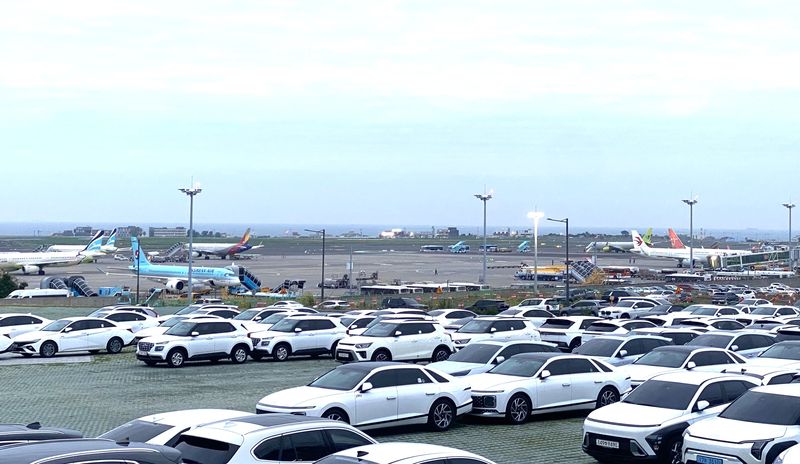
[Financial News Jeju = Reporter Jeong Yong-bok] The number of rental cars registered in Jeju was found to be 1,283 higher than the appropriate level calculated by Jeju Special Self-Governing Province. Jeju Special Self-Governing Province has decided to extend restrictions on new rental car registrations and fleet expansion for another two years.
According to Jeju Special Self-Governing Province on the 16th, the Automobile Rental Business Supply and Demand Adjustment Committee deliberated and approved the fifth rental car supply and demand adjustment plan on the 14th and set the appropriate number of rental cars for the Jeju region at 28,499.
There are currently 29,782 rental cars registered in Jeju. This is 1,283 more than the appropriate level.
Restrictions on new rental car registrations and fleet expansion will also be extended. The current fourth supply and demand adjustment plan ends on the 20th, but the fifth plan will take effect immediately afterward and apply for two years, from the 21st through September 20, 2028. This means that restrictions will continue on new rental car companies supplying additional vehicles to the Jeju market and on existing companies expanding their fleets.
The "appropriate level" referred to by Jeju Special Self-Governing Province differs from the physical maximum number of rental cars that can operate on Jeju. It is a policy-based supply standard determined by considering both tourism demand and traffic conditions, ensuring that sufficient vehicles are available even during peak seasons while preventing an excessive number of rental cars from placing pressure on roads and parking spaces during ordinary periods.
Jeju Special Self-Governing Province explained that it comprehensively considered the maximum utilization rate during the peak season, tourism demand, and the quality of tourism services when calculating the figure of 28,499.
The new appropriate level has actually increased slightly from the previous plan. The appropriate number of rental cars set in the fourth plan in 2024 was 28,300. This time, it increased by 199 to 28,499.
By contrast, the actual number of registered vehicles has barely changed. When the fourth plan was prepared in 2024, 29,785 rental cars were registered in Jeju. The current figure is 29,782, a decrease of just three vehicles over two years.
This is where Jeju's rental car quota system produces different results in its two functions: curbing the increase in vehicles and reducing the number of existing vehicles.
The quota system can prevent rental cars from increasing rapidly again by restricting new registrations and fleet expansion. However, reducing vehicles that have already been registered to the target number is a separate issue.
Jeju took over authority over rental car supply and demand regulation in 2018 and became the first region in the country to implement a total rental car quota system. The system was introduced because the rapidly increasing number of rental cars at the time was judged to be worsening traffic congestion and parking shortages.
Since the system was introduced, the total number of rental cars has fallen from the low 30,000s to the high 29,000s, but the decline has recently come to a virtual halt.
This is because there are legal constraints on forcibly reducing the number of existing vehicles. Jeju Special Self-Governing Province has faced restrictions on compulsory vehicle-reduction measures through lawsuits with rental car companies in the past and has managed supply through restrictions on new registrations and fleet expansion, along with voluntary reductions by companies.
Therefore, the figure of 28,499 presented this time does not mean that the number of rental cars in Jeju will immediately fall to that level starting on the 21st. A total of 1,283 vehicles must be removed to bring the current number of registered vehicles down to the appropriate level. Accordingly, the extent to which the actual number of registered vehicles decreases over the next two years will be a key indicator of the effectiveness of the fifth plan.
The interests surrounding the quota system are also complex. An excessive number of rental cars can worsen road congestion and parking shortages and trigger excessive competition among companies. Conversely, concerns have also been raised that insufficient supply during periods when tourists are concentrated could make it difficult to find a rental car or lead to higher rental fees.
This is why Jeju Special Self-Governing Province considered the maximum utilization rate during the peak season together with tourism demand when calculating the appropriate number of vehicles. The core of the policy is not to reduce the number of vehicles unconditionally, but to adjust supply between the convenience of tourists and the transportation burden on residents.
Jeju Special Self-Governing Province plans to monitor traffic congestion, tourism demand, and conditions in the rental car market and, if necessary, adjust the supply level after deliberation by the Automobile Rental Business Supply and Demand Adjustment Committee.
Kang Min-cheol, Director of the Transportation and Aviation Bureau of Jeju Special Self-Governing Province, said, "We will maintain an appropriate level so that we can reduce the oversupply of rental cars and traffic congestion while responding to tourism demand during the peak season," adding, "We will gradually reduce the excess supply."
[email protected] Jeong Yong-bok Reporter