High Probability of a U.S. Rate Hike... Greater Focus on What Comes After This Decision
- Input
- 2026-09-16 14:08:25
- Updated
- 2026-09-16 14:08:25
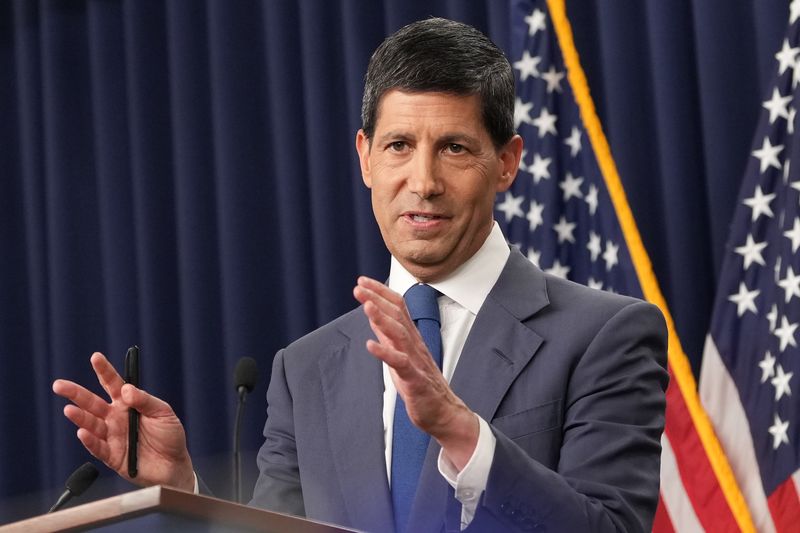
[Financial News] The U.S. central bank, the Federal Reserve System (Fed), is widely expected to raise its benchmark interest rate for the first time since 2023 at the Federal Open Market Committee (FOMC) meeting, its monetary policy meeting scheduled for the 16th local time. Market attention is focused on whether this hike will be a one-off move or the beginning of further increases, with investors watching closely for what Fed Chair Kevin Warsh will say.
Wall Street and market experts put the probability that the Fed will raise its benchmark rate to a range of 3.75% to 4%, up from its current level, at above 90% at this meeting. The key factor behind the expected hike is the August U.S. consumer price index (CPI), which rose 3.4% year on year, well above the Fed's 2% target. According to CME FedWatch from the Chicago Mercantile Exchange (CME), the market-implied probability of a rate hike has reached 93%.
Amid concerns about inflation, the 10-year Treasury yield briefly topped 5%, while the 30-year mortgage rate also exceeded 7%, intensifying market anxiety.
As recently as last summer, the market questioned whether Warsh would take action in response to inflation when he signaled such a possibility. However, he has since adopted a different stance, strongly hinting in a speech last month that he could raise interest rates.
Attention is also focused on whether this hike will be a one-time move or lead to further increases.
A hawkish view holds that further hikes could continue through December and the first half of next year, driven by rising international oil prices, resilient consumer sentiment, the artificial intelligence (AI) investment boom, and a series of supply-chain shocks.
Mark Cabana, director of U.S. rates strategy at Bank of America, said, "The strongest speculation we are seeing is that Warsh will deliver a hawkish rate hike." He analyzed that if Warsh reassures bond investors by demonstrating through action his determination to contain inflation, his hawkish message could help calm the rise in Treasury yields. In other words, Cabana explained that raising short-term rates could ultimately lower long-term rates by easing investors' concerns about inflation over the coming decades.
Peter Williams, an economist at 22V Research, argued that it is "time to begin" raising rates and forecast that the Fed would raise them again in December this year and in the first half of 2027. Williams explained, "Economic growth remains solid or strong, consumption is surprisingly resilient, and the AI boom continues. In addition, overall financial conditions remain accommodative while supply shocks continue to affect the global economy."
Some experts believe that further rate hikes may not be necessary after this FOMC meeting.
James Knightley, chief international economist at ING Group, pointed out that rising oil prices pose a clear risk to inflation. However, he also cited factors that could help inflation return to around 2% next year, including slower job growth, limited wage pressures, a subdued housing market, and tariff refunds that allow companies to avoid raising prices. He stated, "We view this not as the beginning of a new cycle, but as a process of recalibrating Fed policy."
The meeting will also include the release of the dot plot, which shows Fed officials' projections for future interest rates. Divisions within the Fed are deepening between dovish officials who favor keeping rates unchanged and hawkish officials taking a hard line on inflation. Attention is focused on whether the dot plot will reveal the extent of those divisions.
Oscar Munoz, director of U.S. economic analysis at TD Securities, said Warsh is unlikely to provide forward guidance. However, he added, "If he continues to discuss inflation, the market will interpret it as a signal of further rate hikes."
Experts also forecast that even if Warsh does not provide a clear direction for future policy, he will try to stabilize long-term Treasury yields by delivering a tough message on inflation.
[email protected] Yoon Jae-jun Reporter