Government Highlights "SMRs and Marine Nuclear Power" as Next-Generation Nuclear Innovations at IAEA
- Input
- 2026-09-16 11:23:46
- Updated
- 2026-09-16 11:23:46
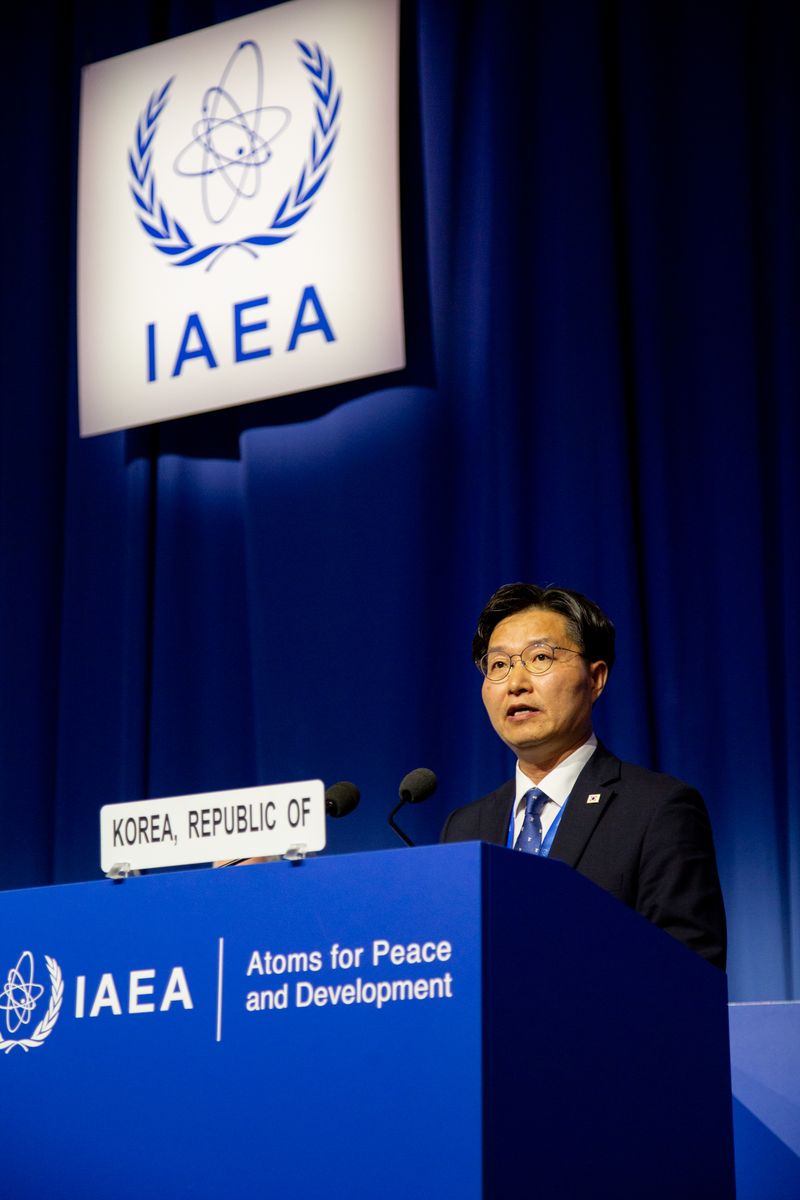
[Financial News] The South Korean government plans to expand the development and use of innovative small modular reactors (i-SMRs) and develop SMR-powered vessels that combine nuclear technology with shipbuilding and marine technologies.
Koo Hyuk-chae, first vice minister of the Ministry of Science and ICT, attended the 70th General Conference of the International Atomic Energy Agency (IAEA) in Vienna, Austria, from the 14th to the 18th as South Korea’s chief delegate. In a keynote speech delivered on the 15th local time, he introduced the country’s nuclear-energy policy direction and major achievements to the international community.
In his keynote speech, Koo revisited the IAEA’s role and achievements in leading the peaceful use of nuclear energy over the past 70 years. He reflected on South Korea’s journey of growth alongside nuclear power and presented a vision for leading future nuclear innovation over the next 70 years.
Koo stated, "We view nuclear power as a key foundation for energy security and carbon neutrality, as well as a strategic technology that will drive future growth. We are pursuing both the stable expansion of carbon-free power generation and future nuclear innovation." He added, "South Korea will lead next-generation nuclear innovations, including SMRs and marine nuclear power."
He presented a plan to develop next-generation nuclear technologies and create new markets through seven SEED projects. In particular, he emphasized that South Korea is pursuing the development and expanded use of innovative small modular reactors (i-SMRs) under the SMR Special Act, while also developing SMR-powered vessels that combine nuclear technology with shipbuilding and marine technologies as part of K-Moonshot. He also stressed that trust in safety and responsibility must underpin future nuclear innovation and expansion, and expressed a commitment to international cooperation for sustainable nuclear development.
Koo reaffirmed South Korea’s firm commitment to the international nuclear nonproliferation regime. He also emphasized that the country would work closely with the IAEA and the international community on major issues, including the nuclear issues involving North Korea and Iran, the safety and security of nuclear facilities in Ukraine, and contaminated water from Fukushima Prefecture.
During the conference, Koo held bilateral meetings with IAEA Director General Rafael Mariano Grossi and senior officials from countries including Singapore and Canada. They discussed expanding cooperation in future nuclear fields such as SMRs and coordinating responses to major international issues. Koo requested high-level participation in the IAEA ministerial meeting to be held in South Korea in October and proposed continuing discussions on the role of future nuclear power and international cooperation in South Korea.
Koo also attended, alongside Director General Grossi, the opening ceremony of the Korean technology exhibition, held under the theme "70th Anniversary Partnership and Future Vision of Korea-IAEA Cooperation." They shared the achievements and future vision of Korea-IAEA cooperation, and Koo presented a $20,000 donation to support the IAEA’s cancer-control activities in developing countries.
[email protected] Yeon Ji-an Reporter