Kim Min-seok Raises ‘Progressive Alliance’ After Yong Hye-in’s Resignation: “Considering a 15-Seat Threshold for Parliamentary Negotiating Groups”
- Input
- 2026-09-16 10:49:12
- Updated
- 2026-09-16 10:49:12
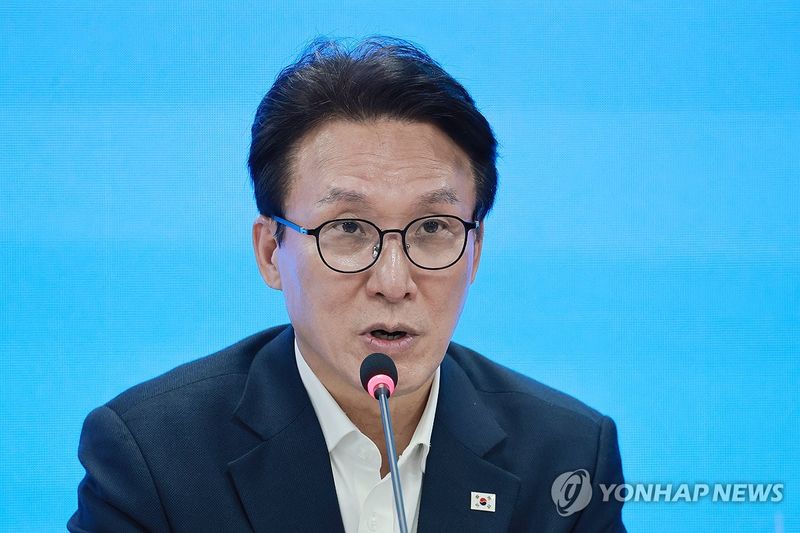
[Financial News] Kim Min-seok, leader of the Democratic Party of Korea, presented four proposals on the 16th to promote solidarity among progressive forces: unifying candidates based on competitiveness, easing the requirements for forming a parliamentary negotiating group, reforming the electoral system, and introducing a runoff voting system. In particular, he raised the possibility of lowering the current 20-seat threshold for forming a negotiating group to 15 seats, signaling his intention to begin full-scale discussions with each political party.
Appearing on the Democratic Party of Korea’s official YouTube channel, Minty07, Kim said, "We must realize solidarity among progressive forces," adding, "I am considering four measures: candidate unification based on competitiveness, easing the negotiating-group requirements, a reasonable electoral system, and runoff voting."
He also suggested that he had held preliminary consultations with the parties. "I gained a degree of support while visiting each party, so I intend to raise the issue for full-scale discussion," Kim said.
Kim also mentioned Yong Hye-in, a lawmaker from the Basic Income Party who recently voluntarily withdrew as a candidate for minister of the Ministry of Gender Equality and Family. "Although I was criticized, on the other hand, didn’t this allow us to see the reality facing vulnerable progressive forces?" Kim said. "We should not merely criticize this issue; we need to solve it, and I am thinking about how to do that."
He specifically proposed lowering the threshold for forming a parliamentary negotiating group from the current 20 seats to 15. "The Democratic Party of Korea has reached the stage where, as the elder brother of progressive political forces, it must propose how to realize solidarity and then make it happen," he said. "The Progressive Party, the Social Democratic Party, the Basic Income Party, and the Rebuilding Korea Party (RKP) have all called for easing the requirements for forming a negotiating group, as has civil society."
He elaborated, saying, "The current threshold is 20 seats—say, 15 seats," and added, "I think the RKP and the various progressive parties also view around 15 seats as realistic and acceptable for an initial change."
Kim also presented electoral reform and a runoff voting system as ways to promote solidarity. "We need to discuss what would be more reasonable under the current semi-linked proportional representation system based on single-member constituencies," he said. Regarding runoff voting, he left its scope open, saying, "It is obviously applicable to presidential elections, and some people also discuss extending it to metropolitan mayors and provincial governors."
On candidate unification, he reaffirmed his position that competitiveness should take priority over allocating shares among parties. "When different parties unify their candidates, common sense dictates choosing the person who would receive the most votes—the person ranked first in opinion polls," he argued. "If we are in first place, we should give it to that person; if we are in second or third, common sense dictates rallying behind the second-place candidate so that they can take first place."
On the 12th, Kim had previously commented on relations with the RKP, saying, "Whether we merge or form an alliance, the overriding principle is competitiveness. The era of dividing up shares is over."
Regarding the recent decline in the Democratic Party of Korea’s approval rating, he stressed the need for a rebound. Referring to his comment the previous day that "this week should be regarded as the last line of defense against the decline in approval ratings, and we must turn it around," he explained, "I did not mean that our defensive line must not be breached. I meant that we should use this week as an opportunity to begin a rebound, even if only marginally at first."
He added, "We are making a concerted effort on personnel issues, policy issues, and real estate, which have become points of contention. We should work together to resolve the concerns of the progressive forces on the left, while also addressing what the forces on the right want. I believe we can do this by strengthening unity within our party and addressing issues across the political spectrum."
[email protected] Kim Kyung-min Reporter