A Samsung-SK hynix Rebound Imminent? “$1.755 Trillion in Investment Is Pouring In” [Shareholders’ Club]
- Input
- 2026-09-16 14:37:53
- Updated
- 2026-09-16 14:37:53
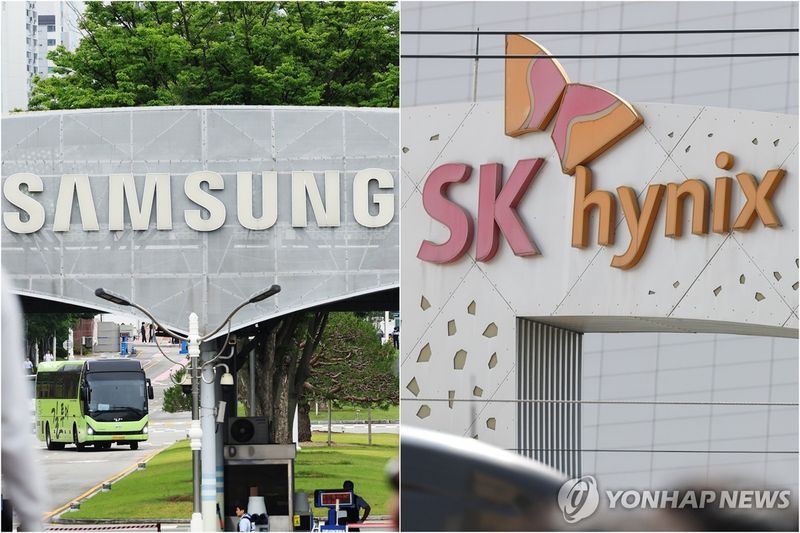
[Financial News] Amid concerns that the pace of AI model development could be slower than expected, weighing on semiconductor stocks, an analysis suggests that actual orders are instead gaining strength.
In a report released on the 16th, KB Securities named Samsung Electronics and SK hynix as its top picks and forecast that now is the time to prepare for a future rebound.
“The recent semiconductor market has been focused more on concerns that AI technology development could take longer than initially expected than on earnings,” said Kim Dong-won, head of KB Securities’ Research Division. He added, “It is premature to directly link the possibility of delays in the launch schedules of individual AI models to a slowdown in the AI infrastructure investment cycle.”
In fact, forecasts for U.S. hyperscalers’ AI infrastructure investment in 2027 have been revised upward. As of September, the forecast stood at $1.3 trillion, up 63% from the previous year and higher than the previous market estimate of $1.1 trillion. That is equivalent to approximately 1,755 trillion won.
KB Securities analyzed that the biggest concern for big tech companies is that the memory supply shortage could worsen next year. “As of September, there are no signs whatsoever of a decline in memory orders from major customers, particularly for HBM and high-performance DRAM,” Kim said. “The memory demand fulfillment rate among customers of the three companies—Samsung Electronics, SK hynix and Micron Technology—is only around 60%.”
In addition, memory manufacturers’ inventories have fallen below 10 days of supply, reaching a historic low. As a result, supply capacity next year is expected to become even tighter. “Major customers are showing stronger efforts to secure supplies in advance, taking into account the worsening shortage expected in 2027,” Kim explained.
Unlike previous cycles, semiconductor companies have already signed highly binding long-term supply contracts covering 70% of their total production capacity. This is another notable factor. “In the past, semiconductor stocks underwent an early correction whenever concerns about demand emerged, but this cycle is different,” Kim said. “Current stock prices have already priced in a slowdown in AI investment, while actual orders continue to show strong momentum. As a result, the gap between stock prices and fundamentals is widening.”
[email protected] Kim Hee-sun Reporter