K-Bio Knocks on the Door of Thailand’s Pharmaceutical Market...Government and Industry Join Forces
- Input
- 2026-09-16 10:31:33
- Updated
- 2026-09-16 10:31:33
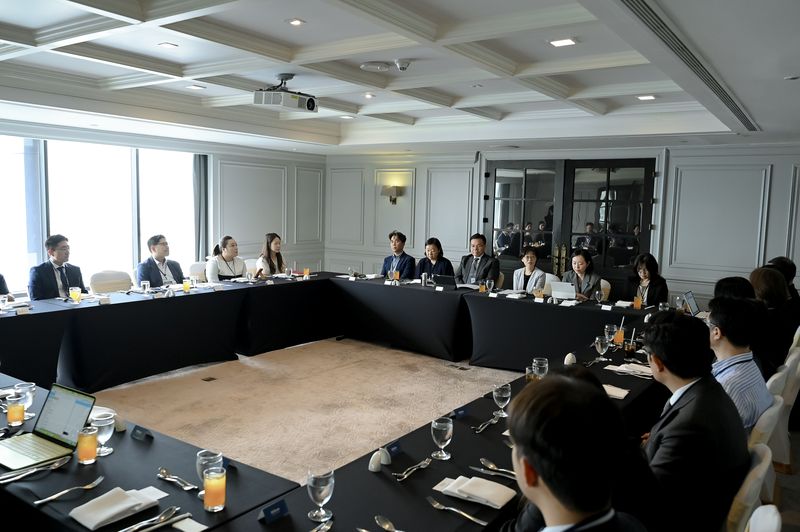
The Ministry of Food and Drug Safety said on the 16th that it had held the Korea-Thailand Pharmaceutical Forum and business consultations in Bangkok on the 14th and 15th, together with the Korea Pharmaceutical and Bio-Pharma Manufacturers Association and the Korea Trade-Investment Promotion Agency (KOTRA).
Thailand is considered the third-largest pharmaceutical market in ASEAN. As medical demand expands and interest among Korean companies in entering the market grows, Thailand was selected as this year’s target country for the public-private support team. The Ministry of Food and Drug Safety previously dispatched market-entry support teams to Vietnam in 2023, Indonesia in 2024 and 2026, and Japan in 2025.
The event focused on reducing the regulatory burden Korean companies face when entering Thailand. The Ministry of Food and Drug Safety discussed drug approval systems and regulatory harmonization with the Thai Food and Drug Administration, while conveying the difficulties Korean companies encounter during local approval and registration procedures.
In particular, the ministry requested information sharing on Thailand’s “reliance” system, which uses the review results of other regulatory authorities to reduce duplicate evaluations, as well as the requirements and procedures for recognizing reference agencies. Drawing on its experience of being listed on the World Health Organization (WHO) Listed Authorities (WLA) list, the ministry plans to expand cooperation between the regulatory authorities of the two countries.
Alongside regulatory cooperation, consultations were held to identify actual business opportunities. Thirty Korean pharmaceutical and medical-device companies and more than 50 Thai companies, buyers, institutions, and hospitals participated in discussions on exports, distribution, and technology cooperation.
Ahn Young-jin, director of the Biopharmaceuticals Bureau at the Ministry of Food and Drug Safety, said, "The government and industry will jointly identify regulatory difficulties in the field and connect them to cooperation agendas between regulatory authorities." He added, "We will continue to support our companies so they can expand their opportunities to enter the Thai market."
Noh Yeon-hong, chairman of the Korea Pharmaceutical and Bio-Pharma Manufacturers Association, said, "Thailand is a major Asian market with excellent medical infrastructure and a strong pharmaceutical industry base." He added, "We will work closely with relevant organizations, including the Ministry of Food and Drug Safety and KOTRA, to actively support Korean companies’ entry into the local market and boost exports."
[email protected] Jung Sang-hee Reporter