POSCO Union Launches 120-Hour Second Partial Strike; Management Says “No Production Disruptions”
- Input
- 2026-09-16 09:16:39
- Updated
- 2026-09-16 09:16:39
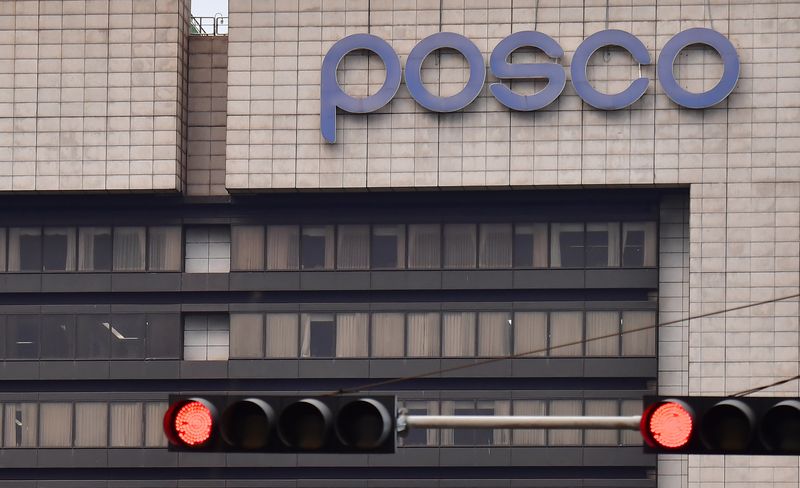
[Financial News] POSCO and its labor union have failed to narrow their differences in wage negotiations, prompting the union to launch a 120-hour second partial strike on the 16th. Some hot-rolling mills at Pohang Steelworks and Gwangyang Steel Works are taking part, but POSCO said it has deployed replacement workers and that production has not been disrupted so far. Differences over wage increases and other proposals remain, making it uncertain whether negotiations will resume.
According to POSCO and the POSCO Labor Union affiliated with the Federation of Korean Trade Unions (FKTU) and the Federation of Korean Metalworkers’ Trade Unions (FKMTU), the union began the 120-hour partial strike at 7 a.m. that day. It is the second industrial action following the first 48-hour partial strike held from the 9th to the 11th.
The strike involves the No. 2 hot-rolling mill at Pohang Steelworks and the No. 4 hot-rolling mill at Gwangyang Steel Works. Hot-rolling mills process slabs produced through continuous casting into hot-rolled steel sheets and other products.
The union said participation in the second strike was about twice the level recorded during the first action. The union reported that 120 workers took part in the first strike—20 at Pohang Steelworks and 100 at Gwangyang Steel Works. POSCO, however, explained that about 60 workers at each site could actually participate in the latest strike and that replacement workers had been assigned according to shift schedules, allowing the plants to operate normally.
POSCO said it was managing the entire process, from production to shipment, by using available personnel and its emergency response system. According to POSCO, core production processes accounting for about 70% of all operations maintain production during industrial action under collective agreement provisions requiring essential work to continue. Core processes such as ironmaking and steelmaking are included.
The main points of contention between labor and management are wages and performance-based compensation. During talks on the 3rd, the union demanded a 7.1% increase in base pay, an incentive payment equivalent to 600% of base pay, 50 shares through the employee stock ownership plan, and a holiday bonus equivalent to 200% of base pay. Management proposed a 2.0% base-pay increase, a 3.5 million won incentive payment for achieving targets, 500,000 won in local gift certificates, and an expanded range for increases in long-service celebration payments.
POSCO and the union began their first round of negotiations on June 16 but failed to reach an agreement. After the National Labor Relations Commission decided on the 18th of last month to end mediation without settlement, the union secured the right to take industrial action. When talks on the 3rd also made no progress, the union staged its first 48-hour partial strike beginning on the 9th.
POSCO and the union resumed negotiations at POSCO’s Pohang headquarters the previous afternoon, but failed to narrow their differences over wage increases and other issues.
According to POSCO, Heegeun Lee, the company’s president, represented management at the talks, while the union’s chief vice president represented the labor side. Management proposed intensive negotiations through the 18th to prepare an agreement on the key issues instead of proceeding with a strike, but the union rejected the proposal, leading to the start of the second partial strike.
A POSCO official said, “We are continuing normal production through available personnel and our emergency response system.” The official added, “We will strengthen on-site management from production through shipment to prevent any impact on domestic demand industries.”
[email protected] Mi-hee Kim Reporter