"Please Stop Visa-Free Entry for Chinese Nationals"—National Public Petition Surpasses 60,000 Signatures
- Input
- 2026-09-16 08:55:23
- Updated
- 2026-09-16 08:55:23
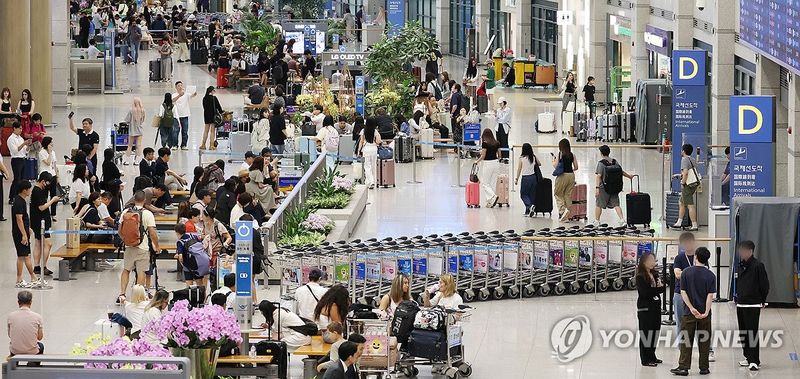
[Financial News] A National Assembly of the Republic of Korea public petition calling for an end to visa-free entry for Chinese nationals and stronger immigration screening and crime management for foreigners has received more than 60,000 signatures. It surpassed the 50,000-signature threshold required for review by the National Assembly of the Republic of Korea less than two weeks after being made public and was subsequently referred to the Legislation and Judiciary Committee of the National Assembly.
According to the Electronic Petition System of the National Assembly on the 15th, the petition titled “Petition Calling for a Ban on Visa-Free Entry for Chinese Nationals and Stronger Immigration Screening and Crime Management for Foreigners,” which was made public on August 31, had received more than 60,000 signatures as of that day.
The petition will remain open for signatures until the 30th. A National Public Petition is referred to the relevant standing committee for review if it receives at least 50,000 signatures within 30 days of being made public.
The petition met the requirements for consideration on the 12th, less than two weeks after it was made public, when the number of signatories exceeded 50,000. It was then referred to the Legislation and Judiciary Committee on the 14th for review.
In Jeju Province, a system is currently in place under the Jeju Special Act allowing individual and group tourists from China to enter visa-free and stay for up to 30 days. A temporary visa-free entry measure for Chinese group tourists nationwide was initially scheduled to end in late June this year, but it has been extended through the end of December.
The petitioner, Kim, called for a ban on visa-free entry for Chinese nationals "for the safety of the people." Kim also demanded, "Please significantly strengthen the immigration screening and crime management systems for all foreigners."
Kim argued that public concern about crimes committed by foreigners has grown as the number of foreigners residing in the country has increased. As supporting evidence, Kim cited statistics showing that the number of foreign suspects residing in the country reached 35,296 in 2024, up 6.8% from the previous year.
Kim argued, "Any expansion or continuation of visa-free entry for Chinese nationals while the safety of the people has not been sufficiently secured needs to be carefully reconsidered."
The petitioner called for expanded cross-border sharing of criminal information so authorities can check foreigners' criminal records and whether they are subject to international wanted notices, as well as records of previous entry denials or deportations and any history of illegal stay or violations of immigration law.
The petitioner also argued that stricter standards should be established, including in principle restricting entry for foreigners with records of serious crimes such as murder, robbery, sex crimes, drug offenses and organized crime.
The petitioner called for stronger post-entry management as well. To prevent foreigners from leaving the country after committing crimes in South Korea and evading investigation, the petitioner argued that information sharing between police and immigration authorities should be strengthened and that measures such as departure restrictions should be imposed swiftly when necessary under the law.
The petitioner also requested tighter restrictions on the reentry of foreigners deported after committing serious crimes in South Korea, along with an integrated system linking and managing information from entry through stay, criminal incidents, investigations, departure and reentry.
The petitioner also called for greater transparency in statistics on crimes involving foreigners. The request includes regularly disclosing not only crime figures by nationality, but also crime rates relative to the resident population and data on serious crimes.
The petitioner stated, "This is not about excluding foreigners. It is about ensuring that everyone who enters the country follows the law and order, and establishing a normal immigration management system that puts the safety of the people first."
[email protected] Han Seung-gon Reporter