Houthi Offensive Puts Mecca Defence Alliance to the Test
- Input
- 2026-09-16 13:38:54
- Updated
- 2026-09-16 13:38:54
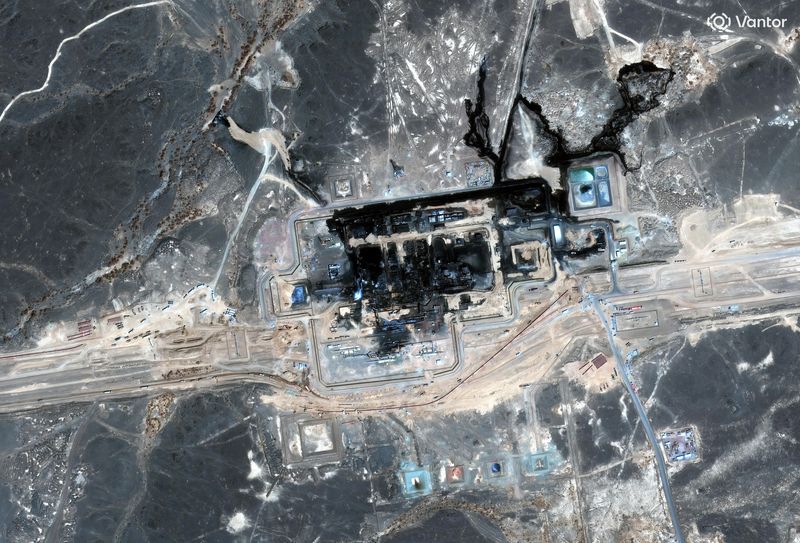
[Financial News] The Mecca Defence Alliance (MDA), a military alliance signed by Saudi Arabia, Türkiye and Pakistan last August, is being put to the test following a Houthi rebel attack on Saudi Arabia last week.
On the 15th (local time), a senior European Union (EU) official responsible for oil security told online energy outlet Oilprice.com that the Houthi rebels’ attack on Saudi Arabia on the 8th was carried out under the direction of Iran’s Islamic Revolutionary Guard Corps (IRGC), whose officers are commanding operations in Yemen.
The official said Iran had financed, armed and trained the Houthi rebels for years and had occasionally directed missile attacks. The official added that more attacks could be expected unless they were deterred through the Mecca Defence Alliance. The Iranian government maintains that it cannot control the Houthi rebels.
Signed on August 7, the Mecca Defence Alliance is modeled on Article 5 of the North Atlantic Treaty Organization (NATO), under which an attack on one member is treated as an attack on all and members pledge collective defense. Saudi Arabia offers financial support, Türkiye, which is also a NATO member, possesses advanced military equipment such as drones, and Pakistan touts its large military force, including nuclear weapons, as a strength. Pakistan’s Defense Minister Khawaja Muhammad Asif emphasized that the alliance is defensive in purpose and limited to conventional warfare, but that the members could provide their full military capabilities under the agreement.
The Mecca Defence Alliance was formed at a time when the security vulnerabilities of military, commercial and oil facilities in the Middle East had been exposed by missile and drone attacks from Iranian forces.
Frequent attacks by the Houthi rebels also led Saudi Arabia to realize that it could no longer rely entirely on the United States for security. It therefore became necessary to build regional deterrence with other Sunni Muslim countries.
The EU security official noted that the Houthi rebels’ attack on Saudi Arabia on the 8th was successful and that Iran has leverage over the Houthi rebels, who could close the Bab-el-Mandeb Strait.
The Bab-el-Mandeb Strait, which connects to the Red Sea, is a strategic passage through which 12% of the world’s crude oil supplies and 10% of liquefied natural gas (LNG) pass.
The alliance’s success hinges on this area. Last week, the Pakistani government warned Iran to stop the Houthi rebels from attacking Saudi Arabia. Defense Minister Khawaja Muhammad Asif warned that the alliance could be activated because of an attack on Saudi Arabia.
Senior military officials from the three alliance countries reportedly met recently to discuss detailed plans in case a military response becomes necessary. Operations are expected to be limited to Saudi Arabian territory, and Pakistani troops already stationed there are not expected to be deployed immediately.
As the Houthi rebels recently and rapidly seized about 130 kilometers of Yemen’s Red Sea coastline, along with strategic locations such as the Bab-el-Mandeb Strait, the Houthi rebels and Iran gained greater leverage over shipping routes through the Red Sea to the Suez Canal.
The Houthi rebels say that vessels passing through the Red Sea are safe and will not be targeted, except for those flying the Saudi Arabian flag. Shipping companies, however, are interpreting the statement pessimistically.
If Saudi Arabia’s east-west oil pipeline is not brought back online, crude oil available for export through the Red Sea could run out of stockpiles. Global crude oil supplies could then fall by 4%, potentially driving international oil prices even higher.
[email protected] Yoon Jae-jun Reporter