Transactions in the Three Gangnam Districts and Han River Belt Plunge 40%, While Outer Seoul Surges 60% [Transaction Cliff in Gangnam, Transactions Concentrated in Outer Areas]
- Input
- 2026-09-16 10:34:04
- Updated
- 2026-09-16 10:34:04
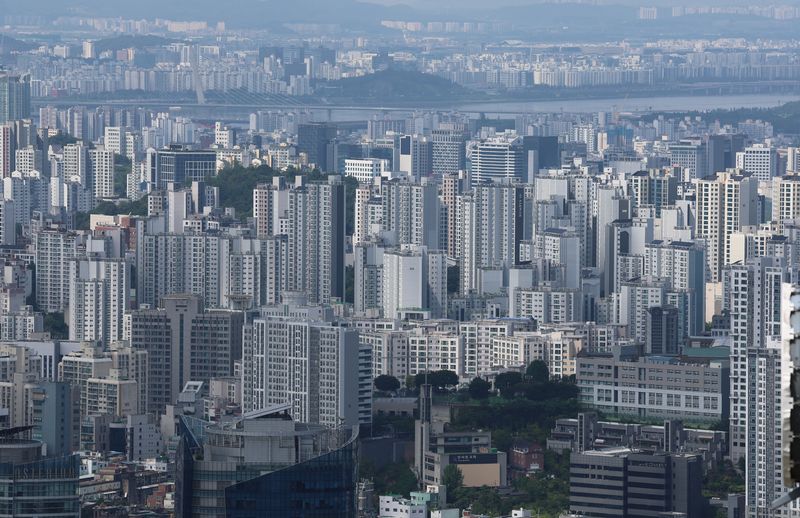
An analysis by Financial News on the 16th, based on the Actual Transaction Price Disclosure System of the Ministry of Land, Infrastructure and Transport, found that about 73,000 Seoul apartment transactions took place over the past year, from September 17, 2025, to September 16, 2026. This was similar to the figure for the same period a year earlier.
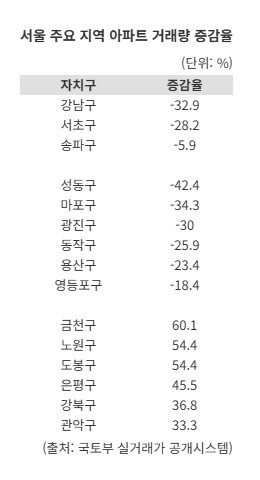
However, transaction volumes varied significantly by district. During this period, apartment transactions in the three Gangnam districts and the Han River Belt fell by as much as 42%, while some outer Seoul districts recorded increases of up to 60%.
Among the three Gangnam districts, Gangnam-gu posted the largest decline, at 32.9%. Seocho District followed with a 28.2% decrease, while Songpa District fell 5.9%.
Among the Han River Belt districts, Seongdong District recorded the largest decline, at 42.4%. Transactions fell 34.3% in Mapo District, 30% in Gwangjin District and 25.9% in Dongjak District. Yongsan District also recorded a sharp 23.4% decrease.
By contrast, transaction volumes increased in most outer Seoul districts. Geumcheon District posted the largest increase, at 60.1%. Nowon District and Dobong District each surged 54.4%, followed by Eunpyeong District at 45.5%, Gangbuk District at 36.8% and Gwanak District at 33.3%.
The rankings by absolute transaction volume also changed. From September 17, 2024, to September 16, 2025, Gangnam-gu ranked fourth among Seoul’s 25 autonomous districts. But it fell nine places to 13th in just one year. Seocho District, which had ranked 13th, dropped six places to 19th. In contrast, Gangseo District, a representative outer Seoul area, climbed from eighth to second. Over the past year, only Nowon District, with 7,716 transactions, surpassed Gangseo District’s 4,927 transactions.
A real estate industry official explained, "The preference for outer Seoul has become more pronounced as the direction of the tax reform plan emerged early this year, following lending regulations that have continued since last year and plans to increase the tax burden on high-priced apartments. This shows that actual end-users are entering the market in greater numbers."
Some additional increases in district-level transaction volumes remain possible because unreported transactions are still pending in the Actual Transaction Price Disclosure System of the Ministry of Land, Infrastructure and Transport. Real estate sale contracts must be reported to the relevant city, county or district office within 30 days of being signed. Given recent trends, however, many expect transactions in outer Seoul to have increased more than those in areas concentrated with high-priced homes.
[email protected] Kwon Jun-ho Reporter