[Exclusive] 240 Cases Registered by CIO Under Law-Distortion Offense in Just Four Months... ‘Concerns’ Over Investigative Gap
- Input
- 2026-09-16 09:09:17
- Updated
- 2026-09-16 09:09:17
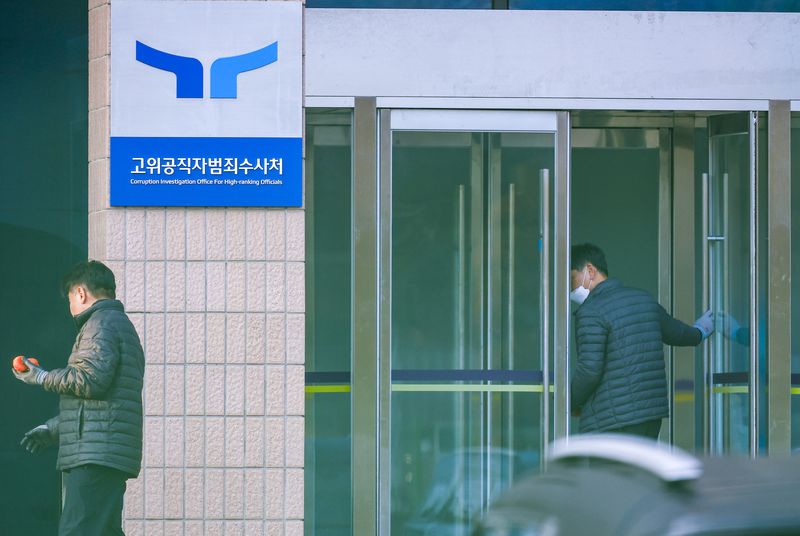
[Financial News] The number of cases involving the crime of distorting the law registered with the Corruption Investigation Office for High-ranking Officials (CIO) reached 240 within four months of the offense’s introduction in March. The offense applies to judicial officials, including prosecutors, judges, and police officers. Concerns are growing over an investigative gap because the CIO transfers standalone law-distortion cases to other investigative agencies, citing unclear jurisdiction, while directly investigating only cases filed together with offenses under its jurisdiction, such as abuse of authority and dereliction of duty.
According to Financial News reporting on the 16th, a total of 240 cases related to the law-distortion offense had been registered with the CIO as of July 31.
As of June 15, the CIO had registered 69 cases related to the offense. At the time, 49 cases were under investigation, 10 had been transferred to other investigative agencies, and another 10 had resulted in decisions not to indict.
The number of registered cases surged by 171 in a month and a half. That represents an increase of approximately 248%, bringing the total to about 3.5 times its previous level.
As of the end of July, the 240 cases comprised 59 closed cases, 23 transferred to other investigative agencies, and 97 under investigation. The specific status of the remaining 61 cases could not be confirmed.
The law-distortion offense, which took effect on March 12, punishes judges, prosecutors, and others performing criminal-investigation duties who intentionally misapply laws during case handling or destroy, conceal, or fabricate evidence. The 240 cases include both those alleging only the law-distortion offense and those alleging it together with other offenses, such as abuse of authority and dereliction of duty.
The problem is that the CIO’s jurisdiction over standalone law-distortion cases remains unclear. As a rule, the CIO transfers such cases to other investigative agencies. By contrast, it is directly investigating cases in which the offense is alleged together with crimes under the CIO’s jurisdiction, including abuse of authority and dereliction of duty.
A CIO official said, "In the case of standalone law-distortion cases, I understand that they are also being transferred to other investigative agencies," adding, "When the law-distortion offense is included with other charges, the CIO investigates and closes the case."
Oh Dong-woon, head of the CIO, also said at a press briefing marking his second anniversary in office in June that the CIO treats cases combining the law-distortion offense with abuse of authority or dereliction of duty as falling under its investigative jurisdiction. However, he noted that it was unclear whether standalone cases fell under the CIO’s jurisdiction because the CIO Act had not been automatically amended. The principle, he said, was to transfer standalone cases to other investigative agencies, such as the National Office of Investigation.
In fact, the CIO transferred a complaint against Supreme Court of Korea Chief Justice Cho Hee-dae, filed under the law-distortion offense, to the National Office of Investigation. Last month, Oh also pointed out before the Legislation and Judiciary Committee of the National Assembly that the uncertainty over whether the newly created offense falls under the CIO’s jurisdiction constituted a "legislative gap."
A CIO official said, "There are still no clear provisions in the CIO Act or elsewhere regarding standalone law-distortion cases," adding, "The CIO’s position is that we want the offense to be clearly included in the CIO Act, but whether to amend the law is a matter for the National Assembly of the Republic of Korea to decide."
In June, the CIO also commissioned a study titled “Interpreting the Elements of the Law-Distortion Offense and Initial Investigative Responses Following Its Implementation.” The study focuses on establishing practical standards for proving the elements of the offense and subjective intent, screening cases that merely reflect dissatisfaction with a decision, and determining when to launch investigations as well as jurisdiction and transfers. The findings are expected next month.
A lawyer and former chief prosecutor predicted, "Separate from establishing practical investigative standards, clarifying jurisdiction over standalone law-distortion cases is tied to amending the CIO Act," adding, "With the number of related cases having risen to 240 and the legislative gap over the scope of investigations continuing, attention will focus on whether the National Assembly of the Republic of Korea amends the law."
[email protected] Yoo Sun-jun Reporter