“Please Move Out” Landlords vs. Tenants: The “Real Battle” Is Coming in Two Years
- Input
- 2026-09-16 09:24:21
- Updated
- 2026-09-16 09:24:21
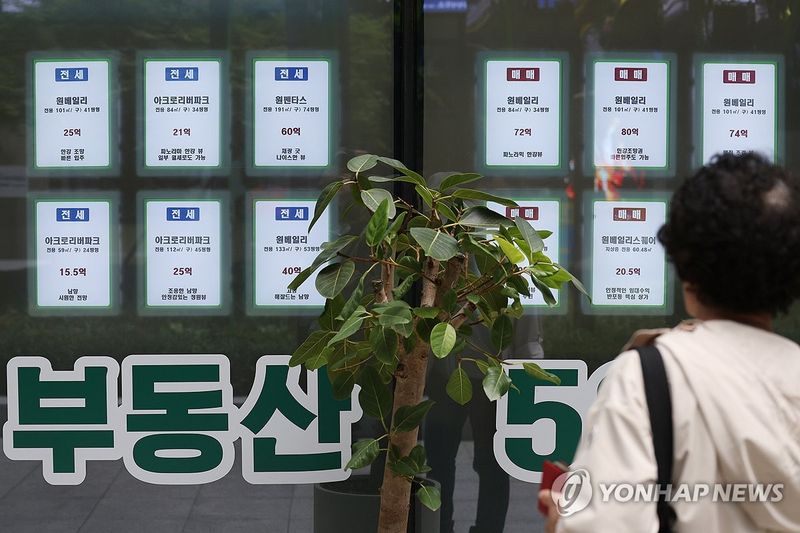
[Financial News] Disputes over lease renewals and terminations have more than doubled this year from a year earlier. With the end of the deferment period for the owner-occupancy requirement approaching, conflicts could intensify between landlords who want to move into their properties and tenants who have nowhere to go amid the jeonse shortage.
Tenants Can Request Lease Renewals, but Landlords May Refuse if They Plan to Move In
On the 15th, data on housing lease dispute mediation applications submitted by the Korea Real Estate Board (KREB) to Lee Jong-wook, a People Power Party lawmaker on the National Assembly Planning and Finance Committee, showed that 971 applications were filed with the Housing Lease Dispute Mediation Committee from January through July this year.
Of these, 131 involved lease renewals or terminations, up 101.5% from 65 during the same period last year. The number filed in just the first seven months of this year has already surpassed the 122 recorded for all of last year, showing a sharp increase. Disputes over lease renewals and terminations have continued to rise, from 75 in 2022 to 104 in 2024 and 122 last year.
Under the Housing Lease Protection Act, revised in 2020, tenants may exercise their right to request a lease renewal once. However, landlords may refuse a renewal if they or their immediate family members plan to actually live in the property. This can lead to disputes over whether the landlord truly intends to move in and when the tenant must leave.
There are also concerns that lease-related conflicts could worsen as the government reshapes the housing market around owner occupancy. Under the June 27 Real Estate Measures announced last year, people who purchase homes in the Seoul metropolitan area with mortgage loans must move in within six months. The measures also blocked gap investment by restricting mortgage loans for multiple-home owners seeking to purchase additional properties.
Since the beginning of this year, the government has also generally restricted extensions of mortgage maturities for apartments owned by multiple-home owners in the Seoul metropolitan area and regulated areas. Analysts say that as it becomes harder to extend loans while retaining existing properties, pressure to sell or move in directly has increased.
An agent at a real estate office in Jamsil-dong, Songpa District, Seoul, said, “There are cases in which landlords tell tenants to vacate because they plan to move in themselves. From the tenants’ perspective, however, it is difficult to find another jeonse home, and moving costs are also a burden. Many therefore want to maintain their existing leases, causing the two sides to clash.”
Kwon Dae-jung, an emeritus professor of economics and real estate at Hansung University, said, “In addition to the June 27 Real Estate Measures, jeonse loan regulations were tightened after the Oct. 15 real estate measures last year. Jeonse homes are in short supply, prices are rising, and loans are becoming harder to obtain, so tenants have a stronger incentive to remain in their current homes.”
Lease Conflicts Likely to Intensify Around 2028 as Owner-Occupancy Deferment Ends
Concerns are also growing that lease-related conflicts could intensify around 2028, when the deferment of the owner-occupancy requirement ends. In February this year, the government allowed the requirement to be deferred until the existing lease expires when a person without a home purchases a property in a land transaction permit zone that is occupied by a tenant. The buyer must move in no later than May 11, 2028.
As a result, tenants can retain their existing lease terms for now. However, as the deadline approaches, conflicts could grow if refusals to renew leases or demands for tenants to vacate surge all at once as buyers prepare to move in. Another real estate agent in Jamsil-dong said, “As the deferment deadline approaches, more landlords may ask tenants to vacate so they can move in themselves. If demands to leave pile up around 2028, tenants may be unable to find homes to move into, or jeonse prices could rise sharply. There is also a shortage of new housing supply, so concerns are high in the field as well.”
[email protected] Hee-sun Kim Reporter