India's Total Fertility Rate at 1.9... 'World's Most Populous Country' Also Faces Warning Signs of Low Birth Rates
- Input
- 2026-09-16 06:00:00
- Updated
- 2026-09-16 06:00:00
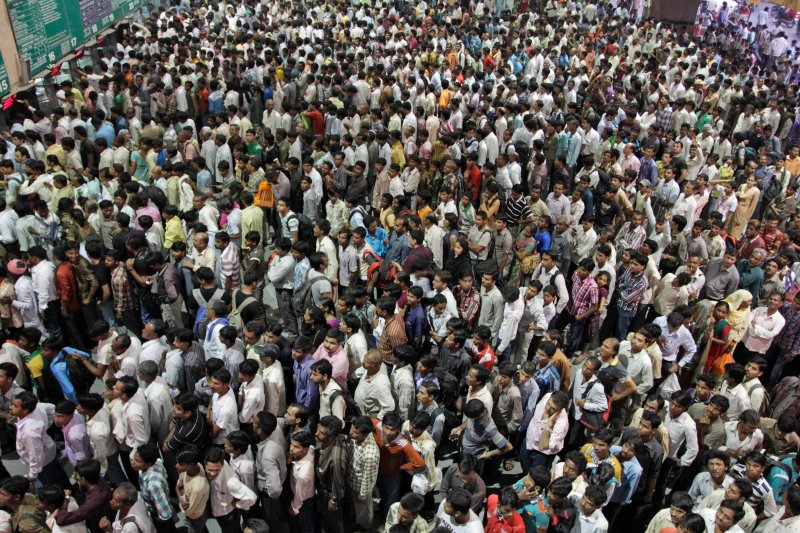
On the 16th, local media reported, citing a recent statistical report on the Sample Registration System (SRS) released by India's General Bureau of Household Registrations, that India's total fertility rate (TFR) fell below the replacement fertility rate of 2.1 required to sustain the population in the long term. While the TFR was approximately 3.3 in the early 2000s, it dropped from 2.3 to 1.9 over the past decade. Sanjeev Sanyal, an economist at the Economic Advisory Council to the Prime Minister, also cited these figures to point out that the population structure is changing rapidly.
However, regional disparities are significant. Bihar had the highest TFR at 2.9, while Uttar Pradesh (2.6), Madhya Pradesh (2.4), and Rajasthan (2.3) continued to exceed the replacement fertility rate. Conversely, the capital, Delhi, recorded the lowest rate in the country at 1.2. Tamil Nadu and West Bengal were approximately 1.3, while Maharashtra was 1.4, approaching the levels of Finland and Norway, respectively. Himachal Pradesh, Karnataka, and Telangana also recorded around 1.5.
Although the fertility rate has fallen below the replacement level, India's population is not expected to decline immediately. This is because "population momentum" is at play, with the number of births remaining stable for a certain period despite the decline in fertility due to the large young population. The United Nations Population Fund (UNFPA) projected that India's population will increase for approximately 40 years, peaking at around 1.7 billion before beginning to decline. India's population was estimated at approximately 1.46 billion in 2025.
Researchers at Germany's Max Planck Institute for Demographic Research analyzed that India's fertility rate has fallen below the replacement level faster than initially expected. Experts cite expanded access to education and contraception, rising child-rearing costs, and declining infant mortality as the main causes.
The impact of low birth rates is already being felt in some regions. As the number of students declines due to fewer births, school enrollment rates have fallen, and some schools have even closed. Andhra Pradesh recently announced a birth incentive program providing 30,000 rupees (approximately 420,000 won) to families with a third child and 40,000 rupees (approximately 560,000 won) to families with a fourth child.
As low birth rates emerge as a new demographic issue in India, the world's most populous country, securing a workforce, responding to population aging, and addressing regional population imbalances are expected to become major policy priorities.
[email protected] Correspondent Pragya Awasati Reporter