[Editorial] Expansion of Class-Action Lawsuits Requires Consideration of the Risks of Excessive Litigation
- Input
- 2026-09-15 18:26:01
- Updated
- 2026-09-15 18:26:01
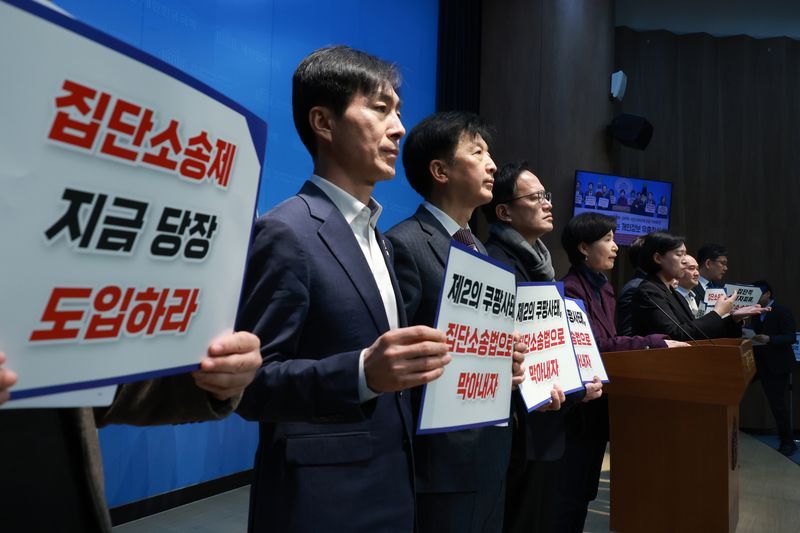
The rationale is understandable. Even when the personal information of tens of millions of people is leaked, it is difficult for individual consumers to sue a company. When the damages are small, victims often give up because of the time and expense involved. Even in cases involving large-scale harm, actual compensation has been limited. The class-action system is intended to narrow this blind spot in remedies for large numbers of victims with small claims and strengthen corporate accountability.
The issue is the scope and speed of the system’s introduction. As the plan is being pursued too suddenly and comprehensively, confusion and anxiety are growing among businesses and across industrial sites. Some bills under discussion include provisions that would apply even to harm occurring before the law takes effect. For companies, the number of potential lawsuits and the amount of compensation could increase substantially, while past matters could become disputes again. Concerns that such uncertainty could discourage investment and undermine business decisions should not be dismissed lightly.
It is necessary to examine the experience of countries that introduced the system earlier. In the United States, where class actions are most active, responding to such lawsuits has long become a major financial burden for companies. According to a survey by Carlton Fields Jorden Burt, P.A., the cost of defending class actions for large companies exceeded $4.5 billion last year and is expected to reach $4.8 billion this year. The scope of litigation also continues to expand into areas such as personal information, labor, and consumer disputes.
There are also significant efforts to reduce the system’s side effects. The United Kingdom allowed class actions in 2015, limited to cases involving violations of competition law, but is now reviewing the system as litigation and legal costs have risen sharply. The aim is to reassess the balance between consumer remedies and the burden on businesses. The European Union (EU) allows only organizations meeting certain requirements to represent consumers in lawsuits, while Japan is also preventing excessive litigation through strict procedures and requirements.
The government and ruling party should prioritize refining the system over moving quickly. They should consider minimizing retroactive application and introducing the system gradually, beginning with areas involving clear collective harm, such as personal information and product safety. Courts should strictly review the representativeness and necessity of lawsuits in advance, and safeguards should be established to prevent duplicate lawsuits and indiscriminate, strategically planned litigation. Protecting small and medium-sized businesses and small business owners that may struggle to withstand lengthy litigation is also important.
The purpose of the class-action system is not to increase the number of lawsuits. It is to ensure that consumers receive fair compensation and that companies bear responsibility commensurate with their unlawful conduct. At the same time, companies should not be constantly exposed to massive lawsuits in a way that undermines the predictability of business management. More thought must be given to a Korean-style class-action system that protects both consumer rights and the stability of business activities.