"Tighten While Growth Is Solid"—Hawks Drive Second Consecutive Rate Hike at August Monetary Policy Board Meeting
- Input
- 2026-09-15 17:12:28
- Updated
- 2026-09-15 17:12:28
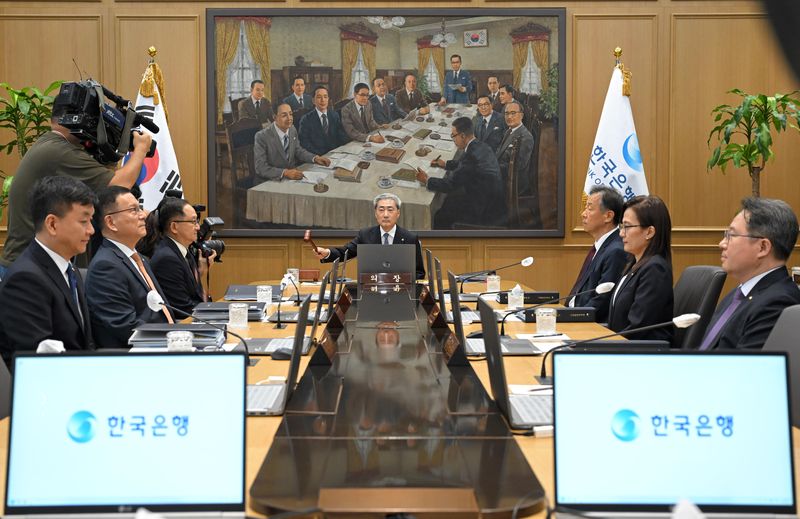
[Financial News] The possibility of an additional policy-rate hike by the Bank of Korea in the second half of the year is growing. Some Monetary Policy Board members who approved two consecutive rate hikes in July and August voiced hawkish support for preemptive additional tightening. Attention is focused on whether the possibility of another hike will emerge ahead of the policy-rate decision in October.
According to the minutes of the 16th Monetary Policy Board meeting, held on August 27 and released by the BOK on the 15th, board members supported raising the policy rate to 3.00% based on solid growth and upward inflationary pressure. At the time, the Monetary Policy Board voted to raise the policy rate by an additional 0.25 percentage points to 3.00%, following the July hike. However, one of the seven members dissented in favor of keeping the rate at its current level, raising the need to moderate the pace.
Although board members showed subtle differences in their views on the policy-rate decision, the minutes indicated that the pace of tightening could be adjusted flexibly at any time in response to economic indicators during the second half of the year.
Some members focused on the domestic economy’s stronger-than-expected growth, supported by robust global AI investment and a semiconductor boom. Their argument was that now was the optimal time to raise rates, as macroeconomic indicators remained solid, with second-quarter GDP and real GDI posting substantial increases.
The BOK substantially raised its economic growth forecasts for this year and next year to 3.3% and 2.9%, respectively.
Members were particularly concerned about inflationary pressures becoming entrenched.
One member said, "Core inflation will remain above the target level for a considerable period as accumulated cost pressures overlap with expanding demand," and noted that if inflation concerns become entrenched, vulnerable groups with high shares of spending on essential goods would suffer a greater blow.
Another member also backed a hike to 3.00%, saying, "Taking preemptive action when growth is solid can reduce the policy costs that must be paid later."
Warnings about overheating in the housing market, particularly in the Capital Metropolitan Area, and rising household debt also received considerable attention.
Some members pointed to upward pressure on housing prices in the Capital Metropolitan Area since May and the rapid increase in household lending, arguing that the tightening reins should be pulled further to contain the risk of financial imbalances.
[email protected] Jung Sang-gyun Reporter