Memories of October Unearthed After 40 Years...Reading the Wounds Passed Down Through Generations [New Book]
- Input
- 2026-09-15 17:09:01
- Updated
- 2026-09-15 17:09:01
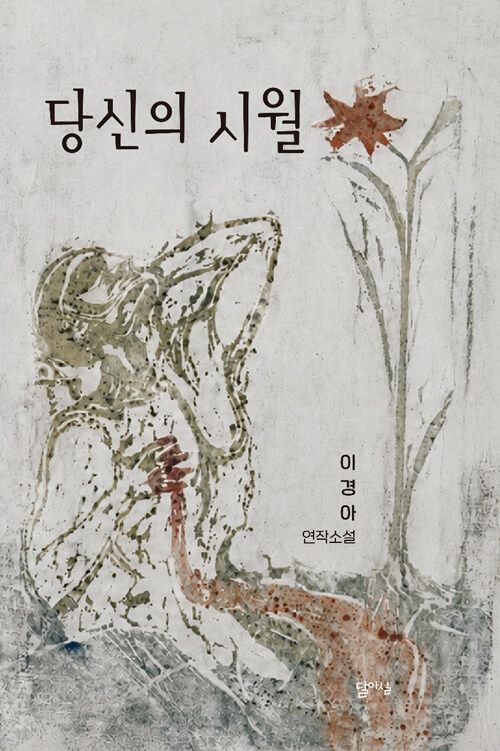
What traces does the trauma of state violence leave on the lives of individuals and families, even after time has passed? Lee Kyung-a’s linked-story collection 'Your October' (Dalasil) explores the memories of the Konkuk University protest, the Yeosu–Suncheon rebellion and the Jeju 4·3 uprising through stories spanning different generations.
Published on the 15th, the book contains five stories, including the title piece, 'Her Film,' 'Your Fugue,' 'The Smell of Soil' and 'April, Now Able to Come.' They are new works following 'The Red Moon Hanging,' which won the Korean Farmers’ Literature Award.
The title story follows a female narrator who experienced the 1986 Konkuk University protest as she brings her memories to the surface after 40 years. She retraces the past in front of young aspiring writers she meets at a residency in the mountains. Sensory images of tear gas, water tanks and the scent of chrysanthemums capture both the fear and love of that time.
The narrator cannot immediately turn the pain she experienced into a story. Her memories emerge through sensations retained in the body and halting words. The difficulty of bearing witness to the past itself becomes a way of revealing the character’s wounds.
'Her Film' and 'Your Fugue' examine how trauma is passed on to the next generation and the possibility of escaping it through the stories of three generations of women in a mother–daughter line and two couples on the run. The relationships among the female characters Vivian, Su-jeong and Ruri also intersect with sexual exploitation in the film industry and power dynamics in the post-#MeToo era.
Although the characters’ names and backgrounds differ, experiences of abandonment, confinement and loss recur. By placing multiple characters’ stories side by side, the collection reveals how one person’s suffering connects with another’s life.
'The Smell of Soil' examines the trauma of the Yeosu–Suncheon rebellion carried by the grandfather’s and father’s generations through the monologue of a novelist who leaves the city and settles in northern Gangwon Province. 'April, Now Able to Come' takes the form of a travelogue about the Jeju 4·3 uprising, combining the island’s history with the narrator’s failed marriage.
The five stories connect personal loss and family silence with events in modern Korean history. Following lives in which wounds remain, they ask what it means to live while carrying memories of the past.
The book concludes with 'Slowly by the Seaside,' a conversation with actor Kim Hye-na and film director Jeon Seon-young. It offers a chance to revisit the characters in the stories through the perspectives of two different media: acting and directing.
In his recommendation, KIM Seok, a professor of philosophy at Konkuk University, wrote, "Memory is memory when I seek it, but when I turn away from it, it remains as a scar."
The author graduated from Ewha Womans University’s College of Law, majored in screenwriting at the Korea National University of Arts’ School of Film, TV & Multimedia, and earned a doctorate in creative writing from Dankook University. She won the newcomer award for fiction from 'Farmers’ Literature' and has moved between fiction, film and performance, directing the independent film and the musical 'Perfect Victory,' as well as the play 'Graveyard of the Stars.'
[email protected] Jang In-seo Reporter