Japan to Cut Food Consumption Tax from 8% to 1%...Two-Year Tax Cut Plus Support Payments
- Input
- 2026-09-15 16:38:38
- Updated
- 2026-09-15 16:38:38
【Financial News Tokyo = Correspondent Hye-jin Seo】The Japanese government will lower the consumption tax on food products from the current 8% to 1% starting next April. The plan is to reduce the tax temporarily for two years and provide support payments to middle- and low-income households to ease the burden on families. Although the annual decline in tax revenue from the cut alone will reach ¥4.3 trillion (approximately ₩37.75 trillion), the government will finalize specific funding measures by the end of the year. Instead of restoring the tax rate after two years, the government plans to provide income-linked support payments to middle- and low-income households.
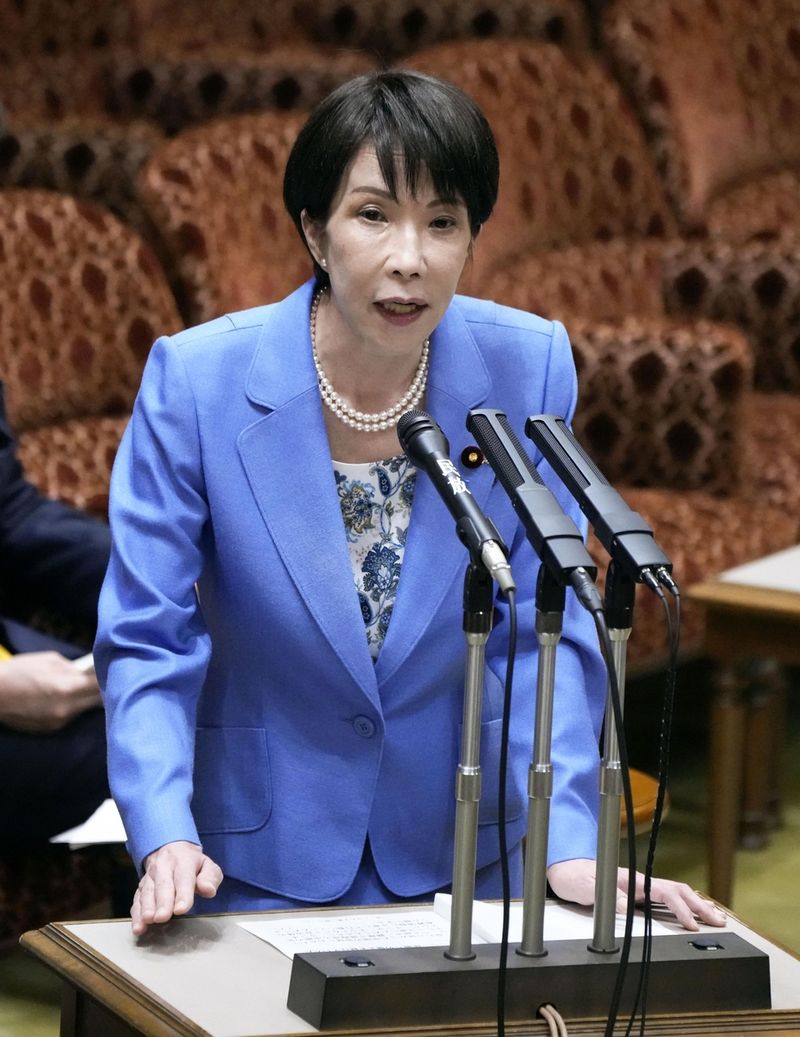
The Japanese government approved a basic tax reform policy containing these measures at a Cabinet meeting on the 15th. It plans to submit related bills to an extraordinary session of the Diet, expected to convene early next month, and seek their passage by the end of the year. The move fulfills a campaign pledge to cut the consumption tax made by Sanae Takaichi’s cabinet during the House of Representatives of Japan election in February.
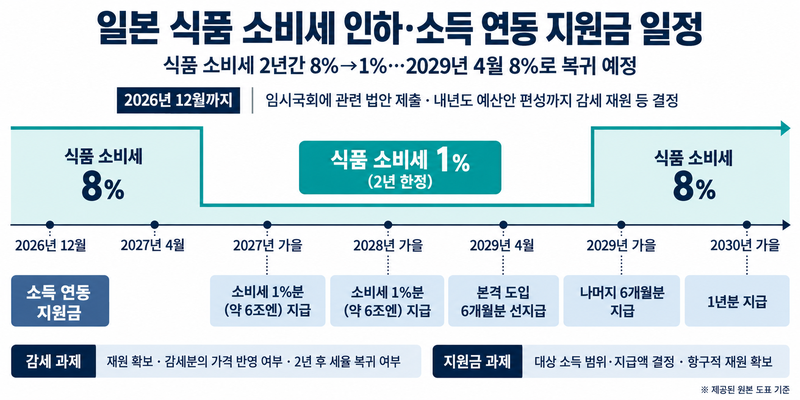
The consumption tax on food products will be reduced to 1% next April and return to 8% in April 2029. The consumption tax rate on dining out will remain at the current 10%.■Two-year tax cut...Funding to be finalized by year-endThe 1% rate on food products will apply from April 2027 through March 2029, before returning to 8% in April of the same year. The government has defined the temporary tax cut as a transitional measure until an income-linked support payment system is introduced.
Support payments will be provided as a priority even during the tax-cut period. In fiscal years 2027 and 2028, payments will primarily target working middle- and low-income earners, with the total amount equivalent to the tax revenue generated by one percentage point of the consumption tax rate. Specific income thresholds and individual payment amounts will be determined later.
The government plans to secure the funds needed for the tax cut and priority support payments without relying on deficit-financing bonds. It will review expenditures and revenues, including the restructuring of subsidies and tax incentives and the securing of non-tax revenue, and reach a conclusion while drafting the fiscal 2027 budget. The central government will also fully compensate for the decline in local tax revenue caused by the tax cut.
Alongside securing the funds, a key issue is whether the tax cut will actually lead to lower retail prices. If the rate reduction is not sufficiently reflected in prices, its effect on easing the burden felt by households could be limited.■Shift to support payments in 2029...Restoration of tax rate to be put to the testThe government will fully introduce an income-linked support payment system from fiscal 2029, when the food consumption tax rate returns to 8%. The aim is to prevent a contraction in consumption by easing the burden on middle- and low-income households resulting from the rate restoration.
In April 2029, existing priority recipients will receive six months’ worth of payments. In the fall of the same year, new recipients will be selected based on their income from the previous year and receive six months’ worth of payments. Starting in fiscal 2030, payments will be made once each fall. The government also stated the principle that it would secure permanent funding to sustain the system.
However, it remains uncertain how much the support payments will reduce opposition to restoring the tax rate. Prime Minister Sanae Takaichi has said she will take responsibility for restoring the rate after two years, but consumers may view the return from 1% to 8% as effectively a seven-percentage-point tax increase.
In a commentary published on the 15th, Nihon Keizai Shimbun noted that continued inflation could intensify calls to extend the tax cut, while the restoration of the tax rate could emerge as an issue in the House of Councillors election in the summer of 2028. The temporary tax cut, introduced to ease the burden on households, could create political pressure over securing funding and determining when the measure should end.
[email protected] Hye-jin Seo Reporter