Will Seoul City Buses Stop Tomorrow? Labor and Management Clash from the Start
- Input
- 2026-09-15 16:28:37
- Updated
- 2026-09-15 16:28:37
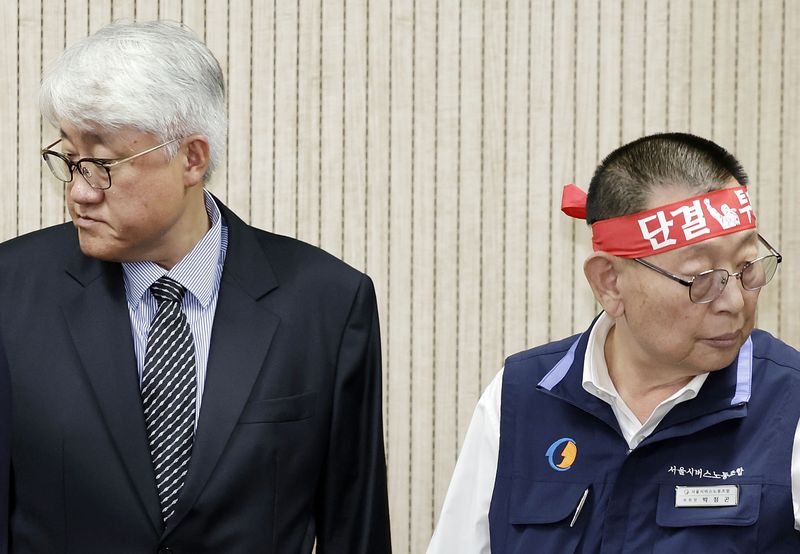
[Financial News] Seoul’s city bus labor and management entered last-minute negotiations on the 15th, one day before an all-out strike, but have failed to narrow their differences over the key issue of the standard hours used to calculate ordinary wages. If they fail to reach an agreement by 9 p.m., the union will completely suspend bus services as scheduled, starting with the first buses at 4 a.m. on the 16th. Seoul Metropolitan Government has begun preparing emergency transportation measures, including additional subway services and free shuttle buses, in anticipation of the strike.
According to Seoul Metropolitan Government and the bus industry, the Seoul City Bus Labor Union and the management-side Seoul City Bus Transportation Business Association held a second mediation meeting at the Seoul Regional Labor Relations Commission at 2 p.m. and began last-minute negotiations. The union has set 9 p.m. as the deadline.
The biggest issue is the monthly standard hours to be applied when calculating ordinary wages. The union argues that other transportation companies should also apply 176 hours per month, following the Supreme Court’s ruling in April in the Dong-a Transportation case. Management, however, maintains that the wage system should first be revised based on 209 hours per month, followed by retroactive adjustments in line with the final outcomes of individual lawsuits concerning ordinary wages currently being pursued by about 50 other transportation companies.
The two sides were already engaged in a tense war of nerves before the talks began. Yeo Jang-kwon, head of the Seoul Metropolitan Government’s Transportation Office, said, "The 176-hour monthly standard for ordinary wages has not yet been definitively established by the Supreme Court." Seoul Metropolitan Government and management explained that the Supreme Court dismissed the appeal in the Dong-a Transportation case for technical reasons and did not directly recognize 176 hours as the standard for calculating ordinary wages.
The standard hours are crucial in determining wages. If a monthly bonus of 1.12 million won is included in ordinary wages, the hourly amount reflected would be 6,364 won based on 176 hours per month, 5,359 won based on 209 hours, and 4,869 won based on 230 hours. As a result, the wage increase effects would differ at approximately 16%, 10%, and 7%, respectively. Seoul Metropolitan Government estimates that if 176 hours were applied as the union demands and hourly wages were additionally increased by 7.85%, the overall wage increase would reach approximately 24%, or 220 billion won annually.
The union is also taking a firm stance. Yoo Jae-ho, an executive secretary of the Seoul City Bus Labor Union, emphasized, "It must be set at 176 hours in accordance with the court ruling." He countered, "Bus drivers’ annual salaries this year are about 59 million won, with monthly pay at around 4.9 million won," adding, "The 85 million won annual salary cited by Seoul is a theoretical figure based on the assumption that drivers work all available overtime on Saturdays and holidays." However, regarding the demand for a 7.85% hourly wage increase, he said it was not a fixed proposal and that the union could negotiate within a range of 0% to 7.85%.
If negotiations break down, the union plans to implement its strike directives following a meeting of branch chairpersons and begin an all-out strike with the first buses at 4 a.m. on the 16th.
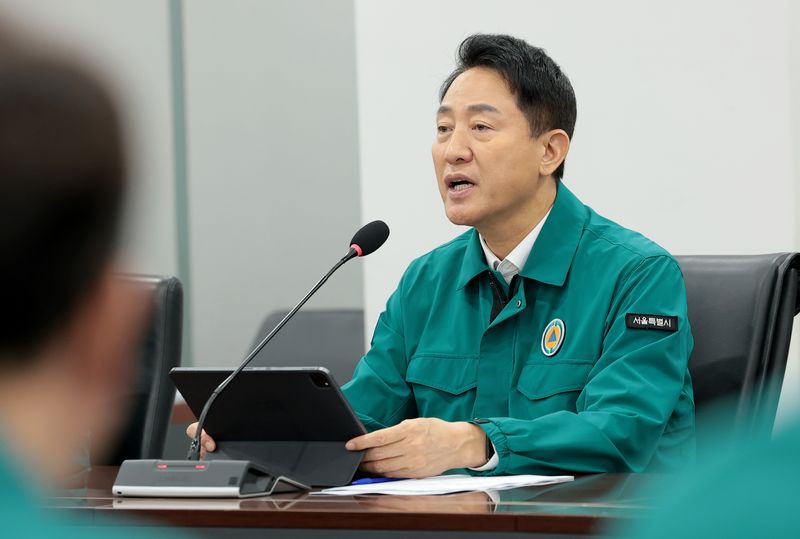
At an emergency situation review meeting, Seoul Mayor Oh Se-hoon said, "If city buses used by about 3.8 million people a day stop running, citizens’ daily travel, including commuting to work and school, will be severely disrupted." He urged both sides, saying, "Please recognize the serious impact on citizens’ daily lives and mobility, and negotiate responsibly until the very end."
Seoul Metropolitan Government will deploy up to 1,500 free shuttle buses and add 202 subway services per day in preparation for the strike. Subway operations will be extended until 2 a.m. the following day, based on the final stations. Mayor Oh said, "We will make thorough preparations by mobilizing every available means of transportation so that there is no gap in citizens’ mobility tomorrow morning."
[email protected] Seong Cho-rong Reporter