The Heartbreaking “Golden Time” Linking South Korea, Ukraine and Vietnam
- Input
- 2026-09-15 15:55:49
- Updated
- 2026-09-15 15:55:49
[Financial News] The mobile phone of a former South Korean ambassador to Ukraine, who has been working tirelessly on Ukraine’s postwar reconstruction while carrying the scars of war, rang urgently at around 3 p.m. on Saturday the 12th.
The caller displayed on the screen was N, a Ukrainian lawmaker and member of the Korea-Ukraine Parliamentary Friendship Association. The news conveyed through a KakaoTalk message was devastating: N urgently appealed for help, saying that A, the 30-year-old daughter of a prominent Ukrainian figure, had fallen into a coma after an overdose in Ho Chi Minh City, Vietnam.
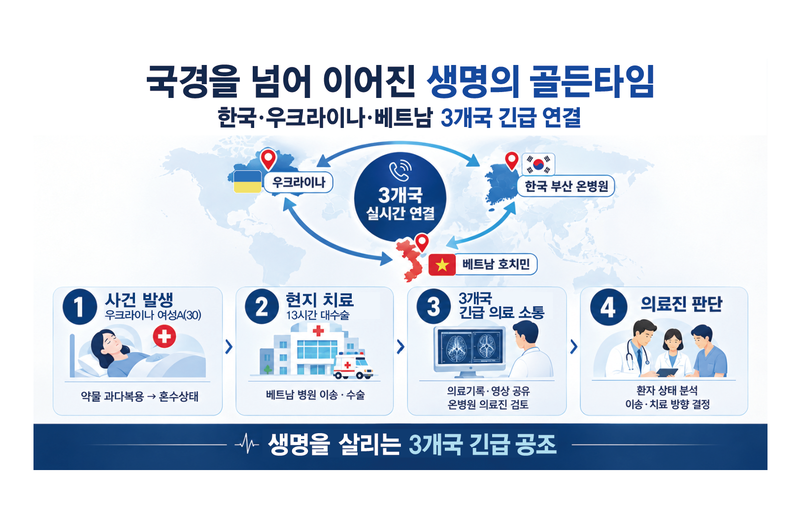
This set in motion frantic, real-time communication among three countries: Busan in the Republic of Korea, war-torn Ukraine and Ho Chi Minh City, Vietnam, where the patient was being treated. It became a moving humanitarian drama in which people across borders and political divides joined forces to save the life of a young woman.
■ The Tragedy of an Overdose and the Crisis After 13 Hours of Major Surgery
The incident dates back to the beginning of this month. On the 3rd, the patient, A, developed fulminant acute hepatotoxicity after taking an excessive amount of Acetaminophen. Her kidneys were subsequently damaged, and she also developed cerebral edema.
As her condition deteriorated rapidly, she was transferred from Vinmec International Hospital to Cho Ray Hospital, a major medical institution in Ho Chi Minh City. She endured a major operation that lasted 13 hours. Fortunately, intensive care helped her damaged liver and kidneys pass the initial critical stage, and their functions began to recover gradually.
But a devastating complication followed. Severe cerebral edema throughout her body caused her intracranial pressure to soar out of control.
■ “I’ll Even Charter a Private Plane...” A Desperate Email from the Husband
The patient’s husband, D, mobilized every contact he had among acquaintances in his home country to seek help from Korean medical professionals. Through N, a lawmaker from the Korea-Ukraine Parliamentary Friendship Association, he reached L, a former South Korean ambassador to Ukraine who had developed close ties with the country through reconstruction projects. The case was soon conveyed to On Hospital in Busan, whose director is Kim Dong-heon, the former director of Pusan National University Hospital.
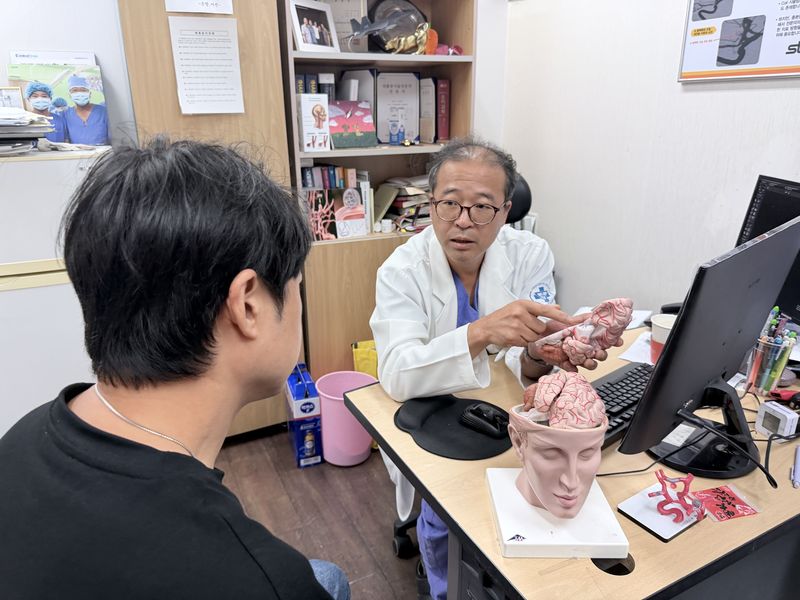
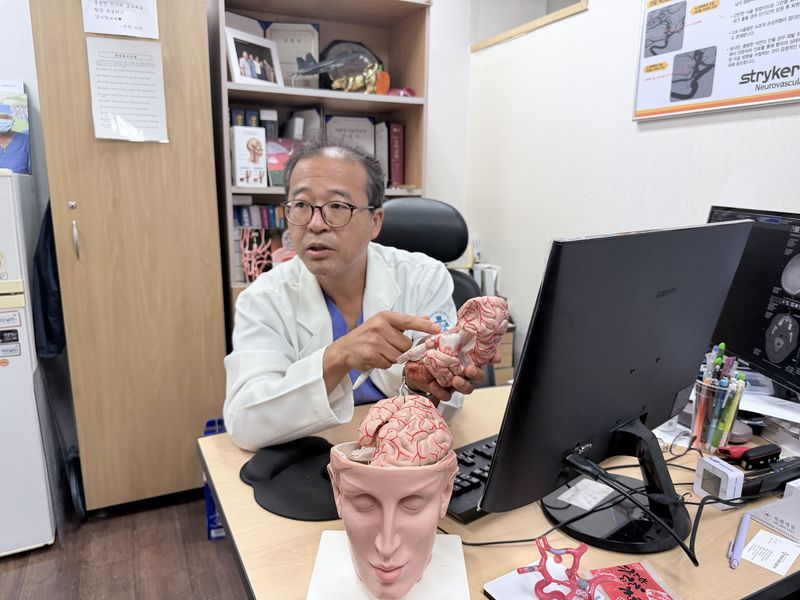
Choi Jae-young, director of On Hospital’s Cerebrovascular Center and a former professor of neurosurgery at Kosin University Gospel Hospital, was taking a weekend break when he was put in touch with the patient’s husband, D, through arrangements made by former Ambassador A. Choi began assessing the patient’s condition in detail through direct email exchanges in English. The husband sent medical opinions from local doctors and dozens of pages of detailed brain-imaging data in DICOM format in real time, earnestly seeking the Korean expert’s advice.
■ Cold Medical Reality and Unceasing Humanitarian Concern
Unfortunately, the patient’s condition, as shown in the medical opinions and imaging reviewed by Choi, was deeply grim.
On the 15th, Choi said, “The patient is currently almost incapable of spontaneous breathing and shows no pupillary reflex at all. Based on these signs, she is considered to be effectively brain-dead.” It was a stark assessment that her brain damage had already passed the point of no return.
Even so, On Hospital said it was prepared to keep its doors open at any time if the family could not give up their last hope and earnestly wanted her to undergo decompression surgery in South Korea.
Choi said, “If the family insists on decompression surgery, we can perform the procedure if they come to On Hospital immediately—even if they have to charter a private plane.”
However, he also offered candid advice as a specialist.
He said, “After carefully reviewing the medical opinions and imaging sent by the husband, I am deeply concerned that physically moving and operating on a patient who is already brain-dead could end up being a futile process.” He expressed concern for both the patient’s suffering and the family’s pain.
■ Cross-Border Communication as a Shining Example of Humanity
A Ukrainian lawmaker reached out to a former South Korean diplomat to save the daughter of a prominent figure from the same country. The diplomat then passed the case to a neurosurgeon in Busan through medical executives who had been his high school classmates.
This miraculous communication continued through real-time emails with the patient’s husband in an intensive care unit in Vietnam on the other side of the globe, allowing them to share medical assessments.
Although medical reality is harsh and time is running out, the borderless solidarity and dedication shown by South Korea, Ukraine and Vietnam to save a 30-year-old Ukrainian woman demonstrate how warmly human compassion can endure amid a cold international landscape.
This moving story of humanity, born in one corner of the global community, deeply reminds us of how beautiful humanity’s efforts to save a life can be when they transcend language and national borders.
[email protected] Byeon Ok-hwan Reporter