Ruling and opposition parties meet with U.S. Ambassador... Kim: "Compatibility of self-reliance capabilities and alliance"; Jang: "Need to strengthen alliance trust"
- Input
- 2026-09-15 16:23:48
- Updated
- 2026-09-15 16:23:48
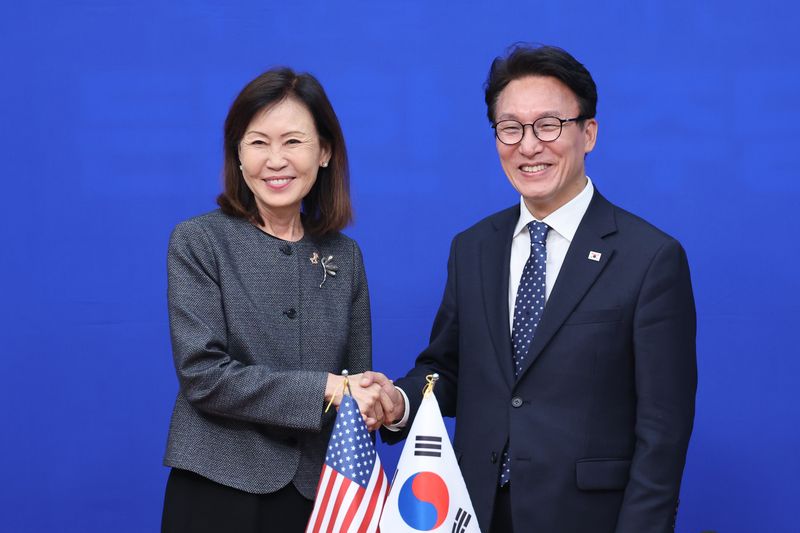
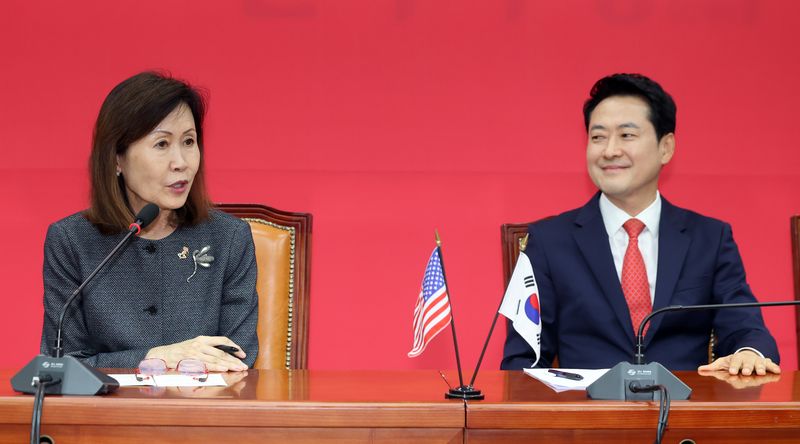
Representative Kim met with Ambassador Steel at the National Assembly on this day and stated, "Korea and the United States have been a steadfast alliance to this day and must develop into an even stronger alliance in the future." He further emphasized, "The process of Korea acquiring independent capabilities is not at all at odds with deepening the alliance with the United States."
This aligns with the "self-reliant defense" policy emphasized by the Lee Jae-myung administration. The government envisions strengthening independent defense capabilities while simultaneously pursuing the development of the ROK-U.S. alliance. The introduction of nuclear-powered submarines, for which South Korea and the U.S. are currently discussing construction approval and fuel procurement plans, is also considered a key project for reinforcing these self-reliant defense capabilities.
Representative Kim also emphasized in his representative speech to the National Assembly on the 7th that "the world of unilaterally looking only to the United States is over," adding that "the overwhelming hegemony of the United States has diminished, and Korea's independent capabilities have increased."
On the other hand, Representative Jang emphasized "trust" as the core of the alliance, indirectly targeting the government's diplomatic capabilities toward the U.S. This is interpreted as being in reference to the recent difficulties faced by both nations regarding trade and security issues, such as the deployment to the Strait of Hormuz and investment in the U.S. Representative Jang stated, "Among the pending issues facing the two countries, there may be matters where we must endure short-term losses," while emphasizing that "the foundation of the alliance is trust." He continued, "We must not look only at the near future, but at the grand future that the two nations will build together," adding, "I hope that this principle of trust will be upheld in resolving various pending issues, including trade and security."
The difference in stance between the ruling and opposition parties regarding North Korea policy was even more pronounced. Representative Kim stated, "Whenever I met President Trump and Vice President J. D. Vance in the United States, they showed deep interest in North Korea," adding, "I hope that North Korea-U.S. relations develop well to contribute to peace and progress on the Korean Peninsula." On the other hand, Representative Jang cited North Korea's nuclear and missile developments as well as the deployment of troops to wars in Russia and Ukraine, emphasizing, "North Korea is increasingly escalating security threats," and stressed that "South Korea and the United States must strengthen security cooperation to counter these threats."
Ambassador Steel emphasized the strengthening of the ROK-U.S. alliance and the expansion of Korea's international role to the leaders of both parties. He told Representative Kim, "I look forward to working closely to strengthen the ROK-U.S. alliance and support Korea's elevated role in the international community," and urged Representative Jang to cooperate in strengthening the bilateral alliance and developing the economic partnership.
[email protected] Song Ji-won Reporter