From Secret Fish Holds to Nighttime Escapes... 58 Chinese Fishing Vessels Seized in Jeju Waters Over the Past Five Years
- Input
- 2026-09-15 15:26:31
- Updated
- 2026-09-15 15:26:31
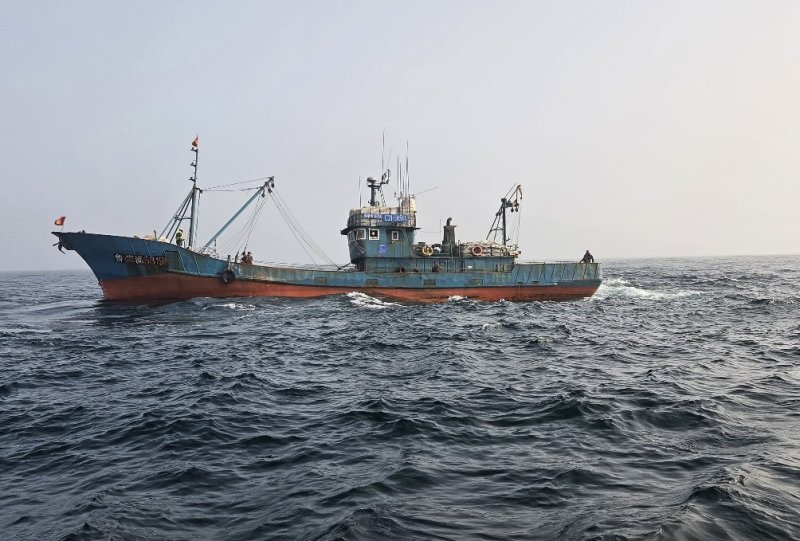
[Financial News Jeju = Reporter Jeong Yong-bok] With an average of 44 Chinese fishing vessels appearing daily in Jeju waters this year, 58 vessels have been seized since 2022 for illegal fishing and violations of permit conditions. As cases continue in which vessels engage in illegal fishing at night or in bad weather and then flee without complying with the Coast Guard's orders to stop, calls are growing to strengthen a permanent surveillance system linking patrol vessels, aircraft, and radar.
According to data submitted by the Korea Coast Guard (KCG) on the 15th to Rep. Moon Dae-rim of the Democratic Party of Korea, a member of the National Assembly's Agriculture, Food, Rural Affairs, Oceans and Fisheries Committee, an average of 44 Chinese fishing vessels appeared daily in Jeju waters from January through August this year.
However, this does not mean that all Chinese fishing vessels spotted in Jeju waters are illegal. The figure also includes vessels operating with permits under the Korea-China Fisheries Agreement and domestic laws. Enforcement targets include unlicensed fishing, violations of permit conditions, failures to report entry and departure, and failure to comply with orders to stop.
The number of Chinese fishing vessels in Jeju waters rose from a daily average of 57 in 2021 to 62 in 2022, before falling to 54 in 2023, 44 in 2024, and 42 last year. This year, the figure rose slightly again to 44.
KCG inspections are on the rise. The number of Chinese fishing vessels inspected in Jeju waters increased from 195 in 2021 and 193 in 2022 to 321 in 2023, 300 in 2024, and 426 last year. This year, 252 vessels had been inspected through August.
Seizures are also continuing. From 2022 through August this year, a total of 58 Chinese fishing vessels were seized in Jeju waters for illegal fishing and various violations of permit conditions. Jeju Coast Guard Station and Seogwipo Coast Guard Station each apprehended 29 vessels.
By year, there were nine vessels in 2022, 14 in 2023, 13 in 2024, and 18 last year. This year, four vessels had been seized through August.
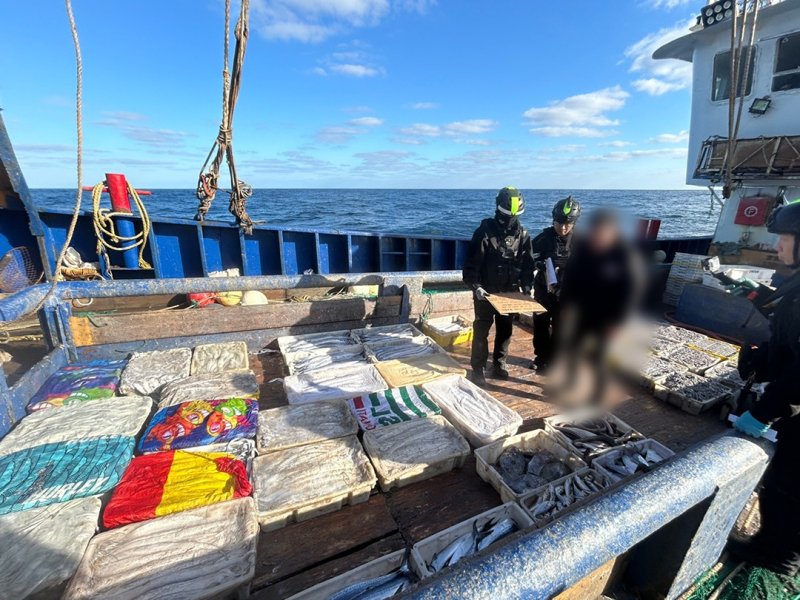
By type of violation, unlicensed fishing was the most common, involving 15 vessels. Fourteen vessels violated entry and departure reporting requirements; 12 underreported permitted details, such as fish-hold capacity; seven violated fishing-log requirements; three failed to operate their Automatic Identification Systems; one violated an order to stop; and six fell into other categories.
Of the four vessels caught this year, three violated permit conditions, including underreporting the size of their fish holds. Secret fish holds were found on two of them.
Even licensed fishing vessels are subject to enforcement if they violate permit conditions concerning catch volume, fish-hold size, or fishing logs. Secret fish holds are a major inspection target in maintaining order in fishing operations because they can be used to conceal actual catches.
The methods used to evade enforcement are also making on-site responses difficult. According to the Coast Guard, some unlicensed Chinese fishing vessels enter permitted waters at night or in bad weather to engage in illegal fishing, then flee toward the provisional measures zone under the Korea-China Fisheries Agreement without complying with orders to stop when patrol vessels approach.
When the sea is rough or visibility is limited, the risks of tracking and boarding inspections also increase. Because there are limits to monitoring the vast waters around Jeju using patrol vessels alone, it is important to operate surveillance assets such as aircraft and radar together with patrol vessels to detect illegal fishing vessels at an early stage.
The issue of Chinese fishing vessels is not limited to Jeju. The number of Chinese fishing vessels appearing near the Northern Limit Line in the West Sea rose from an average of about 60 per day in 2021 and about 70 in 2022 to about 90 in both 2023 and 2024. An average of about 90 vessels appeared daily last year as well, while the figure stood at about 70 through August this year.
The number of Chinese fishing vessels ordered to leave the West Sea rose sharply from 646 in 2021, 424 in 2022, 446 in 2023, and 345 in 2024 to 729 last year. This year, 233 vessels had been ordered to leave through August.
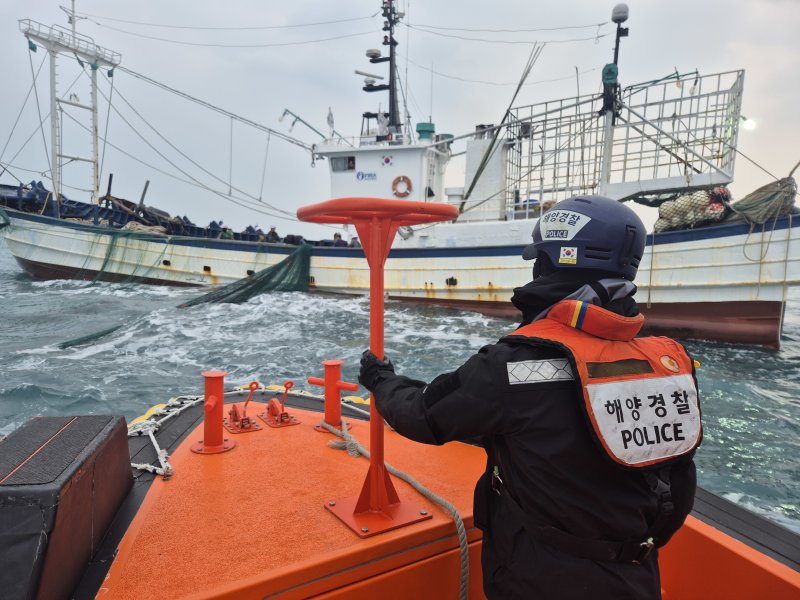
Although Jeju waters and the area near the Northern Limit Line in the West Sea differ in their fishing environments and enforcement methods, they share the common challenge of securing sufficient personnel and assets on site to respond to Chinese fishing vessels' prolonged stays, unlicensed fishing, and refusal to comply with enforcement.
In Jeju, the issue of protecting fishermen's fishing grounds is intertwined with maritime sovereignty: ensuring that foreign fishing vessels licensed to operate in Korea's exclusive economic zone properly comply with the prescribed conditions.
In particular, it is more important to identify actual illegal activity quickly and connect it to on-site enforcement than simply to count the number of Chinese fishing vessels appearing. The key is to deploy surveillance networks that operate at night and in bad weather, along with large patrol vessels, aircraft, and enforcement personnel capable of rapid deployment.
Rep. Moon Dae-rim said, "Jeju waters are the livelihood of our fishermen and an area over which the Republic of Korea's maritime sovereignty extends," adding, "With dozens of Chinese fishing vessels appearing every day, we need a response system capable of constant surveillance and rapid deployment to prevent illegal fishing that takes advantage of nighttime or bad weather."
He continued, "During the parliamentary audit, we will closely examine the presence of Chinese fishing vessels and the state of illegal fishing in Jeju waters and the West Sea," emphasizing, "We will thoroughly assess whether on-site resources, including large patrol vessels, aircraft, radar, and enforcement personnel, are sufficient."
[email protected] Jeong Yong-bok Reporter