Government Pushes for Social Dialogue on Labor Special Provisions for Mega Special Zones, Including 52-Hour Workweek... Two-Track Approach with Parliamentary Legislation
- Input
- 2026-09-15 15:22:58
- Updated
- 2026-09-15 15:22:58
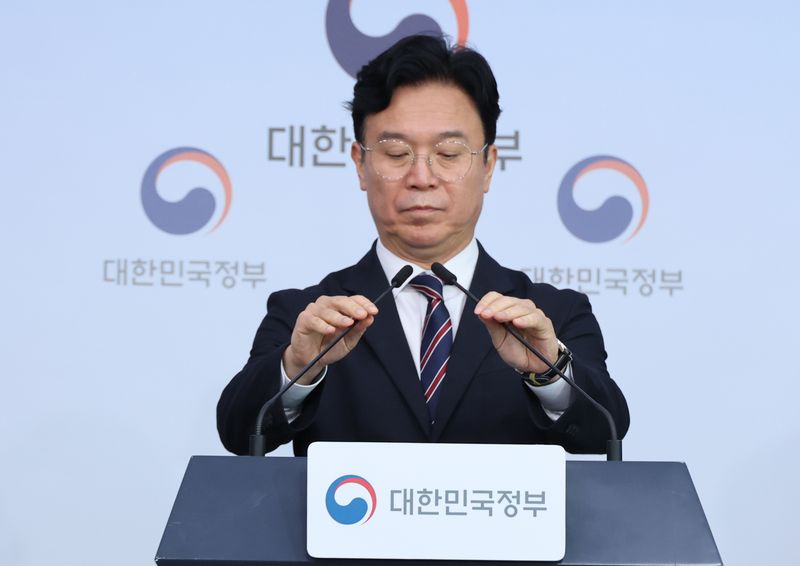
Minister of Employment and Labor (MOEL) Kim Young-hoon held a briefing at Government Complex Seoul on the 15th and stated, "We are discussing special labor provisions applicable only within the Mega Special Zones under the Mega Special Zone Act," adding, "I propose a 'one-point' social dialogue on this."
This is the first time the government has officially proposed social dialogue regarding labor exceptions in Mega Special Zones. Minister Kim has consistently mentioned the need for social dialogue regarding the direction of easing labor regulations within the zones, such as exceptions to the 52-hour workweek and the expansion of the cap on fixed-term employment.
This social dialogue is proceeding separately from the National Assembly's proposal and enactment of the Mega Special Zone Act. Minister Kim stated, "Whether to include special labor provisions in the Mega Special Zone Act scheduled for proposal is within the authority of the legislature," adding, "I believe the content of the social dialogue will be fully reflected in the National Assembly's discussion process. If reasonable measures are derived, legislation will be enacted more quickly."
The government and the ruling party previously set a goal of proposing the Mega Special Zone Act this month and passing it by the end of the year. Given that social dialogue takes at least several months, the most likely scenarios are to first include labor special provisions in the Mega Special Zone Act and modify parts to reflect the content of the social dialogue, or to exclude the special provisions first and then add the content of the social dialogue.
The government's position is that it will proceed with dialogue as quickly as possible, reflecting the positions of labor and management. The operational method, frequency, and deadline have not yet been determined.
The key question is whether the two major labor federations will accept the government's proposal. The Federation of Korean Trade Unions (FKTU) has stated its position to engage in dialogue, while the Korean Confederation of Trade Unions (KCTU) is weighing its options.
The Federation of Korean Trade Unions (FKTU) stated, "As the party that proposed social dialogue regarding the Mega Special Zones, we will responsibly engage in discussions to ensure that balanced regional development and the strengthening of industrial competitiveness lead to an improvement in the quality of life for workers," while also adding, "Participation does not mean acceptance of labor special provisions. Specific matters must be discussed through social dialogue."
It remains uncertain whether labor and management will be able to reach an agreement on contentious issues, such as exceptions to the 52-hour workweek system, which have been stalled in discussions so far. Minister Kim emphasized, "Deliberating the positions of labor, management, and the government during the policy-making process is the most important prerequisite for enhancing not only the completeness of policies but also their implementation," adding, "We will spare no effort to facilitate dialogue by providing objective data accumulated over time."
[email protected] Kim Jun-hyeok Reporter