Membrane Developed to Produce Environmentally Friendly Ammonia [Science K-New Technology]
- Input
- 2026-09-16 06:00:00
- Updated
- 2026-09-16 06:00:00
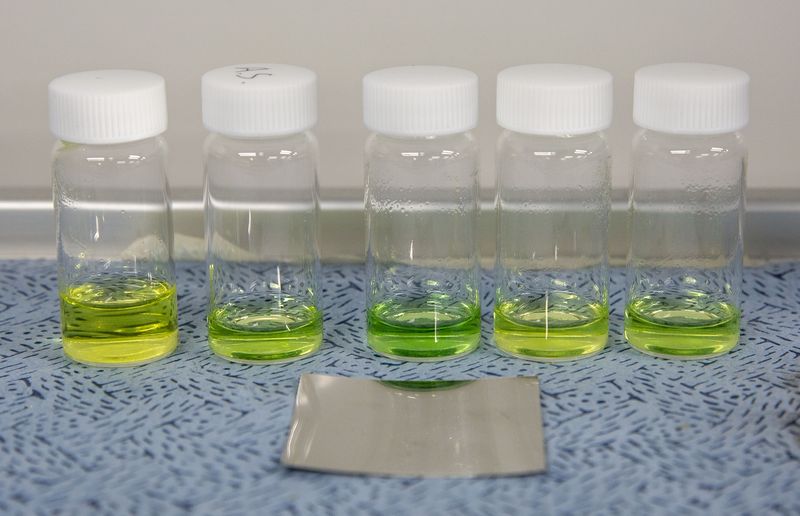
According to the Korea Institute of Energy Research (KIER) on the 16th, KIER demonstrated that a palladium membrane can selectively transport only hydrogen ions from water and verified its performance by applying it to an environmentally friendly ammonia-synthesis process. A membrane separates reactants, products, solvents and other substances inside an electrochemical device so they do not mix, while allowing ions needed for the reaction to pass through. Previously, membranes made primarily from polymers, such as ion-exchange membranes, were used.
Polymer membranes contain tiny channels through which water flows, and ions move along these channels. The problem is that a phenomenon known as “crossover” occurs when unnecessary molecules, including water, pass through along with the ions, reducing the performance and stability of electrochemical devices. Conventional membranes also had a limitation: reducing crossover slowed the movement of ions, making it impossible to achieve both goals at the same time.
The researchers addressed the crossover problem by using a palladium membrane, which absorbs hydrogen atoms, instead of a polymer membrane. With almost no gaps, the palladium membrane absorbs only hydrogen and transports it to the other side, while preventing other substances from moving through.
The palladium membrane was applied to an electrochemical ammonia-synthesis process through joint research with a team led by Professor Hwang Yun Jeong of Seoul National University. Electrochemical ammonia synthesis is an environmentally friendly technology that reduces carbon emissions by extracting hydrogen ions, a raw material for synthesis, from water instead of fossil fuels and supplying the electricity required for synthesis from renewable energy.
By using the palladium membrane, the researchers became the first in South Korea to successfully synthesize ammonia electrochemically using water directly instead of hydrogen, presenting a new direction for research.
Dr. Kim Jae-hyeong of KIER’s Clean Fuel Research Laboratory, who led the study, said, “This achievement presents a new ion-transport mechanism that can resolve the crossover problem, which has hindered electrochemical reaction systems such as green ammonia synthesis.” He added, “Beyond ammonia synthesis, the technology can be applied to various electrochemical devices that require strict material separation, helping expand its potential applications.”
The work was conducted with support from the National Research Council of Science & Technology (NST)’s Global TOP Strategic Research Group Support Program. The findings were published in the June issue of the internationally renowned journal Advanced Science, which has an impact factor of 14.1.
[email protected] Yeon Ji-an Reporter