Saudi-Driven Oil Price Surge Deepens Food Industry’s Business Woes Again: Triple Whammy of Costs, Logistics and Packaging Materials
- Input
- 2026-09-15 14:39:10
- Updated
- 2026-09-15 14:39:10
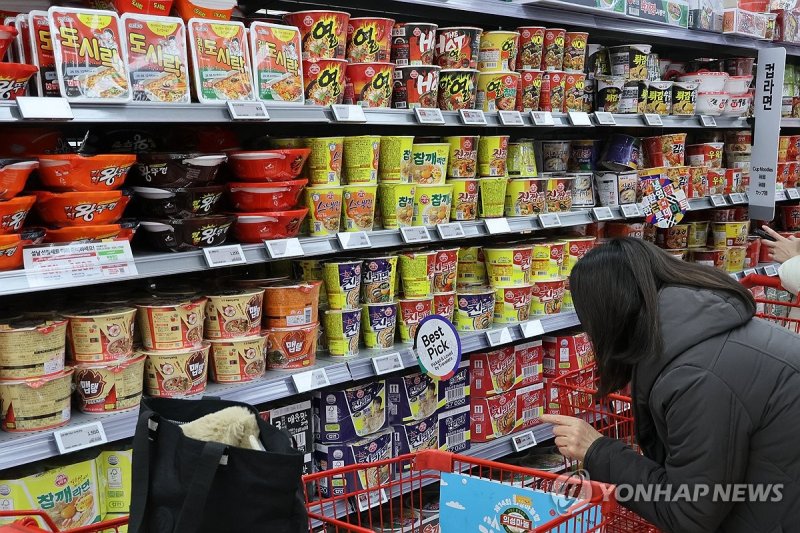
[Financial News] A sharp rise in international oil prices is placing an even greater burden on South Korea’s food industry. Food companies that raised product prices in the second half of the year amid the effects of high inflation and a weak won during the first half are once again being hit by a triple whammy: rising costs, higher logistics expenses and instability in packaging-material supplies.
According to industry sources on the 15th, international oil prices have been rising this month, with Brent crude oil for delivery in the current month and West Texas Intermediate crude oil (WTI) reaching four-month highs and surpassing $100 a barrel. The increase comes as concerns over disruptions to crude oil supplies grow following the closure of a key Saudi Arabia pipeline amid clashes and supply uncertainty along major crude oil routes, including the Strait of Hormuz.
On the 14th, local time, November-delivery Brent crude oil futures closed at $105.68 a barrel on ICE Futures Europe, up 1.02% from the previous session. October-delivery West Texas Intermediate (WTI) futures ended trading at $101.39 a barrel on the New York Mercantile Exchange (NYMEX), up 1.34% from the previous session.
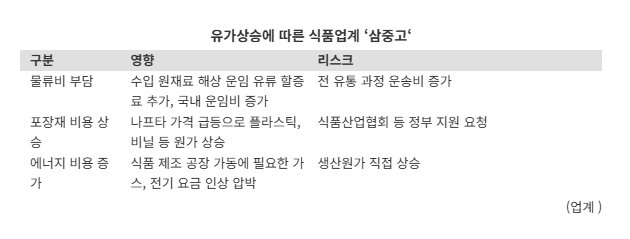
Rising oil prices are directly affecting the entire production and distribution structure of food companies. Logistics costs are the first area to respond. Fuel surcharges are added to ocean freight for importing raw materials, while operating costs for refrigerated and frozen trucks moving goods from domestic factories to distribution networks, as well as freight transportation costs, are also increasing.
Higher packaging-material costs are another setback. Prices for naphtha, a key raw material for plastic containers, plastic packaging and polyethylene terephthalate (PET) bottles, have surged amid supply-and-demand instability in the petrochemical market, driving up the cost of purchasing auxiliary materials. On top of this, food manufacturers are also facing pressure from rising energy bills, including gas and electricity needed to operate production facilities.
Major food companies say they can absorb some of the short-term shock because they have secured futures contracts and inventories covering three to six months of raw materials. However, if the rise in oil prices continues for an extended period, they expect profitability to deteriorate in earnest from the quarter after existing inventories are depleted.
In April, the Korea Food Industry Association (KFIA) and 12 other related organizations asked the government for support, saying, "As the situation in the Middle East continues, the supply of key packaging-material raw materials, including naphtha, plastic bags and films, and polyethylene terephthalate (PET) containers, has reached its limits."
An official from the ramen industry lamented, "International oil prices are rising again due to the recent instability in the Middle East, creating a management burden, but it is difficult for individual companies to respond on their own. In particular, the continued rise in naphtha prices, which is used as a raw material for packaging materials, is intensifying pressure on costs."
The problem is that food companies find it difficult to pass the increased cost burden caused by rising oil prices on to consumers through higher prices. Major food companies have already raised prices for key products this year, citing cost pressures such as the weak won during the first half.
CJ CheilJedang raised the prices of 27 major items, including Hetbahn and dumplings, by an average of 8%; Nongshim raised the prices of cup ramen and other major products by an average of 6%; and Ottogi raised the prices of products including ready-to-eat rice and convenience foods by up to 29.4%.
With consumers becoming more sensitive to prices amid prolonged high inflation and the government continuing to pursue price stabilization, companies are engaged in a difficult wait-and-see game over whether to pursue additional price increases.
An industry official said, "Not only raw materials but also all ancillary costs, including logistics and packaging materials, are rising at the same time, so we are holding out through our own cost-cutting efforts. If the cost pressures that continued throughout the first half accumulate into the second half, production adjustments or changes to product release prices may become unavoidable."
[email protected] Kim Seo-yeon Reporter