Luxury Bags Prompt High-End Clothing and Shoes, Too: The ‘Diderot Effect’ Driving Department Store Boom
- Input
- 2026-09-16 14:49:32
- Updated
- 2026-09-16 14:49:32
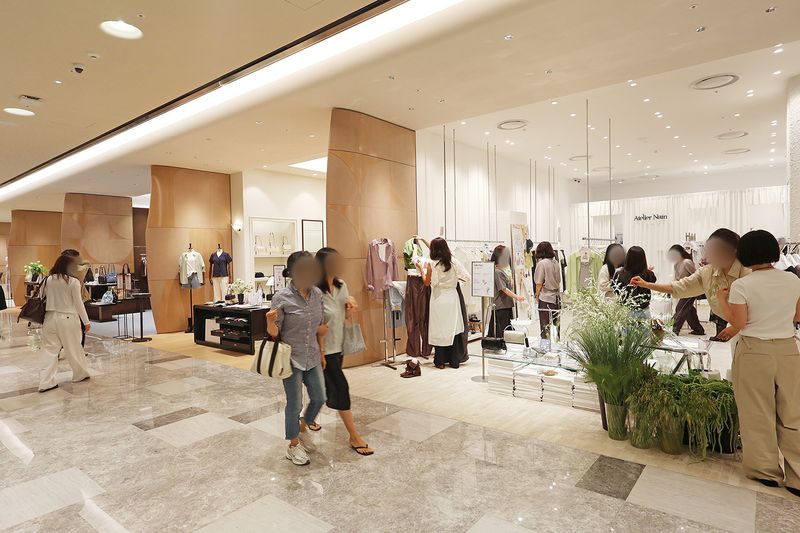
[Financial News] The department store industry is continuing to post double-digit growth even after the stock market correction. Analysts say the industry’s growth base is broadening as high-end consumption, fueled by the wealth effect and performance bonuses paid by major companies, spreads beyond luxury goods to fashion, accessories, home and living products, and other categories through the ‘Diderot effect.’
According to the Ministry of Trade, Industry and Energy (MOTIE) on the 16th, department store sales have recorded double-digit year-on-year growth every month so far this year. By month, sales rose 13.4% in January, 25.6% in February, 14.7% in March, 21.7% in April, 24.5% in May, 22.2% in June, and 17.9% in July. The figures are notable compared with annual growth of 1.1% in 2023, 1.4% in 2024, and 4.3% last year.
Consumption, initially concentrated on luxury goods, is clearly spreading across the broader fashion sector. By department store category in July, women’s casual wear posted the second-highest growth rate after luxury goods, with sales up 13.6% from a year earlier. Household goods, women’s formal wear, and accessories also continued to grow. This has led to assessments that the ‘Diderot effect’ is emerging, with the purchase of one product prompting consumers to buy other products that complement it. Purchases of luxury bags are leading to increased spending on high-end clothing, shoes, and accessories, spreading the previous luxury-led boom to other categories.
Fashion sales at Lotte Department Store rose 20% year on year from January through August, with the growth rate widening to 25% in September. An industry official explained that growth was evenly distributed across all areas, from overseas designer and contemporary brands to emerging K-fashion labels.
Shinsegae Department Store’s total fashion sales also increased 11.2% from January through August. Men’s fashion rose 13.4%, women’s fashion 11.2%, children’s fashion 10.0%, and sportswear 9.2%. Fur and overseas designer brands stood out among women’s fashion, while contemporary and casual wear led growth in men’s fashion. Hyundai Department Store also maintained double-digit growth in fashion sales, which increased 10.3% in June, 13.2% in July, and 11.5% in August.
Industry officials expect the recent department store boom to continue for the time being, as it has been driven by multiple factors—including strong inbound tourism and a recovery in demand among the middle class—rather than by the stock market alone. There is also speculation that advance demand could flow in toward the end of the year ahead of bonus payments by major companies in the first quarter of next year. Fashion, in particular, includes many products with relatively high margins, raising expectations that increased sales will improve profitability through operating leverage.
An industry official added, "Despite the possibility that external factors such as interest rates and exchange rates could dampen consumer sentiment, the effect of increased spending capacity resulting from performance bonuses paid by major companies is continuing. In particular, as luxury consumption has increased, sales of clothing that can be coordinated with luxury items have also grown. Outdoor products and newborn goods are likewise showing strong growth, supported by wellness trends and a rebound in the birth rate."
[email protected] Hyun-ji Kim Reporter