Supreme Court of Korea: “Calling Someone ‘Human Trash’ Is Rude but Not Criminal Insult”
- Input
- 2026-09-15 14:04:45
- Updated
- 2026-09-15 14:04:45
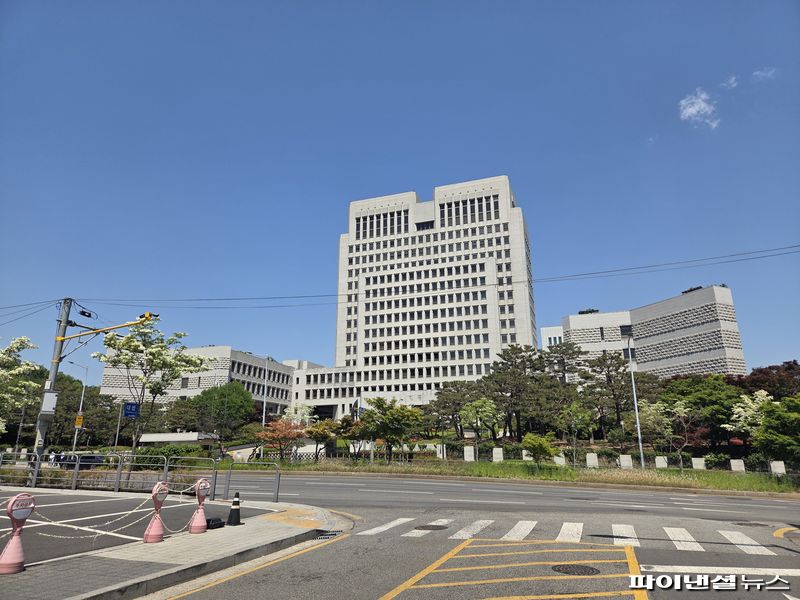
According to legal sources on the 15th, the Supreme Court of Korea’s Second Division, with Justice Park Young-jae presiding over the case, overturned the insult portion of the lower-court ruling on the 12th of last month and remanded the case to the Daegu District Court. The ruling had sentenced YouTuber A, who was indicted on charges of insult and defamation, to eight months in prison suspended for two years.
In October 2023, A got into an argument with B, a woman in her 20s who was hospitalized in the same ward at a clinic where A was also receiving treatment. The dispute began after B turned off the ward lights because the glare bothered her while she was looking at her phone in bed, and unplugged a shared telephone to charge her own phone. A pointed this out, but when B did not accept the criticism, A became emotional and said, “You’re human trash,” in front of other patients.
Separately, A was also indicted on charges of defaming public officials by putting up a banner on a road near the Seoul Detention Center in 2021. The banner contained false claims suggesting that police officers and correctional officers had accepted money and allowed illegal businesses to operate.
The central issue at trial was whether an emotionally charged remark made during an argument could be considered an insult under the Criminal Act. In an insult case, the term refers not simply to language that hurts another person’s feelings, but to an abstract judgment or expression of contempt that could lower a person’s social standing.
Both the first and second trials found A guilty of insult. The first trial found A guilty of all the defamation charges as well and sentenced A to 10 months in prison suspended for two years, along with 120 hours of community service. The second trial upheld the guilty verdict but partially accepted the claim that the sentence was excessive, reducing it to eight months in prison suspended for two years.
The Supreme Court of Korea reached a different conclusion. The court ruled, “If an expression is not a hateful insult that seriously infringes on a person’s personal rights or humiliates the other person to the extent of degrading their personal dignity, but is merely rude and discourteous, or a mild abstract expression or insult that may make the other person uncomfortable, it does not meet the elements of the offense of insult.”
The court continued that the remark was a one-time, spontaneous and impulsive statement made while A was harshly expressing dissatisfaction or anger in response to B’s conduct. It could be viewed as an expression that hurt B’s subjective feelings and infringed on her sense of honor, but it was difficult to conclude objectively that it constituted an insulting act capable of lowering the social evaluation of B’s personal worth, the court said.
The court added, “Expressions that constitute a momentary expression of emotion should be approached cautiously before the state’s penal power is brought to bear through the standards of criminal insult, unless they are expressions based on discrimination or hatred concerning gender, race, disability or sexual orientation.”
The ruling means that courts should not determine whether an insult has been committed by examining the expression alone, but should also consider the circumstances that led to the remark and the specific context in which it was made. The Supreme Court of Korea reached similar conclusions in rulings issued in August 2022 and May of this year.
[email protected] Kim Dong-gyu Reporter