"AI Is About Speed": LG Reaps the Benefits of Koo Kwang-mo’s Business Restructuring as Three Electronics Affiliates Post Strong First-Half Results
- Input
- 2026-09-16 16:45:36
- Updated
- 2026-09-16 16:45:36
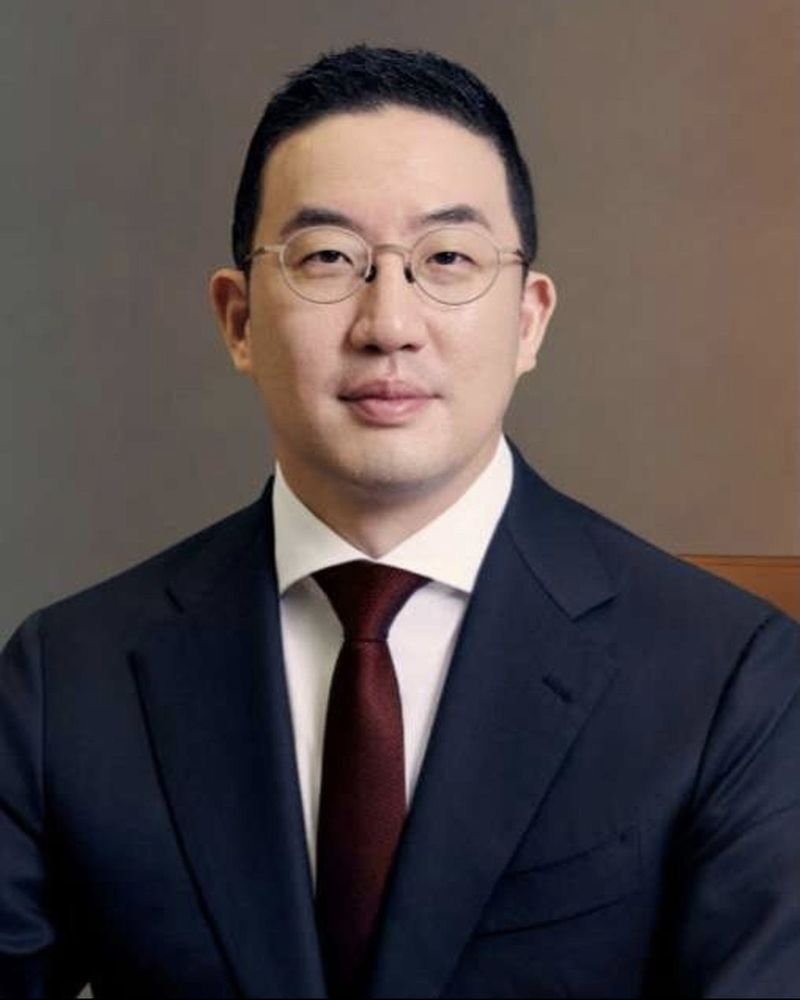
"The future of a company depends on how it understands and responds to changes in artificial intelligence (AI). The most important thing is speed. (March 2026 meeting of senior executives)"
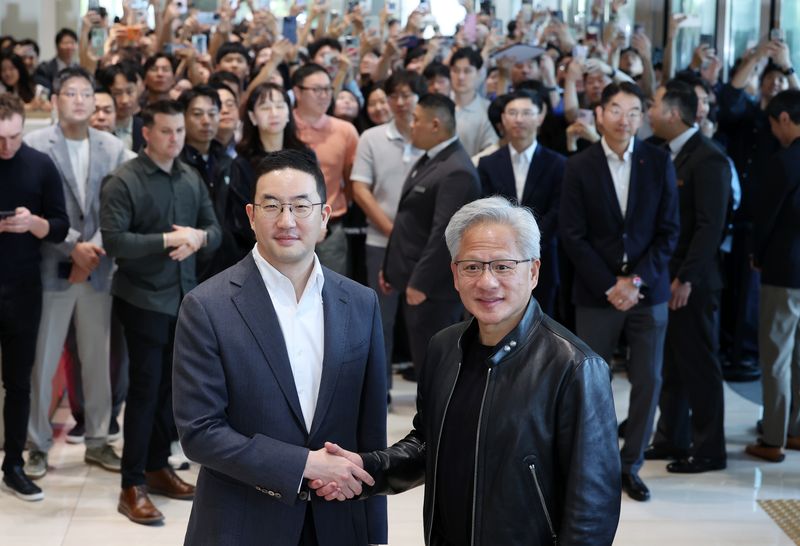
"We will accelerate the spread of AI by building references that lead the industry. (August 2026 meeting with Jensen Huang, CEO of NVIDIA)"
[Financial News] As Koo Kwang-mo, chairman of LG, emphasizes the "race for AI speed," LG Group is strategically nurturing future businesses that generate synergies through AI-centered technological integration among its affiliates. In particular, over the eight years since taking office, Koo Kwang-mo has boldly restructured the group by exiting noncore and underperforming businesses and focusing on future businesses such as AI and profitable business-to-business (B2B) operations. The restructuring has also led to improved results.■ Eight years of business restructuring... LG reassessed as an AI companyAccording to business sources on the 16th, Koo Kwang-mo has spent the eight years since taking office intensively restructuring LG’s business portfolio. He has nurtured future businesses capable of maximizing synergies by concentrating investment on necessary businesses with competitive strengths and combining technologies among affiliates around AI. The strategy is based on a decision to strengthen the market dominance of core businesses while creating differentiated value in future fields such as AI, biotechnology and cleantech, turning them into new growth engines.
A representative future business envisioned by Koo Kwang-mo for LG is its collaboration with NVIDIA. Last month, Koo Kwang-mo met Jensen Huang, CEO of NVIDIA, at the company’s headquarters in the United States and signed a memorandum of understanding (MOU) for strategic business cooperation in robotics, AI factories and mobility.
LG plans to bring together technologies from its affiliates for next-generation bipedal humanoid robots based on NVIDIA Isaac GR00T, including actuators from LG Electronics, sensors from LG Innotek and batteries from LG Energy Solution. In the AI factory sector, it also plans to combine LG’s cooling technology with NVIDIA’s AI infrastructure. In other words, Koo Kwang-mo is placing emphasis on creating synergies through organically integrated businesses among affiliates.
The market is also reassessing LG as an AI company. LG Electronics, LG Innotek, LG Display, LG Energy Solution and LG CNS each possess capabilities in robot devices, sensors, displays, batteries and AI solution deployment, respectively. Analysts say the value of connections among these businesses could grow as AI expands into the physical world.■ Record-high first-half operating profitKoo Kwang-mo’s intensive business restructuring and cultivation of future businesses are translating into improved results for LG Group’s three electronics affiliates.
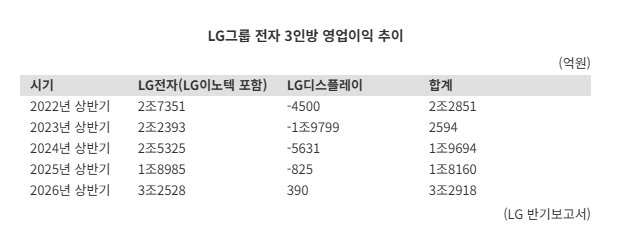
According to LG’s semiannual report, LG Electronics, LG Display and LG Innotek posted combined first-half operating profit of approximately 3.2918 trillion won, the highest since 3.9408 trillion won in 2021, when they benefited from the COVID-19 boom. LG Electronics, in particular, achieved record-high first-half revenue and operating profit this year.
LG Electronics recorded first-half revenue of 47.5569 trillion won and operating profit of 3.2525 trillion won, up 9.4% and 71.3%, respectively, from the same period last year. LG Electronics’ first-half operating profit alone surpassed its full-year operating profit from last year.
LG Electronics’ performance is attributed to expanding the share of highly profitable B2B businesses, including vehicle components and heating, ventilation and air conditioning (HVAC), while restructuring its portfolio around premium products. The Vehicle Solution Business Division (VS), which oversees LG Electronics’ vehicle-components business, exceeded 3 trillion won in quarterly revenue for the first time in the first quarter of this year. It followed that with revenue of 3.0259 trillion won in the second quarter, bringing its cumulative first-half revenue above 6 trillion won. Profitability has also clearly improved, with its operating margin exceeding 6%.
LG Innotek recorded first-half revenue of 11.0621 trillion won and operating profit of 541.1 billion won as demand for high-value camera modules for mobile devices grew and shipments of substrates for AI semiconductors increased. If LG Innotek’s annual operating profit exceeds 1 trillion won this year, it will return to the 1 trillion-won operating-profit club for the first time in four years, since 2022.
LG Display reduced the share of liquid-crystal displays (LCDs) and expanded sales of high-value organic light-emitting diode (OLED) products, recording cumulative first-half revenue of 11.1461 trillion won and operating profit of 39 billion won. Considering that LG Display had posted second-quarter losses for four consecutive years since 2022, the result is being viewed as a meaningful return to profitability after five years.
[email protected] Park So-hyun Reporter