68 Campaign Pledges by Kim Sang-wook, Mayor of Ulsan, to Be Reviewed and Adjusted Directly by Citizens
- Input
- 2026-09-15 14:56:02
- Updated
- 2026-09-15 14:56:02
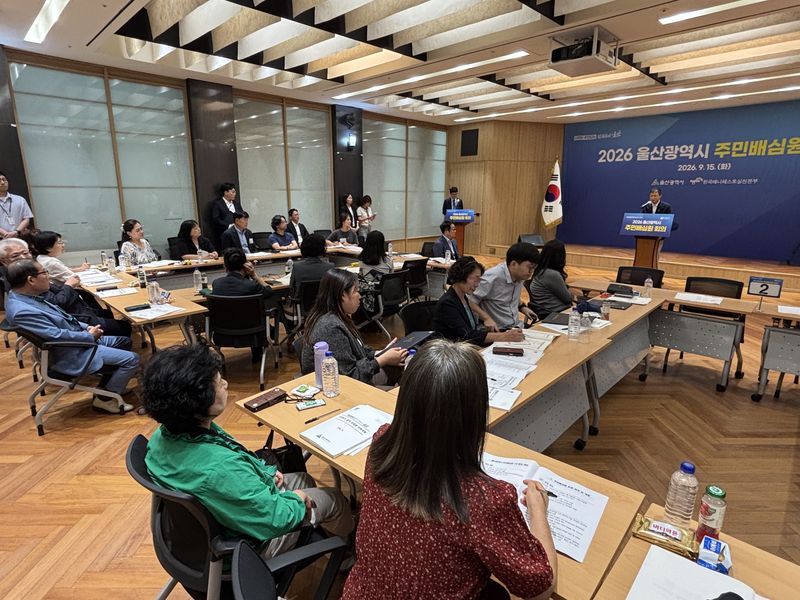
【Financial News Ulsan=Reporter Choi Soo-sang】 The resident jury tasked with directly reviewing and adjusting detailed implementation plans for the campaign pledges of Kim Sang-wook, Mayor of Ulsan, during his ninth popularly elected term has officially begun its activities.
Ulsan Metropolitan City held the first resident jury meeting on the 15th at the Citizens’ Hall of the Ulsan Metropolitan Council, with about 80 people in attendance, including Kim Sang-wook, Mayor of Ulsan, resident jurors, and officials from the Korea Manifesto Center.
In the June 3 local elections, then-candidate Kim Sang-wook had presented eight strategic tasks, including “improving citizens’ mobility rights” and “an AX transition in industry that respects labor,” along with 68 related action tasks, or campaign pledges.
The resident jury meetings will revise and supplement the implementation plans for the action tasks to be pursued during the four-year ninth popularly elected term so that they reflect practical conditions. Following the first meeting, discussions by subcommittee will be held on the 29th, followed by the drawing of conclusions on October 13. After three meetings in total, the jury will prepare comprehensive recommendations and deliver them to Ulsan Metropolitan City.
The resident jury was selected through random draws based on the proportional distribution of the population by region, gender, and age among Ulsan residents aged 18 and older. This time, the jury consists of 70 members, 20 more than the previous 50, in an effort to expand citizen participation.
A city official explained, “The Korea Manifesto Center directly organized the process, calling people at random to ask whether they were willing to participate and selecting the jurors. Neutrality was ensured by excluding politically affiliated individuals and those with vested interests.”
Meanwhile, resident jury meetings were introduced in 2015 to enhance the democratic nature of decision-making through direct citizen participation and ensure transparency in the formulation and implementation of campaign pledges.
[email protected] Choi Soo-sang Reporter