Wearables to Detect Heat-Related Illness in Firefighters Early; Advance Warnings for Abnormal Heart Rates and Body Temperatures
- Input
- 2026-09-15 13:56:39
- Updated
- 2026-09-15 13:56:39
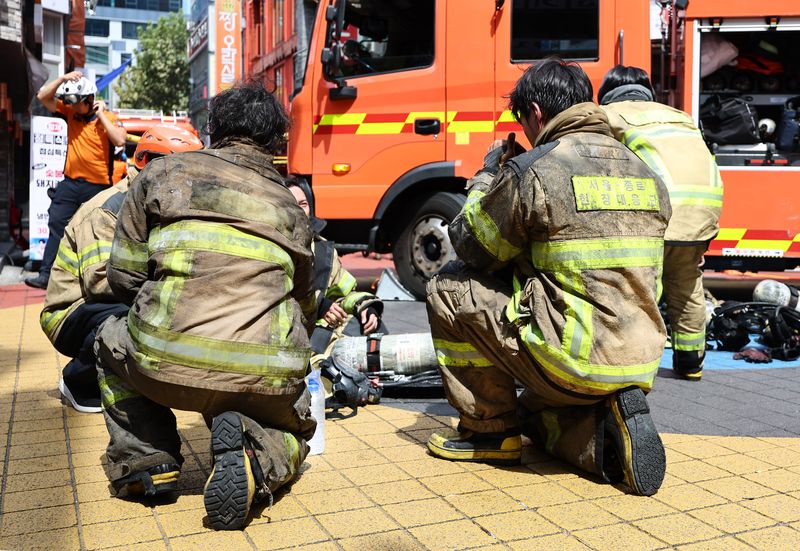
[Financial News] A technology is being developed to monitor firefighters’ heart rates and body-temperature changes in real time at fire scenes and provide advance warnings of heat-related illness risks. Rather than responding only after firefighters experience abnormal symptoms, the system will use wearable sensors to detect changes in biometric signals and issue warnings before the risk reaches a dangerous level.
The National Fire Research Institute announced on the 15th that it will invest KRW 500 million over the next three years to develop an early-warning system for heat-related illnesses among firefighters.
When firefighters wear wearable sensors, their heart rates, electrocardiograms and core temperatures will be measured in real time. The system will jointly analyze biometric signals collected by multiple sensors to determine how much heat exposure firefighters have experienced and assess their risk of heat-related illness.
The institute will focus on establishing warning criteria that can be applied in the field. It plans to determine what degree of change in biometric signals should be considered a danger sign and build a system that alerts firefighters before they enter a high-risk stage.
The first field test has also begun. From the 14th to the 17th, the institute is conducting an experiment involving about 30 firefighters at a live-fire training site at the Gyeonggi Fire Service Academy. The study measures heat stress and changes in biometric signals among firefighters training in high-temperature conditions similar to those at actual fire scenes.
Kim Yeon-sang, president of the National Fire Research Institute, said, "Preventing heat-related illnesses among firefighters is an essential and urgent task amid heat waves that are worsening every year. We will continue investing in the research and pursuing field-oriented health and safety studies so that the results can be used to protect firefighters’ lives on the ground."
[email protected] Lee Bo-mi Reporter