Tokyo to See 100 Driverless Taxis as Waymo Launches Commercial Service Next Year
- Input
- 2026-09-15 12:28:56
- Updated
- 2026-09-15 12:28:56
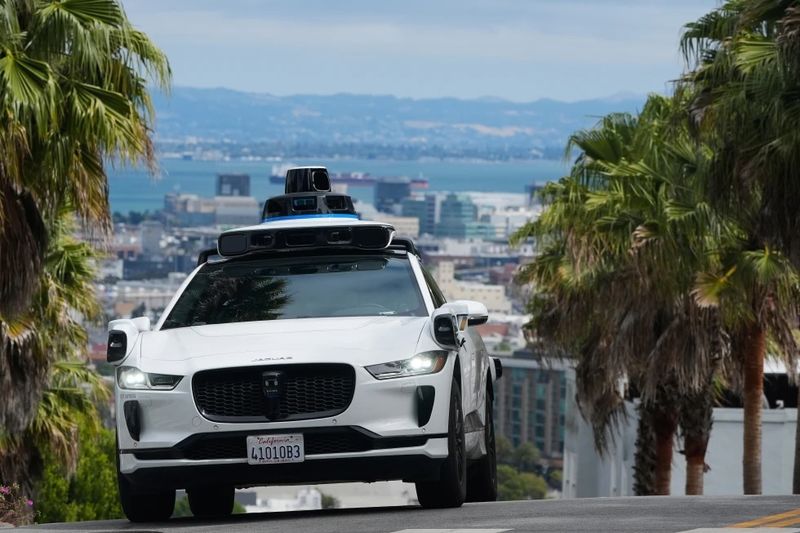
【Financial News Tokyo = Correspondent Hye-jin Seo】Waymo, the autonomous-driving subsidiary of Alphabet, will begin commercial operations of fully driverless robotaxis in Tokyo in 2027. Japan is now entering the robotaxi market in earnest, following the lead of the United States and China.
According to Nihon Keizai Shimbun on the 15th, Waymo announced that it would operate driverless robotaxis in Tokyo and gradually expand the fleet to 100 vehicles. Fares will follow the current approved taxi fare system.
Tekedra Mawakana, co-CEO of Waymo, said, "We believe it is important to achieve fully autonomous driving when providing services to passengers." There had initially been speculation that a human driver might sit in the driver's seat during the early stages of operations in Japan.
The Jaguar I-PACE electric vehicle will be deployed for commercial service. Users will be able to hail vehicles through the taxi-booking app GO and the Waymo app. Japan's largest taxi operator, Nihon Kotsu, will oversee operations, including vehicle management and maintenance.
The vehicles use cameras, radar and LiDAR to perceive their surroundings. Mawakana said, "They are adapting smoothly even to Tokyo's crowded streets and narrow alleyways."
Waymo currently operates driverless robotaxis mainly across 15 cities in the United States, with more than 500,000 rides per week. In Japan, it has conducted autonomous-driving pilot tests with GO and Nihon Kotsu since December 2024.
Wayve Technologies, a British competitor, is also scheduled to begin test operations in Tokyo in the second half of this year in partnership with Nissan, Uber and Hinomaru Kotsu.
Because Japan restricts ride-sharing, taxi companies holding passenger-transportation licenses must operate robotaxis. This has led to a partnership structure in which Waymo provides autonomous-driving technology while Nihon Kotsu runs the business.
Japan's taxi industry, which has opposed the full legalization of ride-sharing, is also supportive of robotaxis. They could help ease driver shortages and address gaps in transportation services. Ichiro Kawanabe, chairman of the National Hire-Taxi Federation, said, "Robotaxis could be the answer to problems involving accidents, labor shortages and transportation gaps."
Regulation and profitability, however, remain challenges. Operating Level 4 vehicles without drivers requires safety reviews of the vehicles and autonomous-driving systems, as well as approval from the public safety commissions in each region. Operators must also present plans covering operating areas and hours, weather conditions, remote monitoring and accident response. Some have warned that taxi companies could struggle to secure profits if they must also pay Waymo technology licensing fees.
Consumer concerns also persist. In a survey of 3,000 Japanese people conducted by MM Research Institute in June, about half expressed concerns about robotaxi safety. Liability in the event of an accident during driverless operation has also yet to be clearly established.
[email protected] Hye-jin Seo Reporter