"Why Does It Bulge Only When a Child Cries?"—The Mystery of Pediatric Hernias [Health Talk]
- Input
- 2026-09-15 10:52:03
- Updated
- 2026-09-15 10:52:03
[Financial News] Repeatedly appearing and disappearing groin bulges should not be ignored, as they can lead to an emergency in which the intestine becomes trapped and develops necrosis.
A hernia is a condition in which part of the intestine or tissue inside the abdominal cavity protrudes through a gap in the abdominal wall or a passage that has not closed. Most hernias in children are inguinal hernias that occur in the groin. They often develop when a passage formed during fetal development fails to close completely after birth.
Fast Recovery Without Scars... Laparoscopic Surgery Becomes the Standard
During fetal development, a passage forms between the abdomen and the groin. In boys, the testicles pass through this passage as they descend from the abdomen into the scrotum. Normally, the passage closes around the time of birth. In some children, however, it remains partially open, allowing the intestine or other abdominal tissue to protrude and cause a hernia. The condition is more common in boys than in girls, and the risk is higher in premature infants born at an earlier gestational age. The most common symptom of a pediatric inguinal hernia is a bulge in the groin.
Professor Bu Yoon-jung, a pediatric surgeon at Korea University Anam Hospital, explained, "The bulge may not be noticeable normally, but it can appear when a child cries, coughs, or strains, and may go back in when the child rests comfortably. Because the symptoms often appear and disappear, caregivers may fail to recognize the condition or may not consider it serious."
The disappearance of the bulge does not mean that the hernia itself has gone away. An emergency can occur if the protruded intestine or tissue becomes trapped and cannot return to its original position. If the bulging area suddenly becomes hard, swollen, or red, does not go back in, and the child becomes extremely fussy or develops vomiting, abdominal pain, or refuses to feed, incarceration should be suspected. If incarceration persists, blood flow to the intestine can be blocked, leading to intestinal damage or necrosis. Prompt medical evaluation and treatment are therefore necessary.
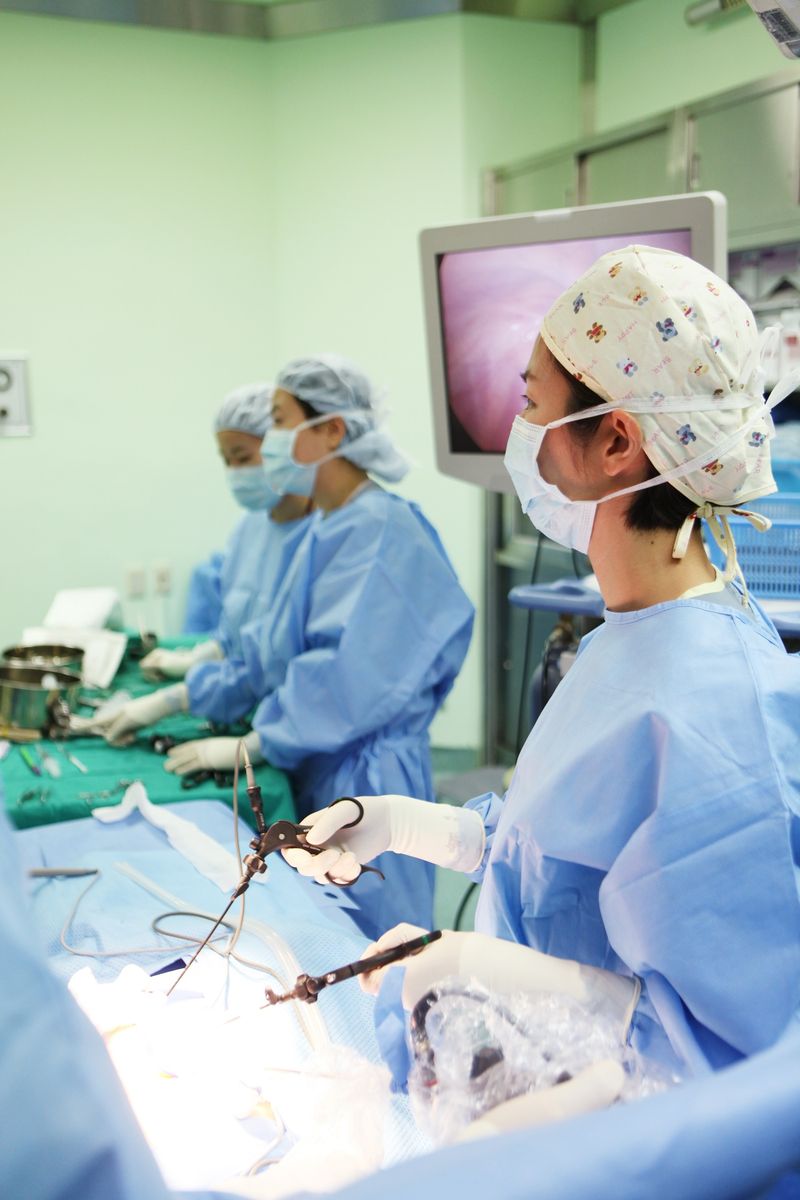
Pediatric inguinal hernias are treated with surgery. The surgical method is determined based on the child’s age and health, as well as the hernia’s location and whether it affects both sides. Recently, laparoscopic surgery, which leaves little scarring and allows rapid recovery, has been widely performed. Because laparoscopic surgery uses small incisions to insert a camera and surgical instruments, scarring is minimal and recovery is quick. Surgeons can also examine the opposite groin during the procedure, enabling accurate diagnosis of bilateral hernias and more precise surgery.
Check Both Sides When Changing Diapers... Early Detection Is Best
Early detection is important for pediatric hernias. When changing a diaper or bathing a child, caregivers should check whether the groin and scrotum look symmetrical on both sides. It is also helpful to see whether one side of the groin repeatedly bulges when the child cries or strains. If the groin repeatedly protrudes or a lump can be felt, the child should be examined by a specialist.
Professor Bu advised, "Pediatric hernias are conditions for which caregivers can relatively easily notice abnormal signs in daily life. When changing a diaper or bathing a child, check the appearance of both sides of the groin. If one side is repeatedly seen bulging, taking a photo or video and showing it to the medical staff during the appointment can also be helpful."
Meanwhile, Professor Bu was the first in South Korea to introduce and perform laparoscopic surgery for pediatric hernias. Since then, minimally invasive laparoscopic surgery for pediatric hernias has been widely performed nationwide and has become a major surgical method for treating the condition.
[email protected] Medical Specialist Jung Myung-jin Reporter