Jeju Bus Wi-Fi Capacity Increased 50% to 300 TB per Month to Reduce Sharp Speed Slowdowns
- Input
- 2026-09-15 10:22:49
- Updated
- 2026-09-15 10:22:49
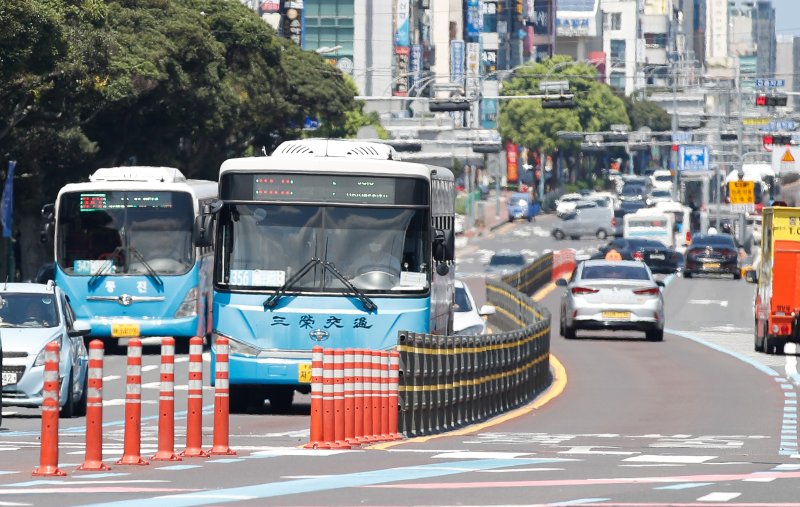
【Financial News Jeju = Jeong Yong-bok, reporter】 The monthly public Wi-Fi data allowance available on buses in Jeju Province has increased by 50%, from 200 TB to 300 TB. The capacity was expanded after cases of slower service emerged as increased bus ridership and greater data use, including video streaming, led passengers to consume the entire monthly allowance.
According to Jeju Special Self-Governing Province on the 15th, the province has operated public Wi-Fi on 848 buses across Jeju Province with a monthly data allowance of 300 TB since the 1st.
The previous monthly allowance was 200 TB. Calculated per bus, the capacity has increased by approximately 50%, from 241 GB to 362 GB per month.
The key point is that the province has not merely increased the number of free Wi-Fi installations; it has also expanded data capacity to match the rise in actual usage.
Previously, internet speeds slowed when data used on buses exceeded the monthly allowance. Connections did not shut down entirely after the basic data was consumed, but speeds were restricted, causing considerable inconvenience when passengers watched videos or accessed large files. Jeju Special Self-Governing Province expects the expansion to improve the on-the-go internet experience, including web searches and video streaming.
The increase in bus ridership also drove up data demand. The number of bus passengers in Jeju Province rose from 50.37 million in 2020 to 62.31 million last year, an increase of 11.94 million. The growth rate over the four-year period was approximately 23.7%.
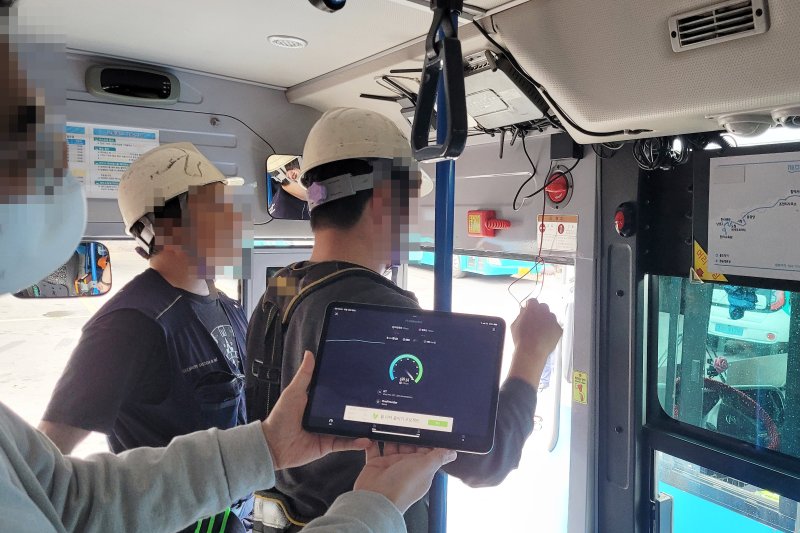
The average number of passengers per day last year was approximately 170,000. Because buses in Jeju are used not only for commuting and school travel but also by tourists, onboard public Wi-Fi serves as communications infrastructure for daily life and tourism. Free Wi-Fi can particularly improve internet access while traveling for teenagers, older adults, and tourists, who face relatively greater data-cost burdens.
Jeju Special Self-Governing Province is also expanding public Wi-Fi in everyday public spaces beyond buses. This year, it plans to install 185 additional public Wi-Fi units, mainly in alley-type shopping districts, public gyms, and public libraries. Once the new installations are completed, the total number of public Wi-Fi units across the province will rise to 6,300.
The province will also replace a large number of outdated devices. It plans to replace 395 public Wi-Fi units that have been in service for more than five years with the latest equipment, improving connection stability and wireless internet quality.
For public Wi-Fi, actual connection quality and maintenance are more important than the number of installations. Older equipment cannot fully utilize the communications performance of newer devices, and connection delays or slower speeds may occur in crowded locations.
Accordingly, the results of this project are expected to be assessed not by the installation figure of 6,300 alone, but by how much the average speeds users actually experience in buses and public spaces improve, how often service disruptions occur, and how much later the data is exhausted.
Jang Cheol-won, director of the Future Industry Bureau of Jeju Special Self-Governing Province, said, "Public Wi-Fi is important infrastructure that improves the digital convenience of residents and tourists. We will expand public Wi-Fi and improve its quality in line with demand to create a stable user environment."
[email protected] Jeong Yong-bok Reporter