Chinese Graduate Student Who Produced More Than 1,000 Deepfake Sexual Exploitation Materials Sentenced to 18 Months in Prison; Both Sides Appeal
- Input
- 2026-09-15 13:56:08
- Updated
- 2026-09-15 13:56:08
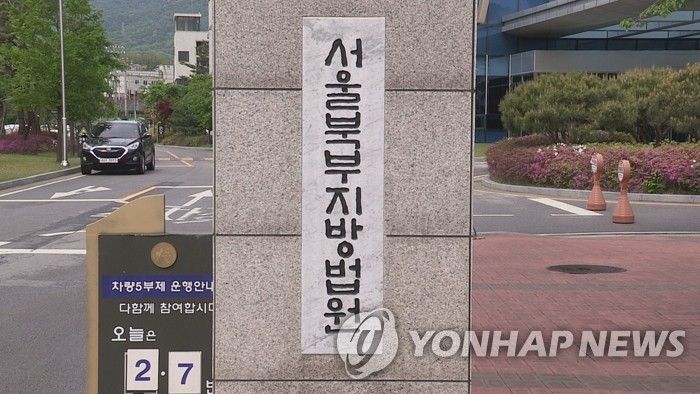
According to legal sources on the 15th, prosecutors submitted an appeal the previous day to the Seoul Northern District Court’s Criminal Division 5 (single-judge panel presided over by Judge Kwon So-yong), which heard the first trial. The attorney representing Defendant A, a 30-year-old Chinese international student, filed an appeal on the 11th. An appeal is a procedure through which a party dissatisfied with a first-instance ruling seeks a new decision from a higher court. The case will proceed to a second trial because both sides appealed.
On the 10th, the court sentenced Defendant A to 18 months in prison for violating the Act on Special Cases Concerning the Punishment of Sexual Crimes, including the habitual editing and distribution of fabricated videos. It also ordered him to complete 40 hours of a sexual-violence treatment program, prohibited him from working for five years at institutions related to children and adolescents or persons with disabilities, and confiscated the seized evidence.
Had both sides not appealed, Defendant A could not have received a harsher sentence at the appellate trial than in the first trial under Article 368 of the Criminal Procedure Act, which establishes the principle prohibiting changes to a judgment to the defendant’s disadvantage. Since Defendant A admitted all the charges, the second trial is expected to focus less on guilt or innocence and more on whether the first-instance sentence was appropriate.
Defendant A was indicted for allegedly producing 1,141 deepfake sexual exploitation materials over six months beginning in November last year by compositing the faces of seven victims, including laboratory colleagues. Investigators also found records showing that he had searched for ways to bypass the safety measures of the generative artificial intelligence (AI) service Grok.
The court noted, "Considering the circumstances and content of the crime, including repeatedly editing, compositing, and manipulating images of the victims, who were students in the same university laboratory, the nature of the offense is poor and his criminal responsibility is grave," adding, "He has not received forgiveness from the victims."
However, the court took into account as favorable circumstances that the defendant acknowledged his wrongdoing and was remorseful, and that there was no evidence indicating that the edited or composited photos and videos had actually been distributed. It also considered that he had no prior record of punishment in South Korea and had deposited 7 million won for each victim with the court.
During the trial, Defendant A’s side admitted all the charges and requested leniency, saying that he was remorseful. The defense emphasized that a total of 49 million won, or 7 million won each, had been deposited with the court as compensation for the seven victims’ emotional damages. It also argued that the images he produced had not been sent to third parties or distributed through social media and other channels.
The victims’ side, however, called for severe punishment, saying they had suffered extreme fear and trauma. Prosecutors had previously sought a three-year prison sentence for Defendant A and asked the court to order the disclosure and notification of his personal information, restrictions on employment at institutions related to children, adolescents, and persons with disabilities, and completion of a sexual-violence treatment program.
[email protected] Seo Ji-yoon Reporter