"Shin Ramyun Tastes Better When Made at the Gumi Plant? An Outright Betrayal"—YouTuber Conducts Direct Test, Eyes Widen
- Input
- 2026-09-15 14:52:27
- Updated
- 2026-09-15 14:52:27
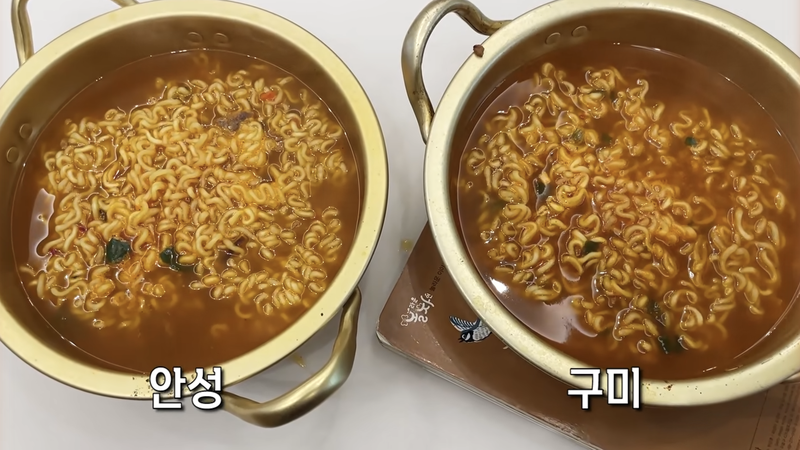
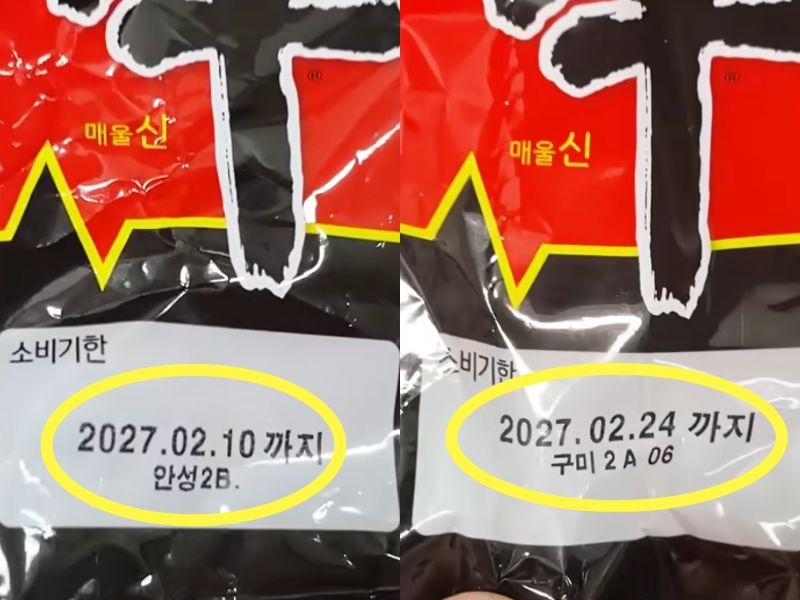
[Financial News] Amid a growing online rumor that Shin Ramyun tastes different depending on the production plant—and that products made at the Gumi plant taste better—a YouTuber who formerly worked as a comedian for KBS has drawn attention by releasing a video in which he cooked and compared products from the two plants himself.
Rumor Says “Anseong Plant vs. Gumi Plant” Shin Ramyun Tastes Different; YouTuber Conducts Direct Test
Jung Yunho, a former KBS comedian who runs the YouTube channel “Yoonhojji,” uploaded a video on the 13th titled “This Is an Outright Betrayal! I Guess I’ll Have to Move Down South.” As of the 15th, the video had received about 290,000 views and roughly 1,150 comments, quickly spreading across various online communities.
In the video, Jung explained why he conducted the test: "I saw a post online saying, ‘Shin Ramyun made at the Gumi plant tastes good.’ I wondered where that could be true, so I checked the comments, and people said it really was." He added, "A lot of people said the seasoning tastes spicier and better, the noodles are chewier, and the products differ by plant."
He continued, "Maybe because I live in the Seoul metropolitan area, all the ramen I had at home was made at the Anseong plant. I’m going to compare Shin Ramyun made at the Anseong plant, which people in the metropolitan area eat, with Shin Ramyun made at the Gumi plant, which people farther south eat, and see what the difference is."
All Flakes Made at the Daegu Plant; Powdered Seasoning Labeled Separately for Anseong and Gumi
After obtaining products from the Anseong and Gumi plants and opening the packages, Jung found that the dried vegetable toppings, or flakes, in both products were made in Dalseong County, Daegu. However, the powdered seasoning was labeled “Anseong” on the product from the Anseong plant and “Gumi” on the product from the Gumi plant.
As soon as he opened the noodle packages, Jung said, "The noodles from the Gumi plant really have a somewhat stronger smell. The Anseong ones have a milder smell." During cooking, he also pointed out a difference in the toppings, saying, "There are no mushrooms in the flakes from the Gumi plant, but there are mushrooms in the Anseong ones."
To eliminate variables, Jung measured 550 ml of water into each of two same-sized brass pots and cooked the noodles simultaneously, following the instructions on the packages. He also used separate tongs to prevent the flavors from mixing.
"The Grease Sticking to the Spoon Is Different"—Direct Cooking Reveals Differences in Color and Texture
After placing the finished noodles side by side, Jung described them, saying, "The Anseong one is a little lighter, while the Gumi one is somewhat darker. It feels like there’s something resembling chili oil floating on top."
After tasting the broth from the Anseong plant product first, Jung said, "It tastes like classic Shin Ramyun—the familiar spicy flavor." But after tasting the Gumi plant product, he expressed surprise: "It’s really different. It has a somewhat richer, oilier flavor. So there really is a difference between plants."
Regarding the noodles, he concluded, "The flavor has soaked more deeply into the noodles from the Gumi plant, and they’re slightly chewier. Isn’t this a betrayal? The Gumi one tastes better."
However, he added, "People’s tastes vary widely, so some may find the Anseong one better. But by my standards, it definitely seems that they taste different."
"Thanks to the Newest Equipment" vs. "Label the Plants"—Online Users Debate
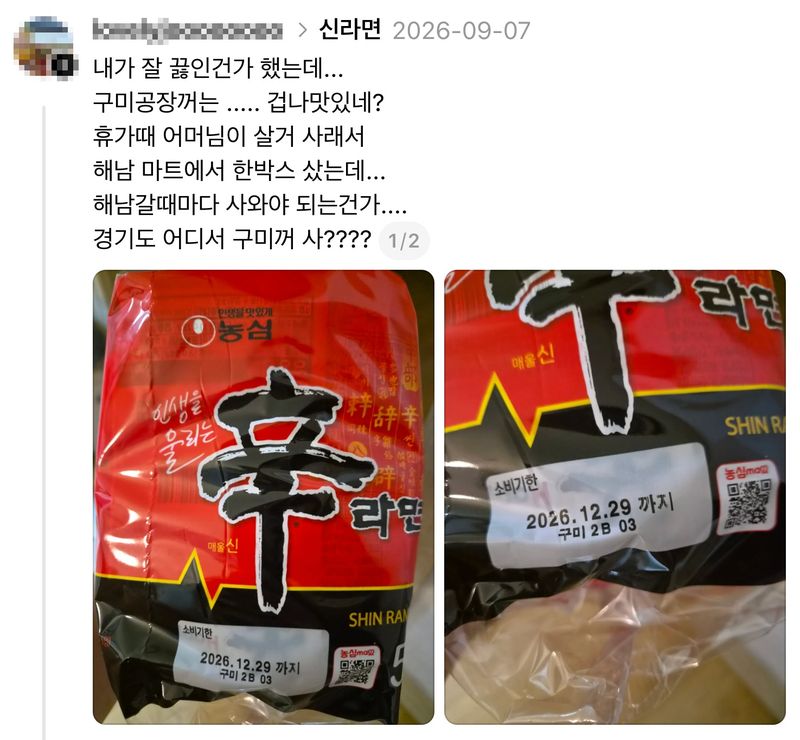
The rumor that “Shin Ramyun made at the Gumi plant tastes better” began with a post uploaded to a social media thread on the 7th. User A wrote, "I wondered whether I had simply cooked it better, but the one from the Gumi plant was genuinely delicious. I bought a box at a supermarket in Haenam County during my vacation. Do I have to buy it every time I go to Haenam County? Where can I buy the Gumi one in Gyeonggi Province?"
The post prompted a series of comments from users who turned over the Shin Ramyun packages at home to check which plant had made them.
Two days later, User A added a message exchange, writing, "I asked a friend who works at Nongshim’s Anseong plant." In the screenshot, the acquaintance said that the plants producing Shin Ramyun were “Gumi and Anseong,” adding, "I heard the Gumi one tastes better. They say the water quality is good."
Reactions grew even stronger after Jung’s test video was released. YouTube comments included, "I wondered whether a major company could really do that, but the visuals look so different from the start that I can’t deny it," "Even on screen, the Gumi one looks redder and richer in color," and "I moved from Daegu to Seoul and thought Shin Ramyun had started tasting worse. It could be a difference between the plants."
The debate has also spread online over the quality control of Nongshim, the manufacturer. One online community user argued, "If they taste different, they are different products, so the packages should say ‘Anseong Shin Ramyun’ and ‘Gumi Shin Ramyun.’"
Others countered, "There is no difference in the ingredients or recipe by plant; it ultimately comes down to the equipment. The Gumi plant was built most recently, so it has the newest equipment." Another theory suggested, "It may not be a difference between plants, but a difference between freshly produced ramen and ramen nearing its expiration date."

[email protected] Seong Min-seo Reporter