Fed Faces a No-Win Situation: Rate Hike Could Hit Stocks, Hold Could Hurt Bonds
- Input
- 2026-09-15 14:11:07
- Updated
- 2026-09-15 14:11:07
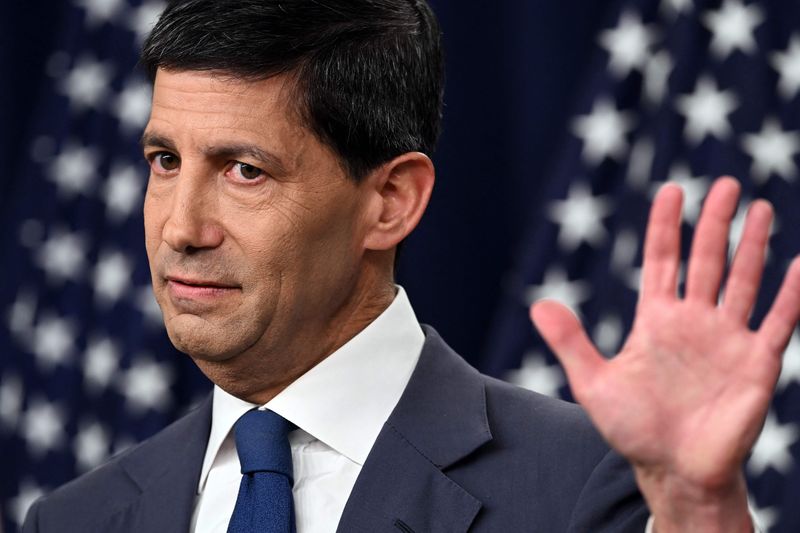
[Financial News] The Federal Reserve System (Fed) is scheduled to announce its interest-rate decision at 3 a.m. on the 17th Korea time, and analysts say either outcome could be negative for investment markets. If the Fed raises rates for the first time in about three years, U.S. stocks could plunge by approximately 10%. If it holds rates steady, long-term bond prices could collapse.
A Rate Hike Could Trigger an 8–10% Correction in the S&P 500
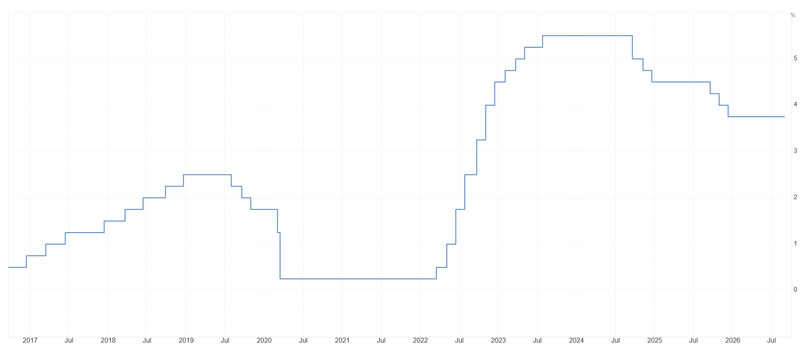
Dean Curnutt, CEO of MacroRisk Advisors (MRA), a U.S. research firm that provides financial advice to international institutional investors, warned about the impact of a rate hike in an investment report sent to clients on the 11th local time. The Fed has held its benchmark interest rate steady at 3.5–3.75% for five consecutive meetings this year. On the 14th, an analysis of trading patterns among U.S. interest-rate futures traders using the CME FedWatch Tool, a market-analysis tool provided by the Chicago Mercantile Exchange (CME), showed that the probability of the Fed raising its benchmark rate by 0.25 percentage point this month stood at 93.5%. The probability of a hold was estimated at 6.5%. If the Fed raises rates, it would be the first hike in about three years, since July 2023.Curnutt cited the Standard & Poor’s (S&P) 500 in his report and said, "We expect the S&P 500 to undergo an 8–10% correction if rates rise, with a possibility of a second decline in December."
The S&P 500 has fallen by approximately 1% since the start of September. Curnutt noted that if Kevin Warsh, who took office as Fed chair in May, signals a shift toward tighter policy through this rate hike, it could change not only stock prices but also the way companies themselves are valued. He warned that the profit margins of companies unable to pass higher interest rates and rising costs on to consumers could shrink. If those changes lead to weaker earnings forecasts, the correction in the stock market could deepen. He said a rate hike "would pressure the margins of companies that cannot pass costs on to consumers," adding that it could also trigger a volatility shock because the market is not sufficiently prepared.
Curnutt noted that the S&P 500, which reached its annual high in September 2018, plunged by approximately 10% in October and November after the Fed raised its benchmark rate by 0.25 percentage point that month. The S&P 500 fell further in December of the same year, immediately after another Fed rate hike, dropping nearly 20% from its peak. Curnutt forecast that this year, too, the S&P 500 could first undergo an 8–10% correction and then decline again in December in response to multiple Fed rate hikes.
A Hold Could Damage the Fed’s Credibility and Send Long-Term Bond Prices Lower
BlackRock, the world’s largest asset manager, said in its weekly market outlook posted on its website on the 14th that another Fed rate hold would create two problems. First, greater uncertainty over the interest-rate outlook would increase the term premium demanded by U.S. Treasury investors. This is the additional compensation investors demand for holding longer-maturity bonds compared with short-term bonds. A higher term premium ultimately means that long-term Treasury prices fall more than short-term bond prices in the Treasury market. The price of 30-year U.S. Treasuries had already fallen this month to its lowest level in 19 years, while 10-year Treasury bonds also reached a 19-year low as of the 15th.The second problem is the Fed’s credibility. The reason the probability of a rate hike on the CME FedWatch Tool exceeded 90% is that the Fed had repeatedly raised the possibility of a hike. At the Jackson Hole Economic Policy Symposium on August 28, Warsh said U.S. inflation was "concerning." Referring to the 3.7% increase in the U.S. personal consumption expenditures (PCE) price index recorded in July, he said, "The 2% PCE inflation target has not changed, and price stability is the Fed’s mission." He also stated, "If inflation does not return to 2%, there is more work to do." Meanwhile, markets assessed that the Fed faced less pressure to maintain a tight policy after nonfarm payrolls announced on the 4th showed an increase of 162,000 from the previous month in August, exceeding expectations.
Lauren Moran, a bond portfolio manager at Wellington Management, said the best course would be to "actually show that it is serious about responding to rising inflation." She noted that the Fed needs to raise rates to stabilize the term premium in the bond market and strengthen its credibility.
However, whether Warsh raises rates or holds them steady, he cannot avoid a clash with U.S. President Donald Trump, who wants rates cut. At a press conference on the 13th, Trump emphasized the possibility of a Fed rate hike, saying, "The U.S. economy is so strong that, regardless of their formula, we should have the lowest interest rates in the world." Bill Campbell, a portfolio manager at U.S. asset manager DoubleLine, analyzed that if Warsh raises rates despite Trump’s pressure, he could demonstrate the Fed’s independence and potentially restore investor confidence in long-term U.S. Treasuries.
[email protected] Park Jong-won Reporter