Justice Party Gangwon Chapter: "AI Data Centers Have Little Employment Impact... Provincial Administration Must Explain"
- Input
- 2026-09-15 09:42:29
- Updated
- 2026-09-15 09:42:29
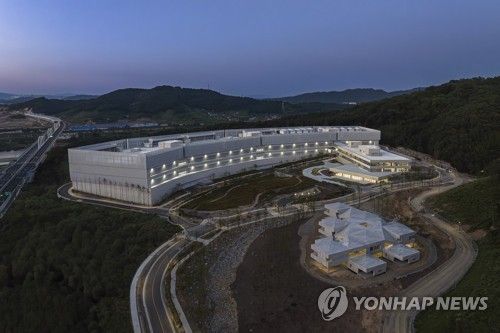
【Financial News Chuncheon=Reporter Kim Ki-seop】The Gangwon chapter of the Justice Party (JP) urged Gangwon State to transparently explain to residents the employment impact and financial burden associated with its efforts to attract AI data centers.
The Gangwon chapter of the JP said in a commentary on the 15th, "Although this project is unlikely to meet residents' greatest expectation—the hiring of local talent—neither the provincial administration nor anyone else has explained this."
The JP cited domestic and international examples showing that data centers are unlikely to create large numbers of jobs. Sejong City projected an employment-inducing effect of 3,064 jobs when it attracted Naver's data center, but only 120 people were actually working there after operations began. The party also claimed that a Brookings Institution analysis in the United States found that the actual increase in jobs in areas that attracted data centers was only about 100 to 200.
Applying the staffing standard disclosed by Meta Platforms—0.2 workers per megawatt—the JP pointed out that Donghae's 2.4 GW would create 480 jobs, Gangneung's 0.4 GW 80 jobs, and Chuncheon's 0.3 GW 60 jobs, totaling only about 620 jobs across Gangwon State. Citing the fact that 11,916 people in their 20s left Gangwon for the Seoul metropolitan area over the past three years, it said, "A deal to create about 600 jobs in a place that has lost 12,000 people cannot stand."
The JP criticized the arrangement, saying Gangwon State would bear the burdens of cooling water, heated wastewater, increased electricity demand and noise, while the benefits would go to capital from the Seoul metropolitan area. Regarding the regionally differentiated electricity pricing system, which applies only to industrial users, it said, "Facilities owned by capital from the Seoul metropolitan area receive discounts created with Gangwon's surplus electricity, while residents' households do not." Referring to the Soyang Dam, it added, "The side that stores the water and the side that uses it have never been the same."
The JP made five demands of Gangwon State and the Democratic Party: disclose, before signing an attraction agreement, binding figures for permanent employment and local hiring targets backed by penalties; disclose the total cost of reinforcing the power grid and the parties responsible for sharing it, while codifying the principle that the party causing the need bears the cost; expand the differentiated electricity pricing system to residential users; disclose water usage and the effects of heated wastewater and noise from the permitting stage and institutionalize procedures for resident consent; and institutionalize the return of development gains to the local community through ordinances.
The Gangwon chapter of the JP said, "If these conditions are not met, Gangwon State must not attract AI data centers," adding, "A project that cannot be explained to residents has no right to proceed."
[email protected] Kim Ki-seop Reporter