Samsung Electronics at 270,000 won and SK hynix at 1.48 million won...Securities Firm Says “Memory Costs Have Reached Their Limit”
- Input
- 2026-09-15 09:33:15
- Updated
- 2026-09-15 09:33:15
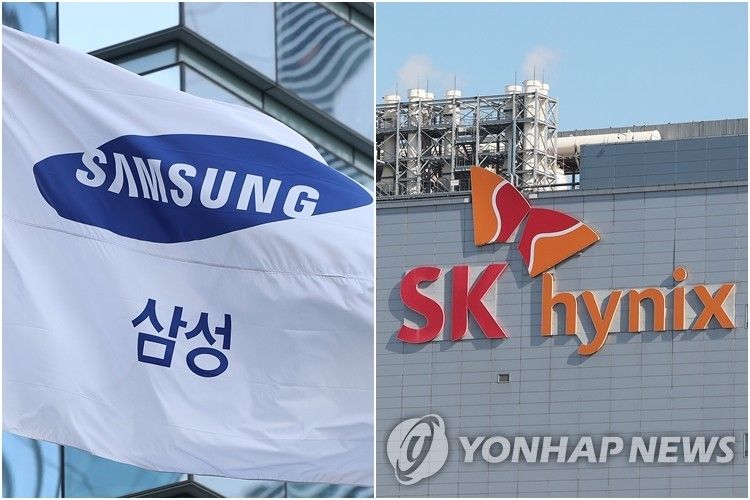
[Financial News] BNK Securities set target prices of 270,000 won for Samsung Electronics and 1.48 million won for SK hynix. Samsung Electronics’ target is less than half the forecasts issued by major securities firms, while SK hynix’s target also differs significantly from market expectations. The assessment reflects concerns that demand could slow not only in PCs and smartphones but also in the server sector as memory prices approach their peak and cost pressures mount.
On the 15th, Lee Min-hwi, a researcher at BNK Securities, assessed Samsung Electronics and SK hynix, saying, "As memory costs have reached their limit, demand elasticity is weakening in servers as well as in information technology (IT) products." He added, "In addition, the share of closed-source models in the large language model (LLM) market has plunged, while price cuts amid intensifying competition have caused the price paid per token to fall by more than half since June."
Lee Min-hwi said this trend "will lead to slower revenue growth and become a factor reducing companies’ ability to purchase semiconductors." He explained, "Google and Meta Platforms are shifting from performance competition toward strategies focused on cost-effectiveness and energy efficiency. OpenAI and Anthropic are also slowing the pace of frontier-model development and focusing on restoring security and reliability."
Regarding Samsung Electronics, Lee Min-hwi viewed its shareholder-return program positively but concluded that it would not be enough to change the stock’s trajectory. He said, "The shareholder-return program is positive, but it is unlikely to affect the stock’s direction," adding, "Expectations for improved profitability in foundry operations, or contract chip manufacturing, remain valid, but much of this appears to have already been reflected in the share price." He continued, "We are lowering the target price from 300,000 won to 270,000 won following downward revisions to earnings," and added, "Because the upside potential is limited, we are also downgrading our investment rating to ‘Hold.’" The target price for SK hynix was maintained at its previous level.
BNK Securities attributed its lower target prices than those of other securities firms to slowing growth in memory prices and a stronger Korean won. Lee Min-hwi said, "Ultimately, Samsung Electronics and SK hynix are expected to post operating profits below market expectations in the third and fourth quarters because of slower growth in memory prices and the stronger won."
He analyzed that the sharp rise in memory prices was also affecting finished-product manufacturers’ strategies. Lee Min-hwi explained, "After an unprecedented surge in memory semiconductor prices pushed memory costs to half of the bill of materials (BOM) for PCs and smartphones, low- and mid-range original equipment manufacturers (OEMs) are reducing memory capacity, while high-end OEMs are raising product prices in the second half of the year." He added, "The same movement is emerging in servers, with NVIDIA and others reducing the HBM and system-memory capacities of next year’s new models from their original plans."
BNK Securities’ forecasts differ substantially from the target prices for Samsung Electronics and SK hynix issued by other securities firms. On the 7th, Mirae Asset Securities set a target price of 400,000 won for Samsung Electronics and forecast 3.1 million won for SK hynix.
Other securities firms also set higher target prices for Samsung Electronics than BNK Securities. KB Securities set a target of 600,000 won, LS Securities 450,000 won, Samsung Securities 400,000 won, and Eugene Investment & Securities 560,000 won. For SK hynix, LS Securities forecast 2.4 million won, Samsung Securities 3 million won, and Hanwha Investment & Securities 3.15 million won.
Compared with other market forecasts, BNK Securities’ target prices are overwhelmingly low. Lee Min-hwi emphasized, "Whatever the motivation, this ultimately shows that demand elasticity is slowing," adding, "The reason memory manufacturers’ supply-and-demand forecasts have repeatedly swung between oversupply and shortages in the past is that demand forecasts, rather than supply forecasts, have always been wrong." He continued, "Macroeconomic conditions are becoming more uncertain, and memory prices are unlikely to rise much further, so demand elasticity is weakening."
[email protected] Han Seung-gon Reporter