MOLIT to Directly Punish Serious Illegal Subcontracting... Enforcement Decree Approved by State Council
- Input
- 2026-09-15 10:34:20
- Updated
- 2026-09-15 10:34:20
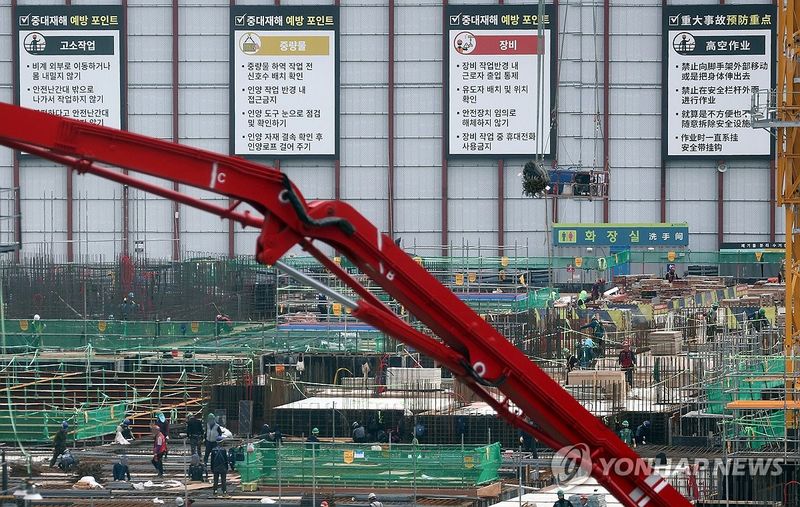
[Financial News] A path has been opened for the Ministry of Land, Infrastructure and Transport (MOLIT) to directly impose sanctions on serious illegal subcontracting at construction sites. New grounds have also been established to reduce penalties when violators report themselves and promptly correct the violations.
MOLIT announced that amendments to the enforcement decrees of the Framework Act on the Construction Industry and the Saemangeum Project Act, containing these measures, were approved by the State Council of South Korea on the 15th.
The amendment to the enforcement decree of the Framework Act on the Construction Industry introduces direct sanctions by the MOLIT minister for serious illegal subcontracting and establishes grounds for reducing administrative penalties for voluntary reporters. It will take effect on the day four months after its promulgation.
Until now, authority to impose administrative sanctions for illegal subcontracting had been delegated entirely to local governments. As a result, even when MOLIT detected illegal subcontracting, the process was delayed by procedures such as reinvestigations by local governments after a request for sanctions and before the final decision. Going forward, MOLIT will directly impose sanctions in cases designated by public notice, taking into account factors such as the entity that detected the violation, the subcontract amount, the type of construction work, the progress rate, and the jurisdiction. Local governments will handle all other cases.
A mechanism to encourage voluntary reporting has also been introduced. Illegal subcontracting contracts need to be promptly corrected through lawful contracts before they lead to harm such as safety accidents, industrial injuries, and unpaid payments. However, incentives to encourage voluntary reporting and correction, apart from on-site inspections, had been insufficient. In the future, if a party voluntarily reports illegal subcontracting within the period designated by the MOLIT minister and completes corrective measures before the administrative sanction is finalized, its business suspension or surcharge may be reduced by up to one-half.
The amendment to the Saemangeum Project Act includes expanded preferential treatment for local companies in Saemangeum projects and improvements to the methods for supplying developed land. It will take effect on the date of its promulgation.
First, construction engineering service contracts under the Construction Technology Promotion Act will be added to the categories eligible for preferential treatment by project operators. This is expected to expand opportunities for construction engineering companies with their principal offices in Jeonbuk State to participate in Saemangeum projects. MOLIT expects greater participation by local companies and a stronger foundation for mutually beneficial development between Saemangeum and the local community, as investment and development in the Saemangeum area are progressing actively and rapidly.
The method for supplying developed land has also been revised. The category of land eligible for private contracts now includes cases in which land is supplied to parties selected according to procedures and methods determined by the head of the Saemangeum Development and Investment Agency. This will allow project proposals, designs, and other elements to be solicited through competitions, reflecting companies’ project plans while ensuring procedural fairness. MOLIT expects the revision to enable competitions for Saemangeum’s complex, three-dimensional development and accommodate a wider range of corporate investment needs.
[email protected] Jung Kyung-soo Reporter