Gangneung Selected for Garden City Development Project; KRW 10 Billion to Be Invested Over Five Years
- Input
- 2026-09-15 09:28:07
- Updated
- 2026-09-15 09:28:07
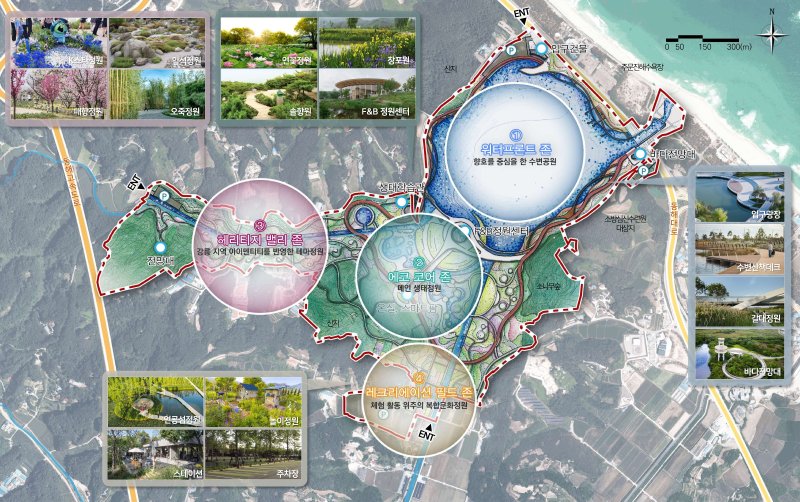
【Financial News Gangneung=Kim Ki-seop】Gangneung will launch a garden city development project to transform the entire city into green ecological and healing spaces.
According to Gangneung on the 15th, the city was finally selected for a garden city development project linked to the Korea Forest Service’s (KFS) Third Basic Plan for Garden Promotion. A total project budget of KRW 10 billion will be invested over five years starting in 2027. The costs will be shared among the national government with KRW 5 billion, Gangwon Province with KRW 1.5 billion, and Gangneung with KRW 3.5 billion. The city plans to establish garden infrastructure across Gangneung and comprehensively develop its garden culture and garden industry.
The project aligns with the key priorities of the KFS’s Third Basic Plan for Garden Promotion. Its core objectives include responding to climate change, promoting biodiversity, expanding green living spaces in urban areas, and fostering the garden industry ecosystem. Beyond simply improving the landscape, Gangneung aims to become a hub for nature-based solutions (NbS) that address urban and environmental issues while improving residents’ quality of life.
The project will initially focus on seven areas: Jumunjin-eup, the planned site of the Hyangho local garden selected in November last year for Gangwon Province’s local-government transfer project competition; Yeongok-myeon; Sacheon-myeon; Hongje-dong; Gyeongpo-dong; Gyo-dong; and Ponam-dong. It will later expand across Gangneung. A total of 21 gardens will be created on a 60,000-square-meter site, including 11 regional hub gardens, five community gardens cultivated jointly by residents, and five climate-response gardens designed to reduce carbon emissions and mitigate the urban heat-island effect. In particular, the city plans to connect the spatial axis with the planned Hyangho local garden, which will serve as a key hub in the northern area, to maximize synergies.
The project will begin with the development of a basic plan and basic design in 2027, followed by detailed design and the development of garden education programs and software in 2028. Full-scale construction, operation, and management will take place from 2029 through 2031.
Gangneung will also work to expand its garden culture into the private sector. It plans to train local garden workers through professional citizen gardener programs and promote garden-related materials and industries by developing a garden tourism platform, holding an Open Garden Festival, and discovering and supporting private gardens.
Kim Joong-nam, mayor of Gangneung, said, "We will complete a distinctive garden city linked to Gangneung’s natural resources, ranging from hub gardens to community and climate-response gardens." He added, "In addition to improving residents’ quality of life, we will secure a new growth engine for the local economy through garden tourism."
[email protected] Kim Ki-seop Reporter