Opening the Door to 20 Years of Jeju Natural Resource Data... Connecting Geology, Ecology, and Climate Research
- Input
- 2026-09-15 08:40:53
- Updated
- 2026-09-15 08:40:53
[Financial News Jeju = Reporter Jeong Yong-bok] Data on rocks, geology and topography, flora and fauna, and climate and environment accumulated over 20 years across Jeju will be made available to external researchers.
According to the Jeju Special Self-Governing Province World Heritage Headquarters on the 15th, the Hallasan Research Department will hold a workshop on the disclosure and utilization of natural resource research data on the 16th at the Ecological Learning Center on Sumokwon-gil, Jeju City, under the theme "Opening Data, Expanding Jeju Research."
The key lies in transforming data that has remained in individual studies and reports despite long-term investigation into a research infrastructure that allows other researchers to re-analyze and combine them.
The data to be made available includes geological and topographical data, flora and fauna, climate and environmental survey data, as well as Geographic Information Systems (GIS) and drone imagery.
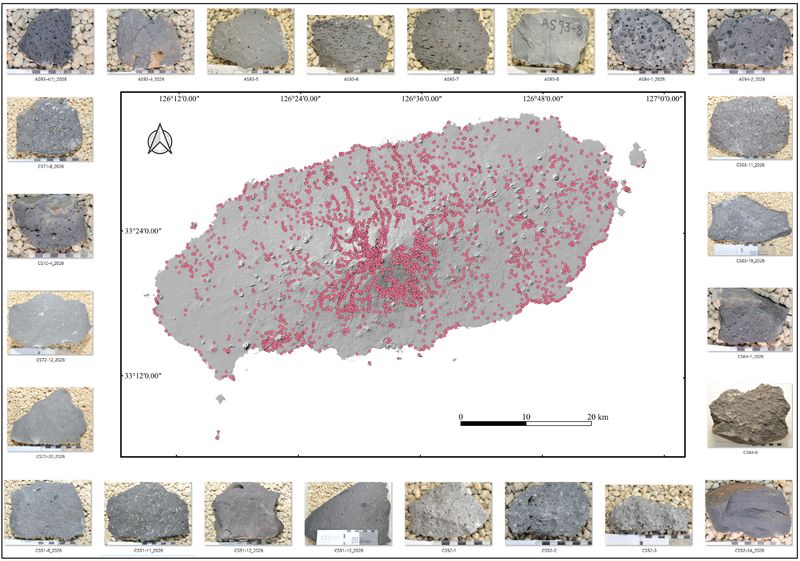
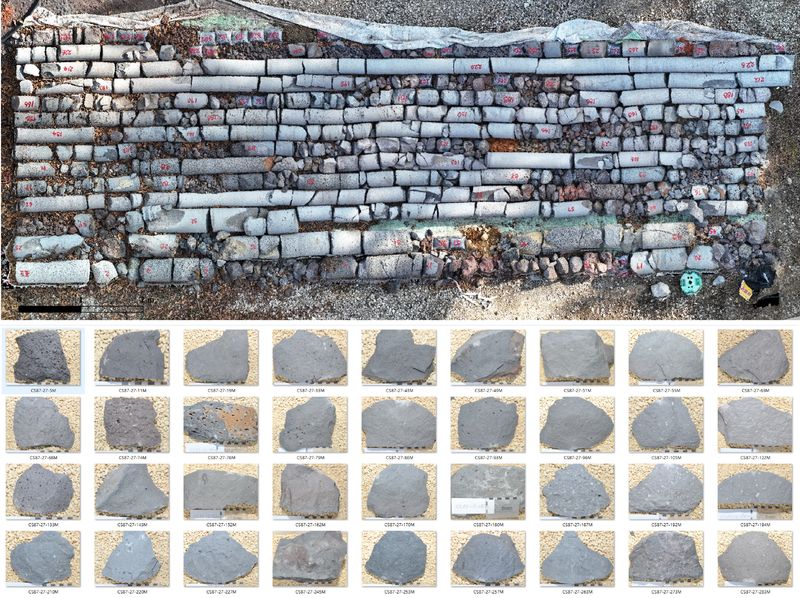
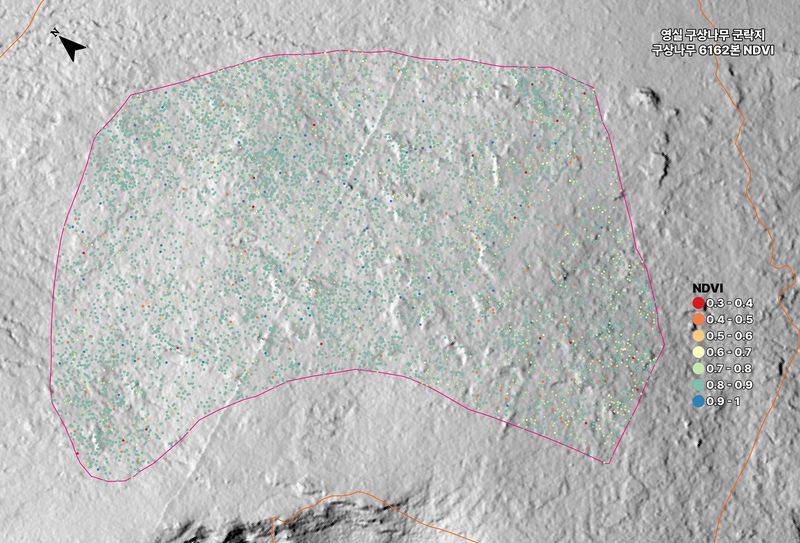
The actual data subject to release covers a considerably wide range. It includes rock samples collected from across Jeju, sampling sites, core orthophotos obtained through drilling, and rock samples by lava layer. In the ecological field, it includes drone footage of the flowering period of Rhododendron yedoense var. poukhanense in the Seonjakjiwat and Witse Oreum areas of Hallasan, as well as Normalized Difference Vegetation Index (NDVI) measurement data for the Korean fir community in the Yeongsil area.
The Yeongsil Korean fir data displays the locations and individual NDVI values of 6,162 trees as spatial information. NDVI is an indicator that numerically represents the vitality and condition of vegetation by utilizing the light-reflecting properties of plants. As data accumulates over time, the patterns of change and decline of the Korean fir community can be compared at the individual level.
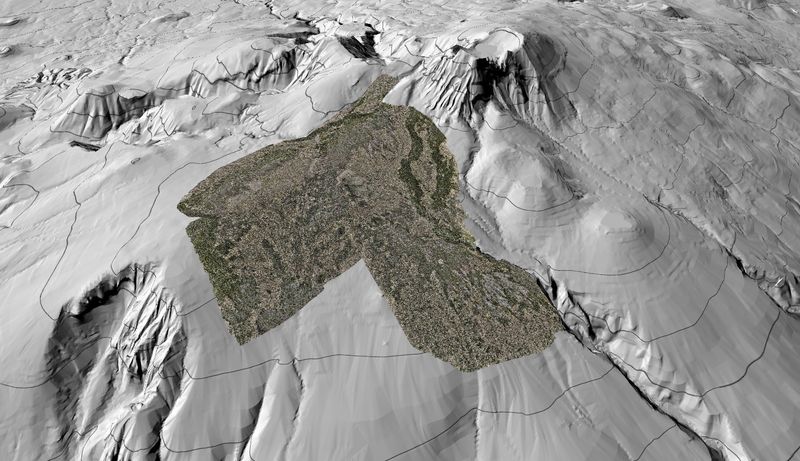
Drone footage is also highly useful. By correcting the tilt and terrain distortion of aerial photographs to create images that allow for the comparison of locations, distances, and areas much like a map, repeated filming of the same region enables the spatial verification of changes in vegetation distribution and flowering ranges.
Data is categorized into three stages based on its accessibility. Data that has been organized is made available for anyone to use, while data requiring further verification is provided upon request. For data currently under research or subject to disclosure restrictions, the decision regarding its use is made through consultation among researchers or collaborative research.
The background behind Jeju Island's decision to open up data is the judgment to increase the usability of data scattered across various research institutions.
In Jeju, administrative and research institutions, including Jeju National University, the Jeju Institute, and the World Heritage Headquarters, as well as private research organizations, have accumulated research data across various fields. However, if the institutions and fields of expertise differ, it has been difficult to link data even when surveying the same region.
Taking a specific volcanic cone as an example, even if geological and topographical data, vegetation, animal distribution, temperature and precipitation, and drone imagery exist separately, it is difficult to comprehensively analyze the causes of changes in the natural environment if they are managed in isolation.
Combining data based on time and location can change the scope of research. It allows for the discovery of research topics that are difficult to capture in individual studies, such as the relationship between volcanic geology and soil and specific vegetation distribution, or how changes in temperature and precipitation are linked to the survival and flowering times of alpine plants.
The 'decentralized research cooperation system' proposed by Jeju Province follows this structure. Rather than creating a new large-scale research institution to gather researchers and equipment in one place, it is a method that connects the data and expertise of existing universities and public and private research institutions. The intention is to enable physically scattered institutions to function as a single research network through data.
Experts in actual data construction and management, as well as geological and ecological research, will participate in the workshop on the 16th.
Ahn Woong-san, a curator at the Hallasan Research Department of the Jeju World Heritage Headquarters, explains the current status and disclosure plans for the natural resource data accumulated by the department. Curator Ahn is a geologist who has conducted research on Jeju's volcanic geology and the construction of geological maps of Hallasan.
Jang Dong-seok, a specialist at the Biodiversity Division of the National Institute of Biological Resources, will introduce utilization cases that connect the opening of public research data to new research outcomes. He plans to examine ways to enable researchers to reuse the vast amount of public data accumulated in the field of biodiversity, linking this to natural resource data from Jeju.
Hyun Hye-rim, a research fellow at the Jeju Studies Research Center, handles data standardization and archiving. Research Fellow Hyun is responsible for archive management at the Jeju Studies Research Center.
There is a reason why standardization is just as important as disclosing data. If coordinate systems, survey methods, file formats, and classification criteria differ from institution to institution, it is difficult to analyze multiple datasets simultaneously. External researchers can accurately interpret the data and reproduce research results only when metadata recording when, where, who, and by what method the survey was conducted is also provided.
Topics for follow-up research will also be discussed in detail. Ko Gi-won, Director of the Gotjawal Research Institute at the Jeju Gotjawal Shared Ownership Foundation, presents ten major research tasks to comprehensively elucidate the geology of Jeju's volcanic island. Director Ko is an expert who has long researched Jeju's geology and groundwater.
Han Areum, a researcher at the National Institute of Ecology, will announce the direction of follow-up research utilizing long-term accumulated ecological and climate data. Researcher Han has been studying changes in the Korean fir population on Hallasan and risk factors for climate change.
At the end of the workshop, universities, research institutions, and experts in natural resources, GIS, and data directly propose necessary materials, demands for additional disclosure, and new topics for joint research.
There are also cases abroad where new research results have been found through the reuse of long-term research data. The Hallasan Research Department is referring to a case where new exploration possibilities were identified that could not be found in previous analyses after geological data accumulated over a long period at Red Lake in Canada was made available to external experts.
Jeju, too, has the potential to discover research topics that were not anticipated at the time of the initial survey by applying new analytical techniques to rock, vegetation, and climate data collected for specific purposes in the past, or by combining them with data from other fields.
If this data opening is limited to the Hallasan Research Department's materials, the effectiveness of the 'decentralized research cooperation system' may be limited. Challenges to be addressed in the future include determining the criteria for linking data held by Jeju National University, other public research institutions, and private research organizations, establishing a joint platform, and deciding on data ownership and the attribution of research results.
It is also necessary to further specify the total number and volume of data subject to opening, as well as the method by which external researchers access the actual data.
The Hallasan Research Department has set a goal to expand data sharing and joint research starting with this workshop, aiming to increase research achievements in the field of Jeju's natural resources by at least double over the next 10 years.
The criteria for performance are also important. To verify the tangible effects of data openness, it is necessary to manage not only the number of papers or research reports but also the number of data uses, inter-agency collaborative research, the identification of new research projects, and the utilization of data for natural resource conservation policies, such as those for Hallasan and Gotjawal.
Kim Dae-shin, Head of the Hallasan Research Department at the Jeju World Heritage Headquarters, stated, "Jeju already possesses diverse professional personnel and research data accumulated over a long period." He added, "If we create a system to open up and connect this data to generate new research results, it could produce effects greater than establishing a new large-scale research institution."
[email protected] Jeong Yong-bok Reporter