Iranian Atomic Energy Organization Head Unable to Attend Vienna IAEA General Conference Due to U.S. Pressure
- Input
- 2026-09-15 07:04:47
- Updated
- 2026-09-15 07:04:47
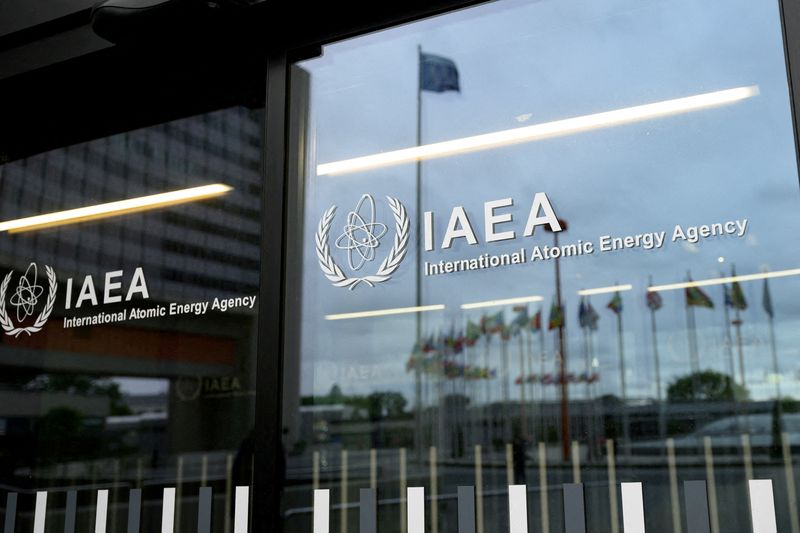
[Financial News] The head of the Atomic Energy Organization of Iran (AEOI) was ultimately unable to attend the annual General Conference of the International Atomic Energy Agency (IAEA), a United Nations (UN) agency, due to strong U.S. pressure to block his entry.
On the 14th (local time), Iranian state broadcaster reported that Mohamed Eslami and his delegation boarded a scheduled flight to Vienna, Austria, on the 12th, but were stranded en route due to U.S. obstruction and returned to Tehran, the capital. Behrouz Kamalvandi, a senior official at the Atomic Energy Organization of Iran (AEOI), strongly criticized the move through AFP, calling it "coercive political pressure by the United States" and warning that it would set a serious precedent for the future.
AFP reported that U.S. Secretary of Energy Chris Wright admitted during a meeting with reporters that the United States had exerted direct pressure to prevent Director Eslami from entering Austria. Secretary Wright stated, "Director Eslami is a sanctioned individual, and we do not want a sanctioned individual to evade sanctions," adding that "he requested a sanctions waiver, but it was denied."
The Austrian Foreign Ministry, where the IAEA headquarters is located, explained that it had requested exceptional entry permission for Director Eslami, who is subject to a UN travel ban, but that the request was denied because "no agreement was reached" within the United Nations Security Council (UNSC).
After Director Eslami, who had attended and delivered a speech at last year's General Conference as Iran's representative to the IAEA, an IAEA member state, was unable to enter Austria, the Iranian government summoned Austria's chargé d'affaires in Tehran to lodge a protest.
Esmail Baghaei Hamaneh, a spokesman for Iran's Foreign Ministry, emphasized at a press conference, "This decision has completely lost its legitimacy," adding, "Although it is clear that this happened because of U.S. pressure, the Austrian government cannot escape responsibility either."
Reza Najafi, Iran's ambassador to the IAEA, described the UN sanctions against Director Eslami as "baseless claims by some Western countries." The sanctions were reinstated last year after the United Kingdom, Germany, and France invoked the "snapback" mechanism (the automatic restoration of sanctions in the event of a violation of the agreement), citing violations of the 2015 nuclear agreement, the JCPOA.
Western countries have raised suspicions about Iran's development of nuclear weapons for decades, but Iran categorically denies them. This incident is expected to further intensify diplomatic friction with the international community over Iran's nuclear program.
[email protected] Yoon Jae-jun Reporter