"Dirty and hard work, just grateful that they do it": Those who filled the void left by young people
- Input
- 2026-09-15 08:15:15
- Updated
- 2026-09-15 08:15:15
Foreign workers are holding down the fort at industrial sites in northern Gyeonggi that have been deserted by local workers. Amid chronic labor shortages in manufacturing and agriculture and livestock farming, foreign workers have become not a choice but essential personnel driving the local economy. Financial News examines, through on-site reporting, statistics, and policy, why Korean workers have left and why foreign workers have come to fill their places. It also seeks solutions for how to coexist with those who are becoming neighbors in the local community, going beyond simply providing labor. Editor's note
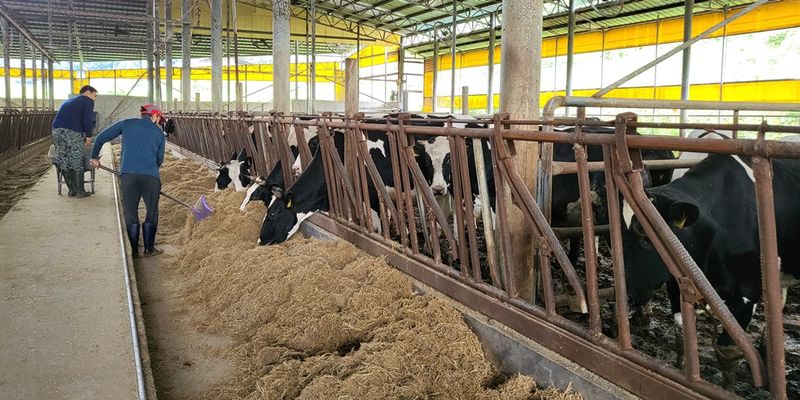
[Financial News, Yeoncheon and Pocheon—Reporter Kim Kyung-soo] 5 a.m. on the 14th. Before the darkness had lifted, I arrived at a dairy farm in Seokjang-ri, Baekhak-myeon, Yeoncheon County, Gyeonggi Province. A foreign worker had put on his work clothes and was beginning his day's work. As I entered the barn, it was filled with the distinctive smell and the sound of cows mooing.
The first task was milking the cows. The cows had to be connected to the milking machine one by one, but they did not move easily. Even moving a single cow required constantly watching its direction and controlling its movements. What seemed like a simple task quickly became a test of physical strength. Whenever a cow moved, the farm owner and the foreign worker had to avoid it and readjust their positions.
After milking, they cleaned every corner of the barn and removed the waste spread across the floor, then prepared feed without a moment to catch their breath. They carried heavy feed, mixed it with grass and additives, and distributed it in the barn for the cows to eat. By after 7 a.m., their bodies were drenched in sweat.
Starting at 3 p.m., they repeat the morning's work all over again. The order is milking, cleaning, feeding, and caring for the calves. Dairy cows do not move according to set times like machines, so they require constant attention. They emphasized that they must be especially vigilant with the calves, as many die from diarrhea and other causes.
Lee Kang-deok (43), who runs the dairy farm, is managing it together with foreign workers. He had worked at the farm with his father for more than 10 years and recently inherited it after his father died in an accident.
It has been just over a month since he inherited the farm. For him, who suddenly became responsible for the farm alone, the worker from Nepal who has worked with him for four years is an irreplaceable presence.
Lee said, "In livestock farming, where work cannot stop for even a single day, the presence of skilled workers determines whether a farm can operate. People avoid this work because it is dirty and difficult, so I am simply grateful that this friend—this foreign worker—is here with me."
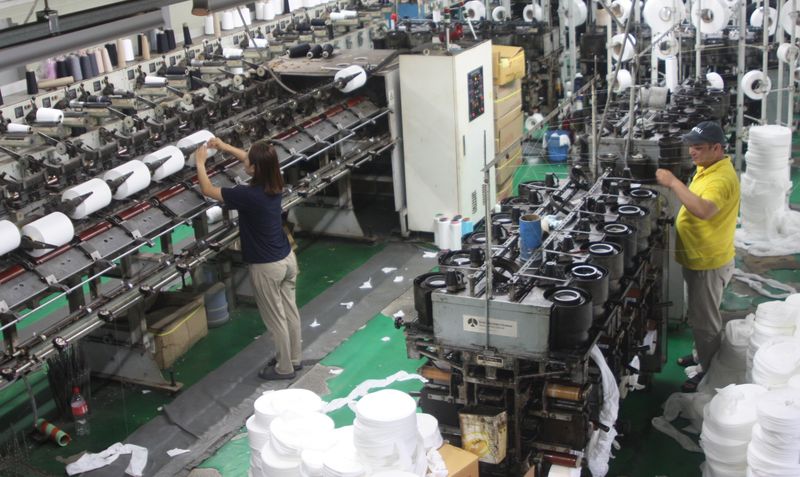
That afternoon, at a textile factory in Seondan-dong, Pocheon, dozens of machines were moving nonstop when the factory doors opened. Thread was unwinding at high speed. The workers moved between the machines, reconnecting broken threads and checking for problems.
They continuously checked the machines for problems such as broken threads. It might have seemed that simply watching them would be enough, but the work moved so quickly that they could not take their eyes off it even for a moment. The heat generated by the machines, combined with the workers' movements, kept their sweat from drying.
The process was to check, move, inspect, and then proceed to the next task. Although the work looked simple, it demanded physical stamina and concentration as time passed. If a problem occurred during production, the worker had to respond immediately. All three workers at the facility were also foreign nationals from Nepal.
Business owner A said that the greatest difficulty factories face these days is not machinery but finding people. It is becoming increasingly difficult to recruit production workers. Even when wages are raised, there are few applicants, and workers who are hired with difficulty often quit soon afterward. That is why hiring foreign workers has become unavoidable.
A said, "Even when we try to hire people, there is no one available. Young people in particular absolutely do not want to do this kind of work. Without the foreign workers hired to make up for the labor shortage, it is difficult to keep the production line running. If they were gone too, we would have to close the factory."
Farms and factories. Although the environments were different, the business owners I met at the sites reached the same conclusion: "There are no people to work." Foreign workers were filling this enormous void.
[email protected] Kim Kyung-soo Reporter