Iran Expands Strait of Hormuz 'Blacklist' to 77 Vessels as Traffic Plummets to Single Digits
- Input
- 2026-09-14 23:15:07
- Updated
- 2026-09-14 23:15:07
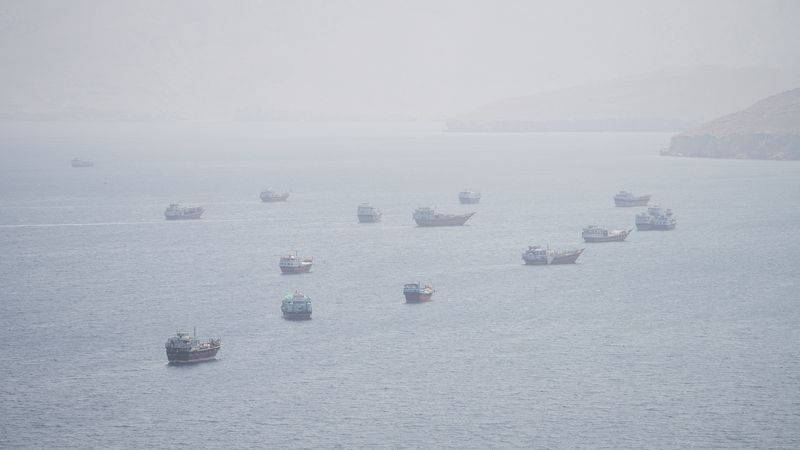
[Financial News] Iran has sharply expanded the number of vessels subject to sanctions to 77, accusing them of violating transit regulations in the Strait of Hormuz. After warning that vessels could be detained, Iran has also pressured global insurers to halt dealings with sanctioned ships, pushing tensions in the Strait of Hormuz— a key artery for global crude oil transportation—to their highest level.
According to major shipping publications and foreign media outlets on the 14th (local time), the newly established Persian Gulf Strait Authority (PGSA) announced that it had added 21 vessels that failed to comply with transit regulations to its blacklist, bringing the total number of sanctioned vessels to 77.
The newly listed vessels include five ships belonging to Kuwait Oil Tanker Company (KOTC), which was recently attacked by Iran, as well as Sidr, a very large crude carrier (VLCC) owned by Saudi Arabia's Bahri. Two Filipino crew members were killed in a security incident involving the vessel late last month. When PGSA announced its first blacklist of 45 vessels on the 24th of last month, it also included five vessels owned by South Korea's Sinokor, raising concerns across the shipping industry. The sanctioned vessels are mainly VLCCs, along with liquefied natural gas (LNG), liquefied petroleum gas (LPG), and petroleum product carriers.
PGSA warned, "If the vessels on the list attempt to pass through the Strait of Hormuz in the future, they may face fines, detention, confiscation, and other measures." It added, "The United States and its allies, as well as other merchant vessels cooperating with sanctioned ships, will also be added to the blacklist."
PGSA has also launched an across-the-board pressure campaign targeting the shipping industry. Through social media, it declared, "Insurers, P&I clubs, classification societies, and others should refrain from providing services to blacklisted vessels in order to avoid possible consequences." The move appears intended to constrain key institutions that provide third-party liability coverage to shipowners and charterers, extending the pressure beyond physical seizures to economic sanctions.
The Strait of Hormuz has seen a noticeable decline in vessel traffic following Iran's hard-line measures. Preliminary vessel-tracking data released that day showed that the number of merchant vessels passing through the Strait of Hormuz over the weekend had fallen to single digits, well below the recent 10-day average of 14 vessels per day. However, vessels that switched off their Automatic Identification System (AIS) transponders and operated in the dark to evade Iranian surveillance and tracking were excluded from the statistics.
[email protected] Park Ji-hyun Reporter