Houthis Seize Strategic Red Sea Positions One After Another, Leaving Saudi Arabia Cornered as Its 'Oil Artery' Is Blocked
- Input
- 2026-09-14 22:01:50
- Updated
- 2026-09-14 22:01:50
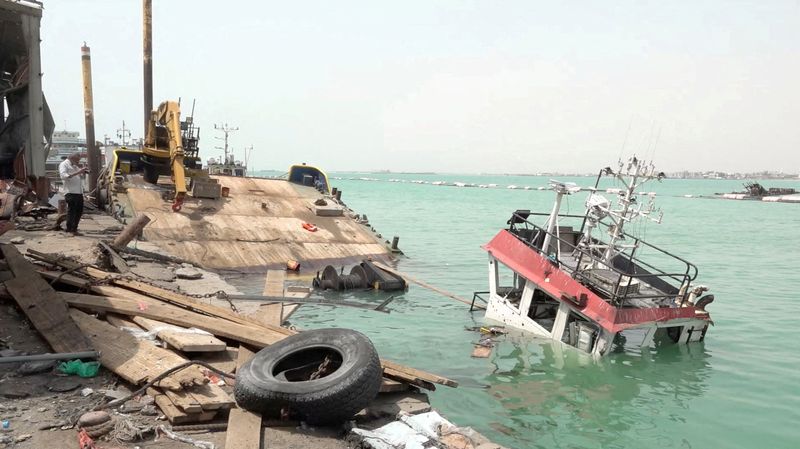
[Financial News] Iran-backed Houthi rebels in Yemen are advancing rapidly after seizing strategic positions in the southern Red Sea one after another. With Iran's blockade of the Strait of Hormuz compounded by the Houthis' control of the Red Sea, Saudi Arabia—whose key oil shipping routes are at risk of being blocked—is truly
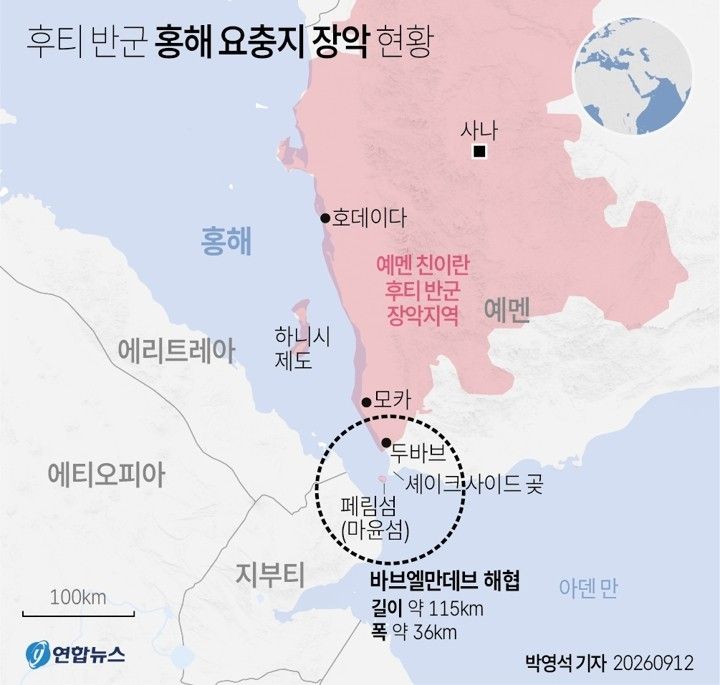
According to the Associated Press and other major foreign media outlets on the 14th local time, Houthi rebels seized the two main islands of the Hanish Islands—Greater Hanish and Lesser Hanish—located 160 km north of the Bab-el-Mandeb Strait, and deployed combat troops there.
This was a further advance following last week's seizure of Mokha, a port city in southern Yemen, and Mayyun (Perim) Island, located in the middle of the Bab-el-Mandeb Strait. The Houthi rebels have now expanded their presence to within just 32 km of a U.S. military base in Djibouti, across the strait, further strengthening their control over the maritime shipping route linking the Red Sea and the Gulf of Aden.
Yemeni government forces backed by Saudi Arabia have launched a counteroffensive, but have suffered painful defeats without achieving any notable results. Direct armed clashes between the Houthi rebels and Saudi Arabia itself also appear to be intensifying. The Houthi rebels claimed, "In retaliation for more than 300 Saudi airstrikes, we carried out large-scale attacks with ballistic missiles and drones on major military facilities, including King Khalid Air Base in Khamis Mushait."
The latest developments have pushed the security crisis facing Saudi Arabia, a key pillar of the global energy supply chain, to a critical point. After Iran blocked the Strait of Hormuz, Saudi Arabia had rerouted crude oil exports through its east-west pipeline to Yanbu Port on the Red Sea coast. However, with the Houthi rebels' control of the Red Sea and attacks by Iran-backed Iraqi militias on overland pipelines unfolding simultaneously, both land and maritime oil routes are at risk of being completely cut off.
Saudi Crown Prince Mohammed bin Salman Al Saud (MbS), facing mounting urgency, held an emergency meeting in Jeddah on the same day with Brad Cooper, commander of United States Central Command (CENTCOM), to discuss regional developments and security cooperation. However, U.S. President Donald Trump reportedly rejected a request for direct military support against the Houthi rebels, fearing further escalation with Iran.
Meanwhile, as the conflict in Yemen intensifies, diplomatic efforts to resolve the regional crisis have also encountered an obstacle. Foreign ministers from the Gulf Cooperation Council (GCC) member states and Iran were scheduled to meet in Salalah, Oman, on the same day to discuss reopening the Strait of Hormuz, but the meeting was abruptly postponed. Iran's Foreign Ministry said, "Saudi Arabia requested that the meeting not be held for the time being," suggesting that Saudi Arabia boycotted the talks out of frustration over the Houthis' fierce offensive.
[email protected] Park Ji-hyun Reporter