90 Minutes of Air Traffic Control Communications Listened to at Jeju International Airport... Chinese Teenager Barred from Leaving the Country
- Input
- 2026-09-14 21:53:42
- Updated
- 2026-09-14 21:53:42
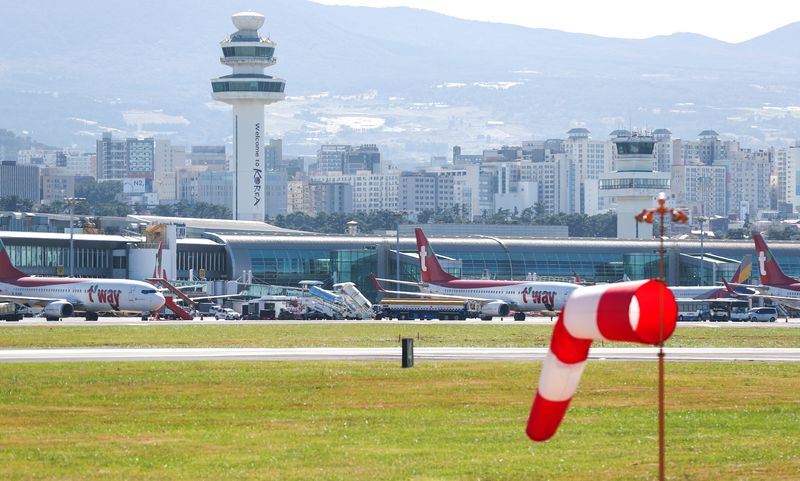
[Financial News Jeju = Reporter Jeong Yong-bok] A Chinese tourist in their teens is under police investigation on suspicion of listening to communications between the control tower and an aircraft for about one hour and 30 minutes using a portable radio at Jeju International Airport, which is classified as a top-tier national critical facility. As it was determined that the tourist brought the radio from China and entered Jeju Province on the day of the incident, the police have barred the tourist from leaving the country and are investigating the purpose of the listening and any possible links to North Korea.
According to the Jeju Provincial Police Agency and others on the 14th, a Chinese national identified as A is suspected of listening to air traffic control communications via radio for about one hour and 30 minutes on August 27 at the observation deck on the fourth floor of the Jeju International Airport passenger terminal.
A visitor at the observation deck found A's behavior suspicious and notified the airport authorities. Police dispatched after receiving a report from an airport employee who checked the scene arrested A in the act.
A was booked without detention on charges of violating the Protection of Communications Secrets Act. The police have barred A, a foreign national, from leaving the country and are investigating the specific circumstances of the incident, including the purpose of listening to air traffic control communications for an extended period and bringing in the equipment, as well as any possible links to North Korea.
It was found that A entered Jeju Province on the day of the incident, and the walkie-talkie used was brought from China.
Air traffic control frequencies themselves are not classified information. The Ministry of Land, Infrastructure and Transport (MOLIT)'s aviation information publications disclose the radio frequencies used for air traffic services at Jeju International Airport, including approach and departure control, the control tower, and ground control. This is because pilots and others must be able to identify the frequencies in use for aircraft to communicate normally with air traffic control agencies.
The focus of the investigation is not on the act of discovering the publicly disclosed frequencies, but rather on the act of a person who is not a party to the telecommunications using a radio to listen for an extended period to control communications actually being transmitted and received, and the purpose of that act.
Air traffic control communications are exchanges between air traffic controllers and pilots of instructions and information necessary for safe flight operations, such as takeoff, landing, taxiing, and changes in altitude and direction.
The Protection of Communications Secrets Act defines the transmission or reception of sound or information by electronic means, such as wireless communication, as telecommunications. Listening to or obtaining the content of communications being transmitted or received in real time using electronic or mechanical devices without the consent of the parties involved is subject to determination as to whether it constitutes wiretapping.
There is also a Supreme Court of Korea precedent regarding listening to radio communications. In a 2003 case in which a towing company listened in real time to radio communications between the Korea Expressway Corporation situation room and a patrol car using a radio, the Supreme Court of Korea deemed the radio communications telecommunications and ruled that listening without the consent of the parties constituted wiretapping under the Protection of Communications Secrets Act.
However, the relevant precedent and the present case do not share the same factual circumstances, such as the equipment used and the specific method of communication. Whether A's conduct constitutes wiretapping under the law will be determined during the investigation and judicial proceedings based on the equipment's capabilities and manner of use, as well as the circumstances of the actual listening.
The Supreme Court of Korea also considers the 'contemporaneity' of wiretapping important. Unlike viewing stored communication content later after transmission and reception have ended, the Court has held that acquiring content using equipment at the moment telecommunications are actually being transmitted or received constitutes wiretapping.
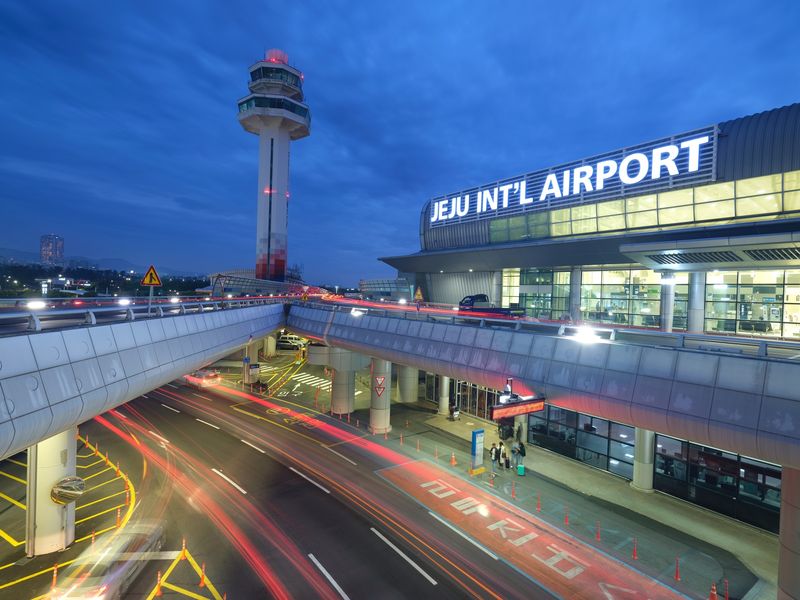
The location of the incident is also noteworthy for security reasons. A was caught at the fourth-floor observation deck of the Jeju International Airport passenger terminal, which is accessible to the general public.
By contrast, Jeju International Airport itself is managed as a Grade A national critical facility, the highest level. This year, an incident occurred at Jeju International Airport in which aircraft takeoffs and landings were suspended because a drone was flown within a no-fly zone. The need for on-site responses to new forms of security risks surrounding national critical facilities continues.
It is also worth noting that in this case, the use of a separate walkie-talkie for an extended period in a public area inside the airport was identified through a visitor's report rather than the airport's own detection.
The core of the police investigation is to determine why A listened to air traffic control communications for an extended period starting on the day of entry, what information was obtained, whether it was stored or transmitted, and whether the radio's transmission function was also used.
Only after these facts are established will it be possible to specifically determine whether this was simply a case of illegal listening, whether there was an additional security purpose, and the actual level of security risk at the airport.
[email protected] Jeong Yong-bok Reporter