Kia: "We sell business results, not cars"—PBV philosophy unveiled in Hanover
- Input
- 2026-09-14 19:36:27
- Updated
- 2026-09-14 19:36:27
Kia has newly defined its blueprint for its purpose-built vehicle (PBV) business, a key future growth engine. In a bold declaration, the company said it would move beyond simple technological competition and become a solution provider that helps commercial-vehicle customers achieve tangible business results.
■ Three key pillars encompassing hardware, software and services
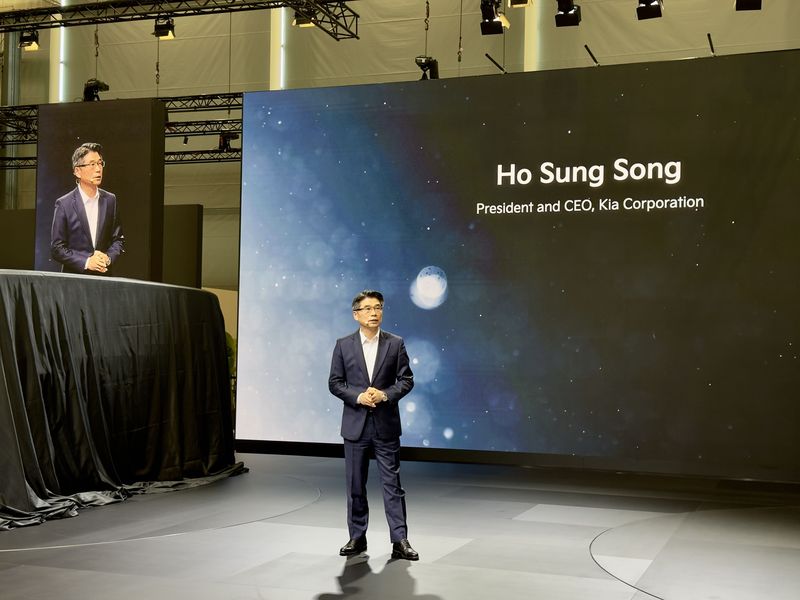
Kia President Song Ho-sung took the stage at a press conference for 'IAA Transportation 2026,' the world's largest commercial-vehicle exhibition, which opened in Hanover, Germany, on the 14th (local time), and announced the company's global PBV vision.In his keynote speech, Song stated, "Kia's answer is not electrification for the sake of electrification." He clearly explained the background to the vision, saying, "We want to go beyond being a manufacturer that simply builds vehicles and provide practical business solutions. That is because what customers truly want is not a vehicle with better looks, but ultimately better business results."
The starting point for Kia's PBV innovation is the everyday inconvenience that commercial-vehicle customers have quietly endured in the field.
Song pointed out, "People who make their living using light commercial vehicles (LCVs) spend more time with their vehicles than anyone else, yet ironically endure the greatest inconvenience." He continued, "As time passes, customers have even stopped recognizing that inconvenience," and questioned, "Why should such inconvenience be a cost that customers must naturally bear for the sake of their businesses?" His remarks underscored Kia's strong determination to address the difficulties faced in the field.
■ "Professional systems beyond space"—the multipurpose PV7 squarely targets fleet customers
Kia's new philosophy of customer-centered business solutions is reflected throughout the vehicle design process. Karim Habib, Kia's executive vice president in charge of global design, highlighted the differences as he explained the design direction of each model.He explained, "If the midsize PV5 embodies the 'Open Box' concept, flexibly responding to customers' changing needs, the large PV7 takes a 'Toolbox' approach, with a much clearer focus for specific purposes." He added, "Whether for logistics delivery or service work, the PV7 was designed like a reliable business partner that can always be trusted and relied upon."
Habib also emphasized the system-level expertise that goes beyond space utilization. "The value of the PV7 lies not simply in its expanded space, but in providing professional systems designed for specific purposes," he said. The PV7's interior features a multilayered structure for flexible equipment loading. A kick-down graphic design applied to the side windows enhances the sense of openness, helping drivers safely check their surroundings even in urban environments.
Sjoerd Knipping, chief operating officer (COO) for Kia's European region, made clear that the large PV7 is a strategic model specifically targeting large-scale fleet operators and global corporate customers. He said, "For large business customers, vehicle efficiency, uptime and systematic fleet management are decisive factors." He added, "A company's business competitiveness ultimately begins with overwhelming cargo capacity and operational efficiency."
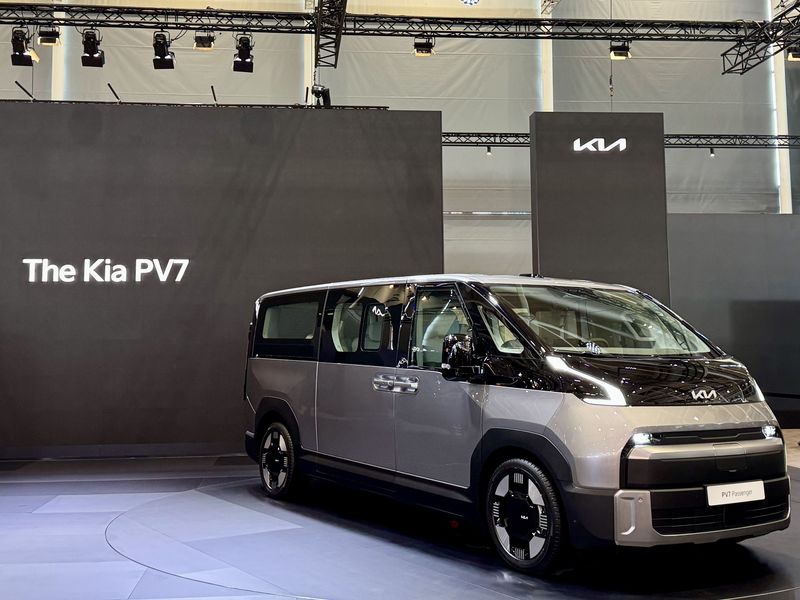
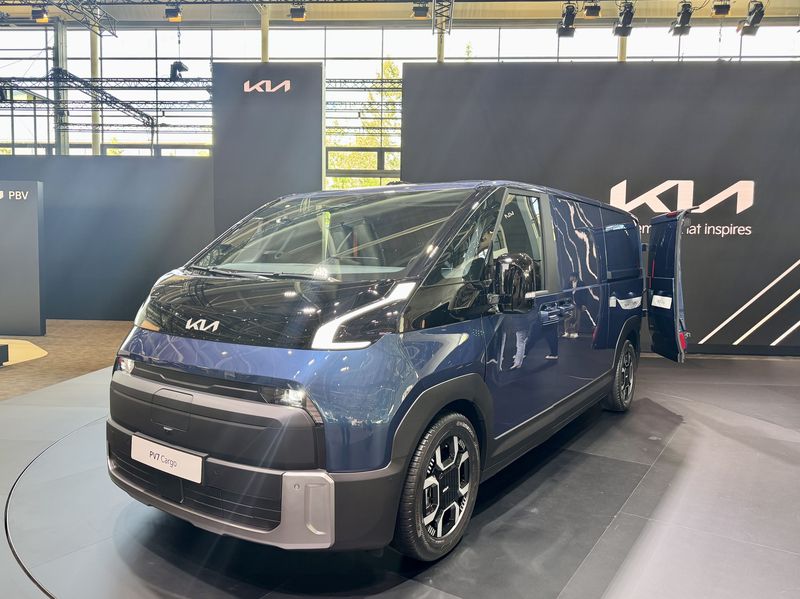
To meet the demanding requirements of the commercial-vehicle market, the PV7 offers more than 20 lineup configurations, including the 'Cargo' for freight transport and the 'Passenger' for passenger transport. The Passenger model can accommodate up to nine people and is expected to significantly improve work efficiency through advanced features such as Walk Away Auto Lock, an automatic door-locking function, and the Twin Swing Tailgate, designed to maximize convenience when loading and unloading cargo.
[email protected] Kim Dong-chan Reporter