The Construction of the Korean Pavilion at the Venice Biennale 30 Years Ago Highlighted as a Case of Cultural Exchange Between Korea and Italy
- Input
- 2026-09-14 18:26:59
- Updated
- 2026-09-14 18:26:59
[Financial News] The history of cooperation between Korea and Italy surrounding the construction of the Korean Pavilion at the Venice Biennale has been revived in an oral-history volume more than 30 years later.
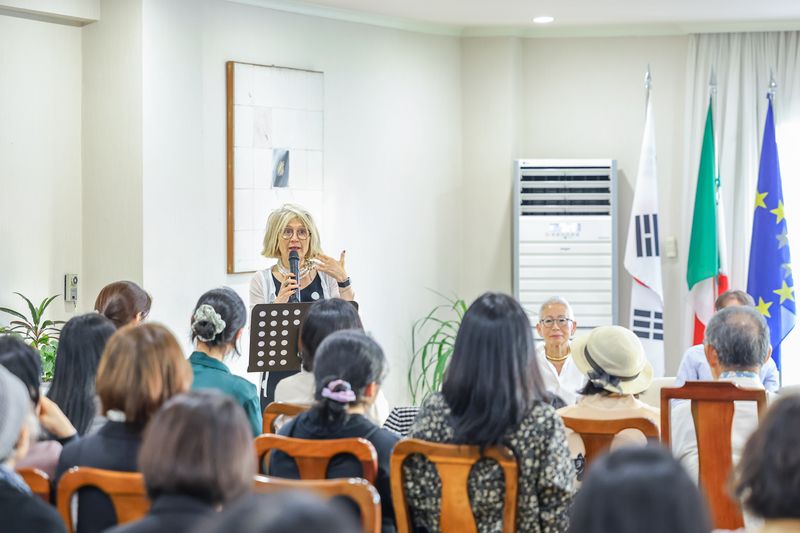
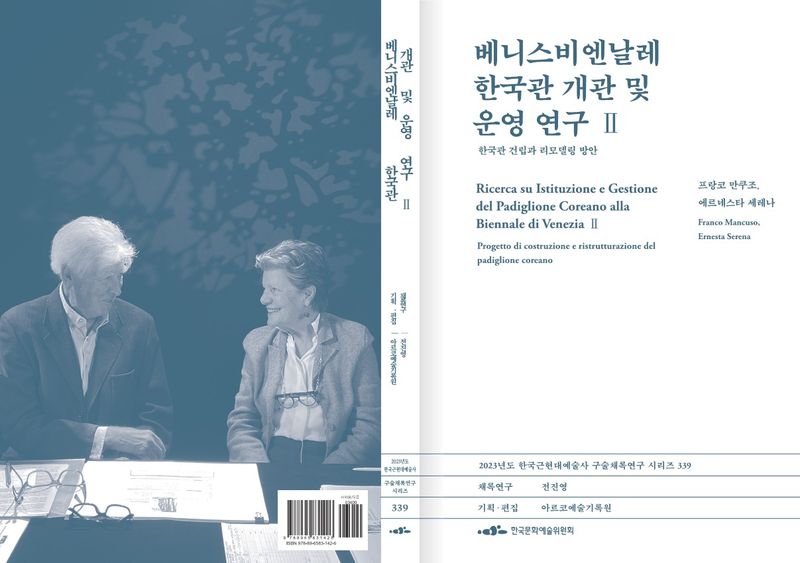
According to Arts Council Korea on the 14th, the Franco Mancuso Oral History, published by the ARKO Arts Archive, was introduced as a representative example of cultural exchange between the two countries at the “Italy? Books! — Italy Encountered by Koreans” book talk held at the Embassy of Italy in Korea at 5 p.m. on the 11th.
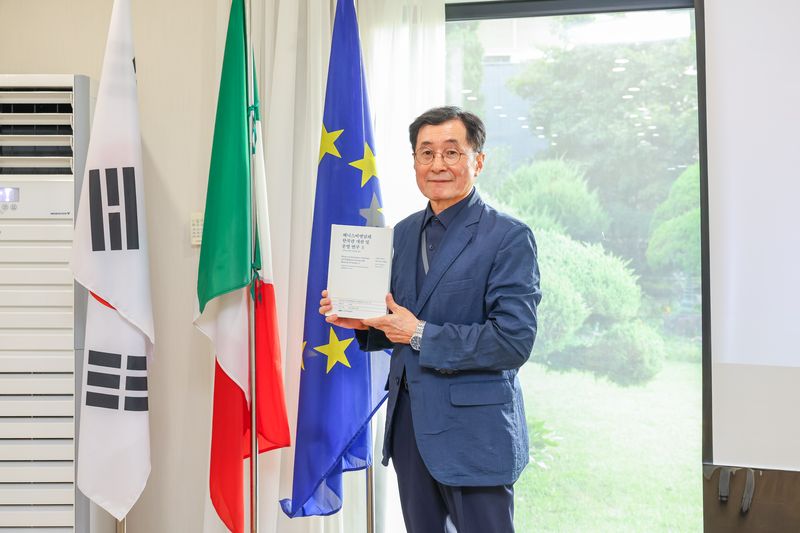
Presentation by Emeritus Professor Jeon Jin-young of Myongji University
“Italy? Books! — Italy Encountered by Koreans,” hosted by the Embassy of Italy in Korea, is a book talk program in which Korean authors personally introduce Italian culture.
The event featured Jeon Jin-young, emeritus professor in the Department of Architecture at Myongji University, as a presenter. He served as the principal researcher for the Mancuso oral history project and shared the record’s academic and cultural significance. Holding architectural licenses in both Korea and Italy, Professor Jeon is a leading scholar who has consistently introduced Italy’s urban and architectural culture to Korea. He provided a detailed account of the architectural concerns captured in Mancuso’s testimony and the significance of cooperation between the two countries.
Completed in 1995, the Korean Pavilion was a valuable achievement realized by overcoming nearly impossible constraints, including local cultural administration in Venice, strict building regulations, and numerous difficult construction processes. Mancuso (born in 1937) was the architect who jointly designed the pavilion with architect Kim Suk Chul (1943–2016), and he is the only surviving person able to testify about the circumstances at the time.
The ARKO Arts Archive recorded Mancuso’s experiences at the Korean Pavilion construction site in the 1990s and published last year “Research on the Opening and Operation of the Korean Pavilion at the Venice Biennale II: Plans for the Construction and Remodeling of the Korean Pavilion.”
The Embassy of Italy in Korea provided diplomatic support, including informing the Italian government of the need for the pavilion from the early 1990s, when its construction was being conceived. Because of this longstanding connection, Emilia Gatto, Ambassador of Italy to South Korea, wrote the foreword to the Franco Mancuso Oral History.
At the event, Ambassador Gatto said, "ARKO’s work highlighting the history of the construction and operation of the Korean Pavilion has special value." She added, "It is a meaningful example showing that, by passing on the memory of cultural cooperation between Korea and Italy to future generations, it can become a new bridge connecting the cultures of the two countries."
“One Table” exhibition through November
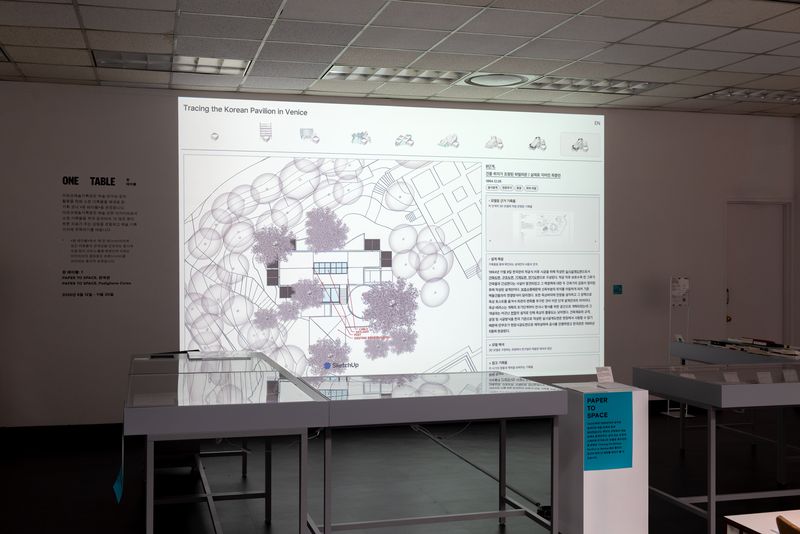
The exhibition “One Table: 7. PAPER TO SPACE, Korean Pavilion,” which explores the design process of the Korean Pavilion at the Venice Biennale, will also be held at the ARKO Arts Archive in Seocho-dong, Seoul, through November 30.
Located in Giardini della Biennale in Venice, Italy, the Korean Pavilion at the Venice Biennale has long sparked visitors’ curiosity with its distinctive exterior, completed amid a sloping site and strict building regulations imposed by local authorities.
The exhibition offers a multidimensional look at the background to the pavilion’s construction, the evolution of its design, and the architectural concerns behind it. The ARKO Arts Archive organized the exhibition using the existing Korean Pavilion at the Venice Biennale Collection and more than 4,000 primary sources, including documents, sketches, and hand-drawn plans donated by Mancuso in 2023.
The exhibition’s centerpiece, the 3D modeling web archive “Tracing the Korean Pavilion in Venice: The Trajectory of the Korean Pavilion at the Venice Biennale Design Discovered in the Archives, 1993–1995,” recreates in virtual space eight stages of design changes preserved in faxes and paper drawings.
The exhibition also presents oral-history videos containing accounts of the circumstances before and after the Korean Pavilion opened, as well as the voices of local operations officials. An interactive space allows visitors to manipulate the 3D content themselves and examine the design-plan books. Design drawings from 1988 and related correspondence, discovered with the assistance of the Historical Archive of Contemporary Arts (ASAC), are also on display.
Lee Beom-heon, chairman of ARKO, said, "It is meaningful that the Franco Mancuso Oral History, which documents the history of the Korean Pavilion’s construction, is being highlighted as a representative example of cultural exchange between the two countries." He added, "I hope this exhibition will also allow visitors to encounter the value of cultural cooperation between Korea and Italy across time and space."
[email protected] Shin Jin-a Reporter