Strong Won and High Oil Prices Send Export Prices to Lowest Level in 3 Years and 8 Months
- Input
- 2026-09-15 06:00:00
- Updated
- 2026-09-15 06:00:00
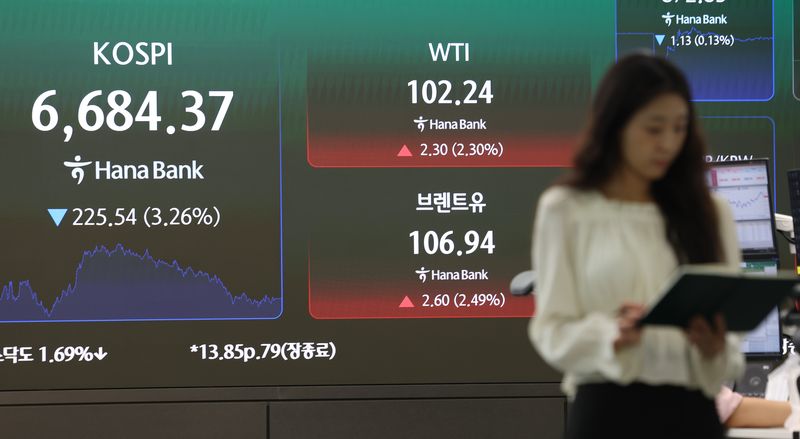
[Financial News] As the strong won and high oil prices coincided, export prices in August fell by the largest margin in three years and eight months. Import prices also declined in tandem due to the impact of the falling exchange rate. On the other hand, as export prices rose significantly more than import prices, the terms of trade recorded the largest improvement on record.
According to the Export and Import Price Index and Trade Index (Preliminary) for August 2026 released by the Bank of Korea (BOK) on the 15th, the export price index in won terms fell 3.7% in August compared to the previous month. This is the lowest figure in 3 years and 8 months since December 2022 (-6.1%).
While a decline in the export price index puts a burden on corporate profitability as the price of exported products converted into Korean won decreases, there are also positive aspects such as stabilizing import prices and improving terms of trade.
Although the prices of coal and petroleum products rose due to the rise in international oil prices, the prices of most items fell as the monthly average won-dollar exchange rate dropped 6.1% compared to the previous month (1,497.43 won → 1,406.30 won).
Compared to the same month of the previous year, export prices of computers, electronics, and optical equipment rose by 42.4%. This marks the 12th consecutive month of increase.
The import price index also fell 2.4% from the previous month due to the impact of the falling exchange rate, marking a downward trend for three consecutive months. While a decline in the import price index offers cost-saving benefits to importers and domestic finished product manufacturers, it is also interpreted as a leading indicator of an economic downturn, such as sluggish domestic demand or a contraction in global demand.
As international oil prices, including Dubai crude, rose 15.6% compared to the previous month, raw material prices (1.5%) increased, but intermediate goods such as chemical products (-6.1%) and primary metal products (-4.2%), as well as capital goods and consumer goods, all declined. Compared to the same month of the previous year, prices rose 15.6%.
Export and import volumes and values continued to increase.
The export volume index in August rose 25.9% year-on-year, marking the tenth consecutive month of increase, driven by growth in semiconductors, computer memory, mobile phones, and cosmetics. The export value index also jumped 75.8%.
The import volume index and import value index also rose by 12.0% and 23.1%, respectively.
The terms of trade indicator, which shows how much profit our country is gaining from trade with foreign countries, has hit an all-time high.
The net terms of trade index for August rose 27.1% year-on-year, as export prices surged 39.6% and import prices rose only 9.9%. This is the largest increase since statistics began in 1988.
Lee Heung-hoo, head of the Bank of Korea (BOK)'s price statistics team, said, "The net terms of trade index and the export volume index (25.9%) rose together," adding, "The income terms of trade index, which shows the quantity of goods that can be imported with total exports, also surged by 60.0% compared to the same month last year, setting an all-time record."
[email protected] Normal bacteria Reporter