[Han Dong-ha's Notes on Materia Medica] Long-Term Bleeding Requires Tonification First
- Input
- 2026-09-19 06:00:00
- Updated
- 2026-09-19 06:00:00
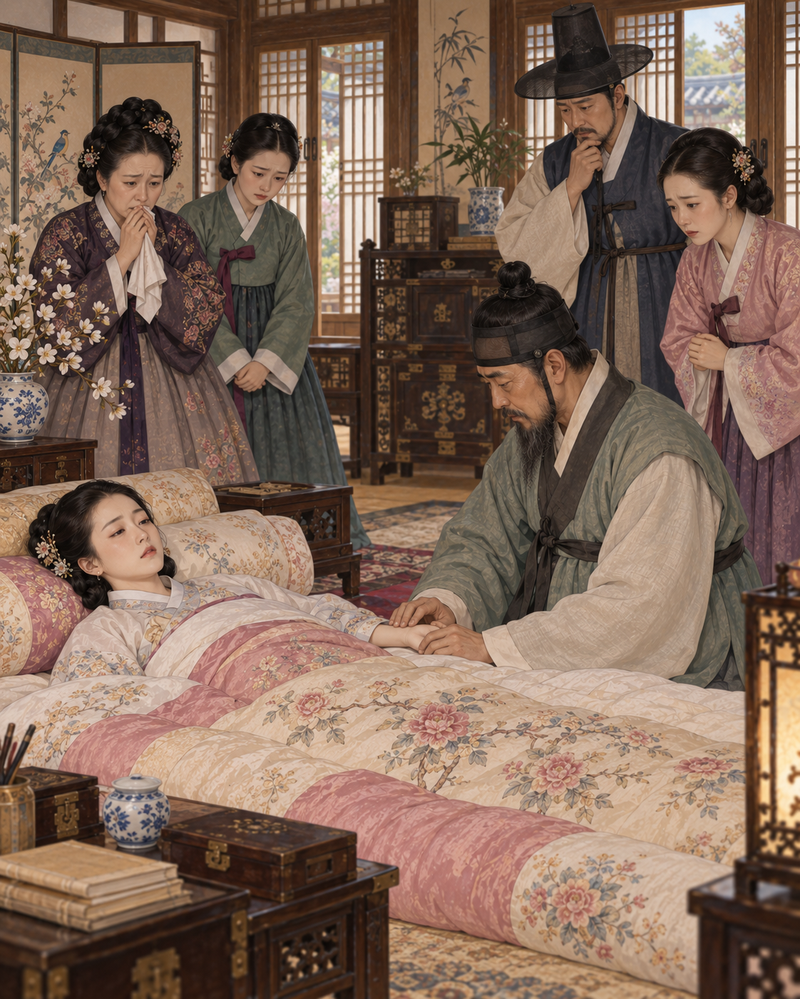
One day, the wife of Wang Dae-seong, a high-ranking local official, developed prolonged uterine bleeding. She had already been experiencing repeated uterine bleeding for several months. At first, she took Siwu Decoction with various hemostatic medicines at home. The bleeding seemed to lessen for a few days after she took the medicine, but it soon returned and the cycle continued.
Then one day, the woman became extremely angry over a household matter, after which she began to develop a fever. Her bleeding became even heavier that night. Wang Dae-seong's family hurriedly called a local physician.
When the physician arrived at Wang Dae-seong's home and felt the woman's pulse, he found it large and rapid. The physician said,
"The woman's anger caused her fire qi to flare upward. That is why she developed a fever and the bleeding worsened. We must quickly use cold and cooling medicines to lower the heat and stop the bleeding."
However, the bleeding did not stop even after she took the medicine prescribed by the physician. Instead, she began to experience severe, cramping pain in her flanks and abdomen. Her hands and feet grew cold, and she curled up and moaned in pain.
Wang Dae-seong began to fear that the treatment might have been wrong. He therefore called another physician who had long enjoyed an excellent reputation. This doctor was particularly known for treating women's illnesses.
The physician carefully examined Wang Dae-seong's wife. Her face was drained of color, and her lips were pale. Her body seemed to be slightly feverish. Although her abdomen hurt severely, she felt more comfortable when it was covered and warmed by a hand pressing over it. Her pulse felt large and forceful at the surface, but when the physician pressed deeply with his fingers, he found it forceless underneath.
The physician asked Wang Dae-seong, "What medicines has she taken previously?"
Wang Dae-seong replied. "At first, she took Siwu Decoction with hemostatic medicines at home. But when her symptoms recently worsened, the first physician prescribed cold and cooling medicines."
The physician said. "She has been bleeding for a long time, so her qi and blood are already depleted. Repeatedly taking cold medicines has also damaged the yang qi of her spleen and stomach. It is like repeatedly pouring cold water on a fire to put it out until even the embers in the furnace are extinguished. Her interior is now even colder and more deficient."
The physician diagnosed her condition as spleen-stomach deficiency-cold. Wang Dae-seong asked anxiously, "She is losing so much blood. Is it really safe to use warm medicines? Isn't there an old saying that tonifying treatment should not be used for pain?"
The physician nodded and replied. "The blood is not pouring out because it is hot. It is leaking because she lacks the strength to hold it in. Pain does not always mean that tonifying treatment should be avoided. When pain is caused by deficiency and cold, the proper approach is דווקא to tonify and warm the body."
The physician first prescribed Fuzi Lizhong Decoction. Aconite and dried ginger were intended to warm the interior, while ginseng and white atractylodes were used to strengthen the qi of the weakened spleen and stomach.
After she took the medicine, warmth gradually returned to her previously cold hands and feet. The severe pain in her abdomen and flanks also gradually subsided. Within a few days, her fever had gone down as well.
The physician then prescribed Jisheng Guipi Decoction and Buzhong Yiqi Decoction to tonify qi and blood and restore the strength of the spleen and stomach. He added Erchen Decoction to remove damp-phlegm. The prolonged uterine bleeding visibly decreased and eventually stopped completely.
Wang Dae-seong asked in amazement, "The first physician said that the heat had to be lowered and the bleeding stopped, but you used medicines that warmed and tonified her body instead. How did the illness improve with treatment that was the exact opposite?"
The physician replied. "Not every fever is excess heat, and not every large pulse indicates an excess pattern. In someone who has been bleeding for a long time, the vital qi may be severely damaged, causing the pulse to feel large at the surface. Nor should one be bound by the rule that tonifying medicines must not be used when there is pain. If the pain is caused by deficiency and cold, it will disappear only when the body is tonified and warmed."
Word that Wang Dae-seong's wife had recovered from prolonged uterine bleeding soon spread throughout the county. Before long, the wife of Yang Yeong-heung, who held the post of Geumui, also visited the physician. She, too, had been suffering from prolonged uterine bleeding.
Yang Yeong-heung's wife initially took various cold and cooling medicines to stop the bleeding. However, her condition worsened the more medicine she took. Her abdomen felt distended and oppressive, preventing her from eating properly, and she developed a fever. Agitation in her chest left her unable to sit still, and she could not sleep properly at night.
Her family took her to the physician recommended by Wang Dae-seong. The physician examined her and found that her pulse was surging and large, yet deficient. It rose broadly like a great wave, but lacked strength underneath. Her face was as pale as a sheet of paper, and her lips were colorless.
The physician said urgently, "She must immediately be warmed and tonified with Bazhen Decoction plus processed dried ginger. We must hurry. If treatment is delayed even slightly, it will be difficult to save her."
Bazhen Decoction combines Sijunzi Decoction, which tonifies qi, with Siwu Decoction, which tonifies blood. Processed dried ginger was added to warm the interior, tonify her deficient qi and blood, and control the bleeding.
However, Yang Yeong-heung's family could not readily follow the physician's advice. They were uneasy about using warm medicines while she had a fever and was continuing to bleed heavily. The family simply replied, "Understood," and sent the physician away.
The next day, they called the physician who had treated her previously. They told him that the doctor who had treated Wang Dae-seong's wife the day before had recommended adding processed dried ginger to Bazhen Decoction, and asked for his opinion.
The previous physician said, "Her fever is this severe and she is continuing to bleed heavily, yet you want to give her warm medicines? What she needs now are medicines that stop the bleeding and clear the fire."
The family was once again persuaded by this physician's words. In the end, instead of Bazhen Decoction, they gave her cold and cooling hemostatic medicines and fire-clearing medicines.
Her condition then deteriorated rapidly. She completely lost her appetite and could barely drink water. Her body became extremely weak, but her agitation grew even worse. She became short of breath and broke into a cold sweat, while her hands and feet turned cold. Various deficiency symptoms erupted all at once, like a swarm of bees.
Only then did Yang Yeong-heung urgently send for the physician who had treated Wang Dae-seong's wife. When the physician arrived, he examined the patient's condition. After feeling her pulse for a long time, he quietly withdrew his hand and shook his head.
Yang Yeong-heung asked anxiously, "Could we not use the tonifying medicine you recommended, even at this point?"
The physician was unable to say anything for a moment. Then he spoke in a low voice.
"It is already too late. The qi of her spleen and stomach has nearly been extinguished, and her vital qi no longer has the strength to accept medicine."
The woman eventually died a few days later. Yang Yeong-heung regretted their decision, but by then it was too late to reverse it.
Even today, it is not appropriate to treat uterine bleeding by looking only at the bleeding and automatically trying to stop it. The cause of the bleeding must first be identified accurately. It is essential to distinguish among various possible causes, including uterine fibroids, adenomyosis, ovulatory disorders, endometrial disease, pregnancy-related bleeding, and blood-clotting disorders.
However, when bleeding continues for a long time and a patient develops severe anemia, loss of strength, loss of appetite, dizziness, a pale complexion, and general weakness, treatment must not only control the bleeding but also restore the qi, blood, and physical strength that have already been depleted.
This is why physicians of old emphasized, "Long-term bleeding requires tonification first." This does not mean that tonifying medicines should automatically be used as soon as bleeding occurs. Rather, it is a warning not to continue aggressive treatment aimed only at the outward symptoms of heat and bleeding in patients whose bodies have already been weakened by prolonged blood loss.
When treating an illness, one must look beyond the symptoms immediately visible and consider both why those symptoms developed and whether the patient's body is currently deficient or excessive.
Source of today's Notes on Materia Medica story
<Gyoju Buin Yangbang>○ The wife of Chief Magistrate Wang Dae-seong had long suffered from prolonged uterine bleeding. She took Siwu Decoction and hemostatic medicines on her own, with the bleeding sometimes improving and sometimes returning. After she became angry and developed a fever, the bleeding did not stop. The previous medicines were ineffective, so medicines aimed at draining fire were prescribed. This caused severe pain in her flanks and abdomen, and both her hands and feet became cold. I said, "This was caused by spleen-stomach deficiency-cold." I first used Fuzi Lizhong Decoction, and her fever and pain stopped. I then used Jisheng Guipi Decoction, Buzhong Yiqi Decoction, and Erchen Decoction, and the uterine bleeding quickly resolved. It is an error to insist that tonifying treatment must not be used for pain.○ The wife of Yang Yeong-heung, who held the post of Geumui, suffered from the same condition. After taking excessive amounts of cold and cooling medicines, her symptoms worsened further. Her abdomen became distended and oppressive, she could not eat, and she developed a fever and agitation. Her pulse was surging, large, and deficient. I said, "This restlessness is caused by deficiency of qi and blood in the spleen channel. Bazhen Decoction with processed dried ginger should be used immediately to warm and tonify her. If treatment is delayed, she cannot be saved." However, the family did not believe me and gave her medicines to stop the bleeding and clear the fire. Deficiency symptoms erupted like a swarm of bees. They believed me only then, but it was already too late for treatment.
/ Han Dong-ha, Director of Handong Han Clinic
[email protected] Jeong Myeong-jin, Medical Specialist Reporter