Six Alleys to Light Up Seoul at Night... Up to 2 Billion Won to Be Invested per Commercial District
- Input
- 2026-09-14 16:53:24
- Updated
- 2026-09-14 16:53:24

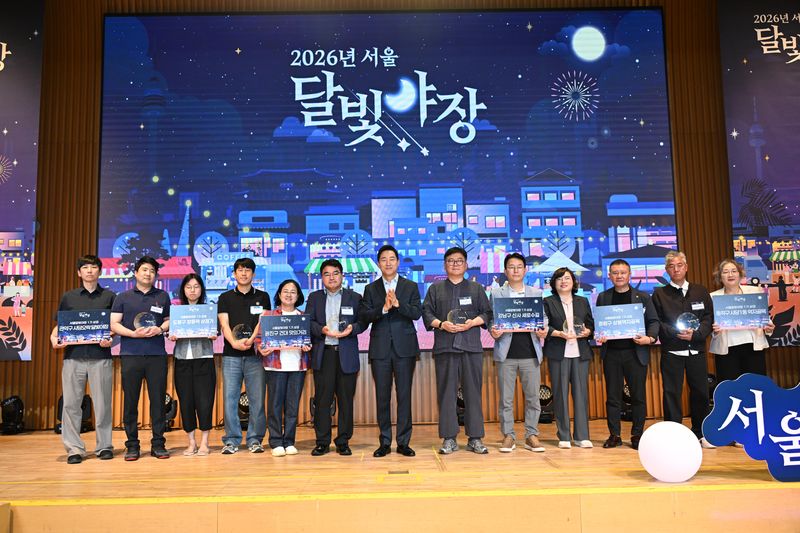
[Financial News] Sero-gil in Gangnam-gu, Sadang Orak Moonlight Night Market in Gwanak-gu, Konkuk University Taste Street in Gwangjin-gu, Changdong Station Shopping District in Dobong-gu, Sadang 1-dong Food Alley in Dongjak-gu, and Sangbong Food Alley in Jungnang-gu have been selected as representative neighborhood commercial districts for implementing Seoul Metropolitan Government’s key ninth-term elected administration strategy of revitalizing the nighttime economy.
Seoul Metropolitan Government held the final citizen participation evaluation for the 2026 Seoul Moonlight Night Market Development Project at the Seoul Metropolitan Government on the 14th and announced the six selected sites.
The Seoul Moonlight Night Market project extends the operating hours of neighborhood commercial districts, which are concentrated during the day, into the evening. It aims to increase the time residents and tourists spend in these areas and their spending, thereby boosting sales for local small businesses and revitalizing neighborhood economies. Seoul Metropolitan Government plans to expand the program to a total of 25 sites by 2028, beginning with the pilot districts announced that day.
A total of 19 commercial districts in 15 autonomous districts participated in the open call previously conducted by Seoul Metropolitan Government. After an initial document review, Seoul Metropolitan Government narrowed the field to 10 candidate districts. The final sites were selected by combining evaluations conducted on-site by five experts with the results of a final assessment involving 50 citizen evaluators.
During the final evaluation, each candidate district presented its development plan for the Seoul Moonlight Night Market and then underwent a question-and-answer session with the evaluation panel. Experts focused on the suitability of the project plans, commitment to implementation, and measures to prevent complaints and manage conflicts. The citizen evaluators assessed each district’s appeal and potential as a nighttime destination they would want to visit in person.
Sero-gil in Gangnam-gu, selected as a Seoul Moonlight Night Market site that day, was recognized for its ability to connect with Garosu-gil and offer shopping and dining, as well as for its strong influx of young people and foreign tourists. Sadang Orak Moonlight Night Market in Gwanak-gu will present content linking Sadang Station’s accessibility with Gwanaksan, the Buchu Samgyeopsal Alley, and the Artists’ Village. Konkuk University Taste Street in Gwangjin-gu will strengthen nighttime market content targeting young people, drawing on the young foot traffic around the university district and station. Changdong Station Shopping District in Dobong-gu will be developed as a culture-oriented nighttime commercial district linking K-pop performances at Seoul Arena with local food. Sadang 1-dong Food Alley in Dongjak-gu will attract demand for evening dining by leveraging the foot traffic at Sadang Station and its restaurants and bars. Sangbong Food Alley in Jungnang-gu plans to operate a nighttime market based on its existing food district, where restaurants and bars are concentrated.
The districts will receive up to 2 billion won each by 2028. Seoul Metropolitan Government will improve safety facilities, including walkways, streetlights, and closed-circuit television cameras, as well as convenience and sanitation facilities such as restrooms and waste-disposal facilities. It will also renovate aging signs and lighting to create nighttime streetscapes that reflect the character of each district.
The city will also develop nighttime content linking long-established local businesses, neighborhood restaurants, and nearby cultural and tourism resources. It will create a joint “Seoul Moonlight Night Market” brand and logo and support online and offline promotion and marketing. It will also pursue the issuance of “Moonlight Love Gift Certificates,” linked to citizen participation events such as visit verification and Seoul Love Gift Certificates. Storage facilities for strollers and luggage will be provided according to the conditions of each district for families and tourists.
Measures will also be implemented to reduce inconvenience to residents resulting from expanded nighttime business hours. Merchants and residents will sign coexistence agreements and form consultative bodies to manage noise, odors, waste, and pedestrian inconvenience. The agreements will include operating rules for each district, covering business areas and closing times, noise and odor prevention, and cleanliness. If the rules are violated, district-level sanctions will be applied in stages.
The city will also establish an institutional foundation for expanding outdoor business operations. Seoul Metropolitan Government will implement its “Guidelines for Road Occupancy by Outdoor Business Areas” starting that day, allowing outdoor operations while ensuring pedestrian safety and the right of passage. A proposed ordinance on outdoor operations by food-service businesses will also be announced on the 21st after an advance administrative notice.
Oh Se-hoon, Mayor of Seoul, said, "Many cities, including Amsterdam and London, have repeatedly experienced both success and failure while raising their gross regional domestic product (GRDP) through things to enjoy and activities to take part in, thereby creating vitality in their cities. We will continue refining our policies so that Seoul’s nightlife can make residents’ lifestyles flourish and contribute significantly to Seoul’s economy."
[email protected] Seong Chorong Reporter